- Services
Advertising disclosure: we earn commissions when you shop through the links below.
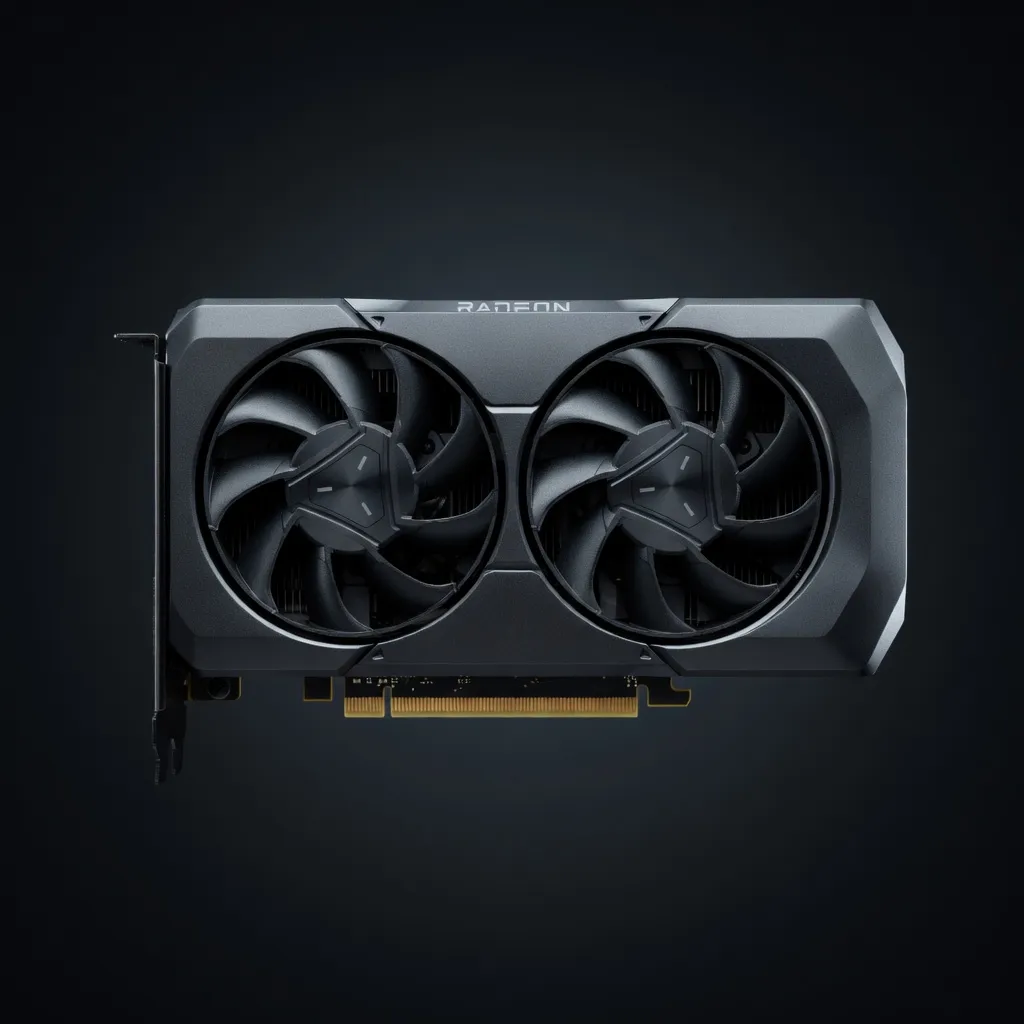
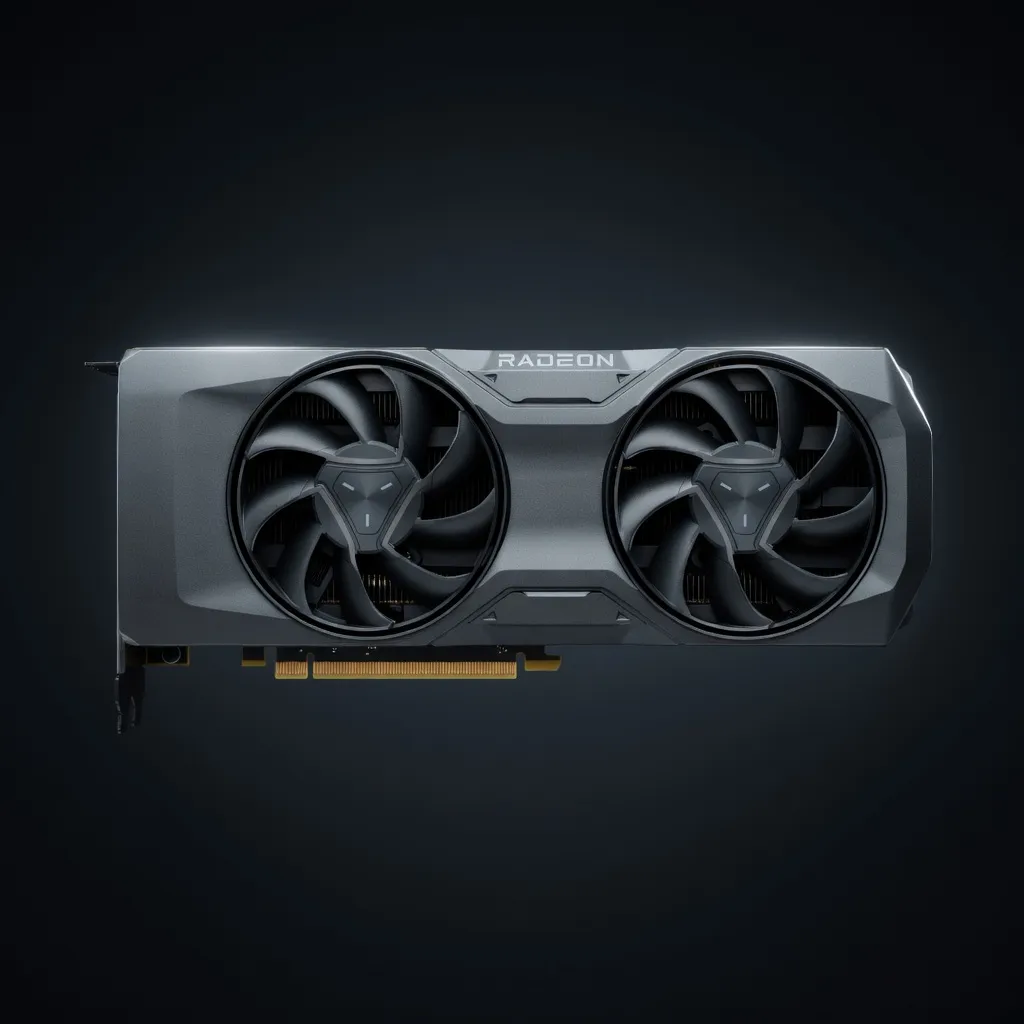
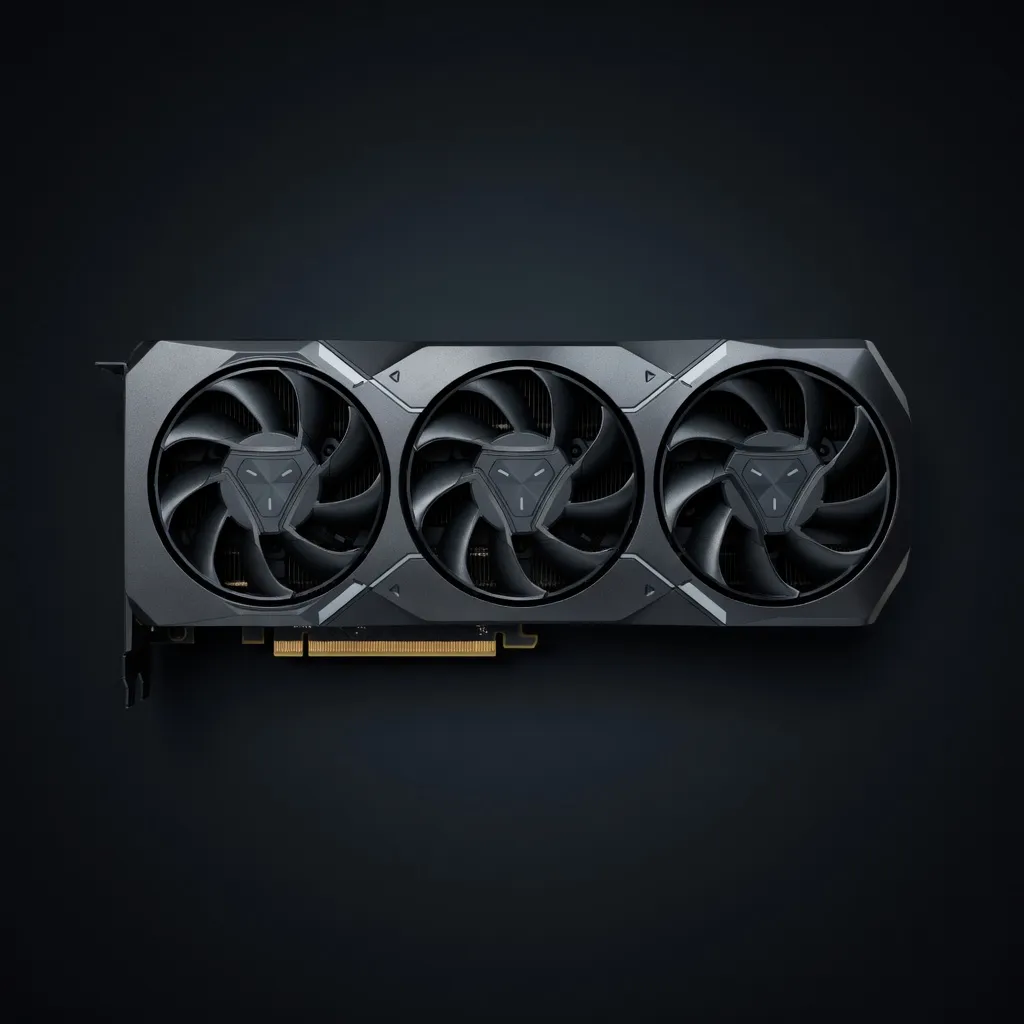
Budget RDNA 3 GPU with 8GB GDDR6 that remains one of the most affordable current-gen GPUs available at MSRP. Solid 1080p performance for gaming and entry-level content creation.
8 GB will run a 7B Q4 quant and most embedding models, but the KV cache budget is tight. Better as a stepping stone than a long-term home for AI work. Pricing puts it well above average on raw compute-per-dollar, which matters more than peak FLOPS for steady inference loads.
Generated from this product’s spec sheet. Editor reviews refine it over time.
The AMD Radeon RX 7600 8GB represents the entry point for the RDNA 3 architecture, serving as a high-efficiency gateway for developers and hobbyists exploring local AI inference. While positioned as a budget-friendly consumer GPU, its support for the latest instruction sets and its sub-$300 MSRP make it a notable candidate for entry-level AI development and edge deployment. It competes directly with the NVIDIA RTX 4060 8GB, offering a compelling price-to-performance ratio for those leveraging open-source stacks.
For practitioners building agentic workflows or local LLM implementations, the RX 7600 offers a modern 6nm process and 32 Compute Units. Its primary utility lies in its ability to run small language models (SLMs) and vision-language models locally without the high power overhead of flagship silicon. While the 8GB VRAM buffer is a limiting factor for larger architectures, the RX 7600 is an optimized choice for developers who need to test code against local API endpoints or deploy lightweight AI agents in power-constrained environments.
When evaluating the AMD Radeon RX 7600 8GB for AI, the most critical constraint is the 8GB GDDR6 VRAM. In the context of local LLMs, VRAM capacity dictates the maximum parameter count a model can have while remaining resident on the GPU. The RX 7600 utilizes a 128-bit memory bus, providing a memory bandwidth of 288 GB/s. For inference, bandwidth is the primary bottleneck for token generation speed (throughput); 288 GB/s is sufficient for high-speed interaction with models that fit entirely within the frame buffer.
The RDNA 3 architecture introduces dedicated AI accelerators, which contribute to a peak FP16 performance of 36.7 TFLOPS. For AMD Radeon RX 7600 8GB AI inference performance, this translates to rapid processing of prompt embeddings and KV cache management. However, users should note the PCIe 4.0 x8 interface; while sufficient for this tier of GPU, it highlights the importance of keeping models within the 8GB VRAM to avoid the performance degredation associated with system memory fallbacks (GTT).
Compared to its predecessor (the RX 6600) or the similarly priced RTX 4060, the RX 7600 maintains a competitive TDP of 165 W. This makes it one of the best AMD GPUs for running AI models locally in small form factor (SFF) builds or workstations with limited power headroom.
The AMD Radeon RX 7600 8GB VRAM for large language models is best suited for 7B and 8B parameter architectures. To run these effectively, practitioners must utilize quantization (GGUF, EXL2, or AWQ formats).
The RX 7600 is a capable performer for Stable Diffusion (SD 1.5 and SDXL Turbo). Using ROCm on Linux, practitioners can generate 512x512 images in seconds. However, for SDXL (1024x1024), the 8GB VRAM is tight, necessitating the use of "lowvram" modes or optimized diffusers to prevent out-of-memory (OOM) errors.
The RX 7600 is not a "training" card; its 8GB buffer and memory bus are insufficient for meaningful fine-tuning of large models. Instead, it is a best AI chip for local deployment in specific scenarios:
When choosing hardware for local AI agents 2025, the RX 7600 is often compared to the NVIDIA RTX 4060 8GB and the Intel Arc A770 16GB.
For AMD amd gpus for AI development, the RX 7600 is defined by its constraints. It is a highly capable, energy-efficient tool for 1080p-tier AI tasks, provided the practitioner understands the 8GB VRAM ceiling and targets appropriately quantized models.
The top models this device can run at 4-bit, ranked by fit and speed.
| Model | Grade | Speed | VRAM |
|---|---|---|---|
| Qwen3-30B-A3BAlibaba | SS | 43.0 tok/s | 5.4 GB |
| Apertus 8BEPFL, ETH Zurich, CSCS | SS | 42.9 tok/s | 5.4 GB |
| Llama 3 8B InstructMeta | SS | 40.9 tok/s | 5.7 GB |
| LensVLM-9BApple | SS | 38.5 tok/s | 6.0 GB |
| Carnice-9b for Hermes agentkai-os | SS | 38.5 tok/s | 6.0 GB |
Among 6 similar devices, the AMD Radeon RX 7600 8GB ranks #6 for memory and #6 for memory bandwidth.
Also in Our Store
Docks, fast storage, cables, and a UPS sized for a local AI machine.

Rent this class of GPU by the hour before you buy. Live prices from RunPod and Vast.ai.
Find the break-even between buying this hardware and paying for a cloud API.
Mac vs NVIDIA for local inference, if you are still choosing a platform.