- Services
Advertising disclosure: we earn commissions when you shop through the links below.
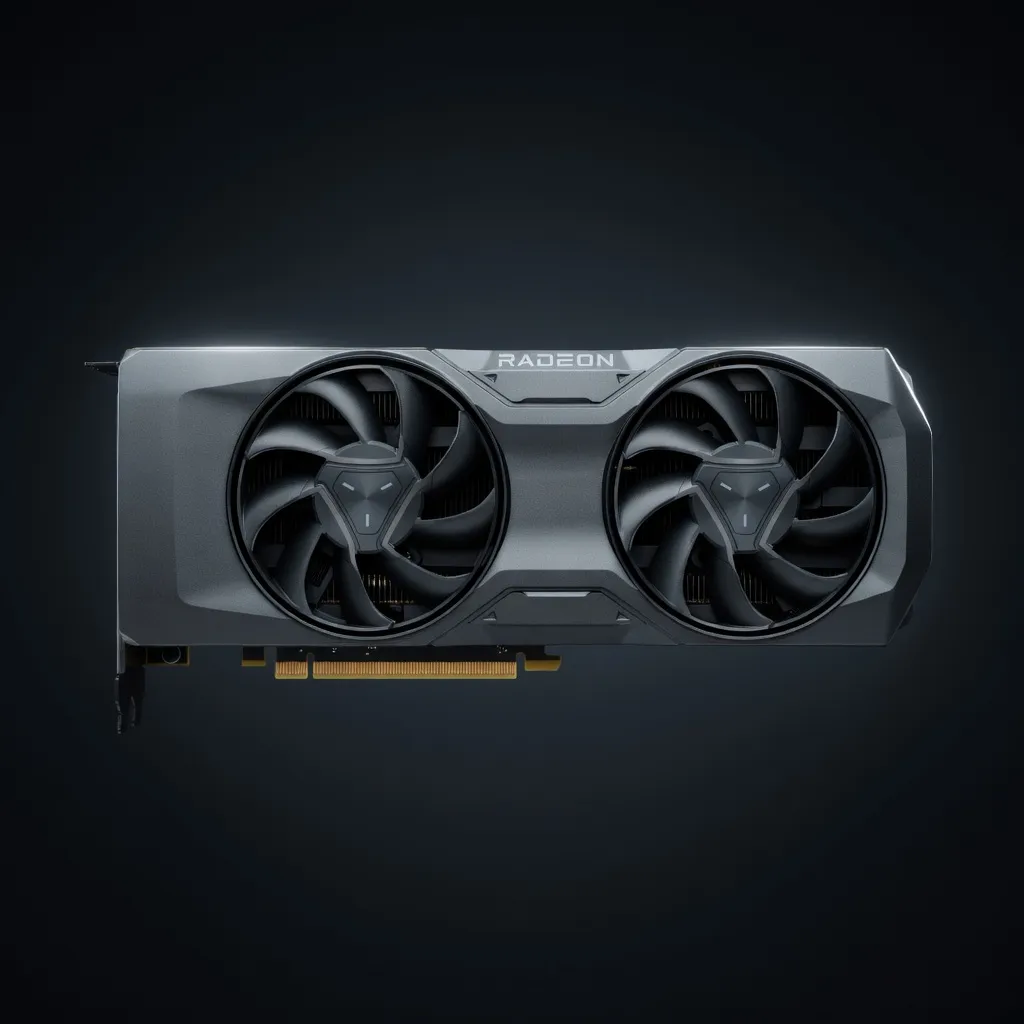
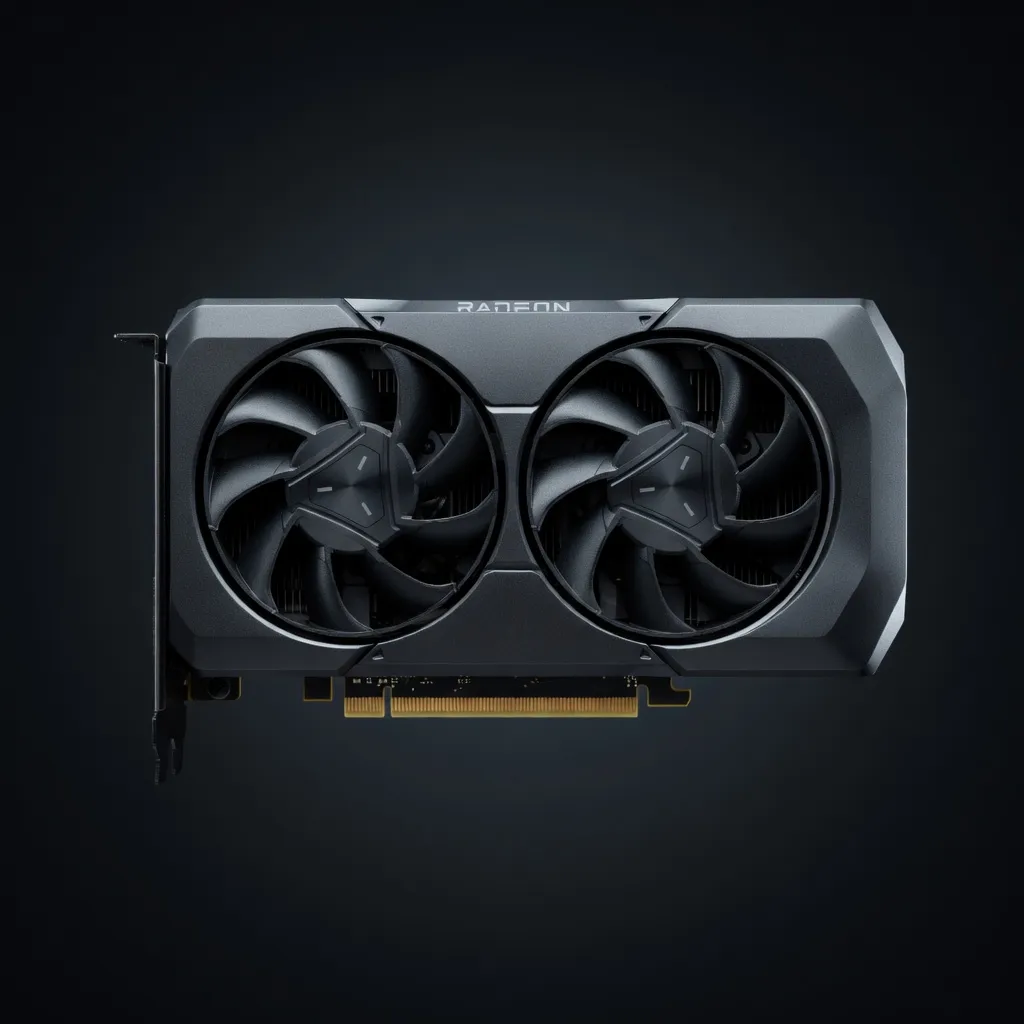
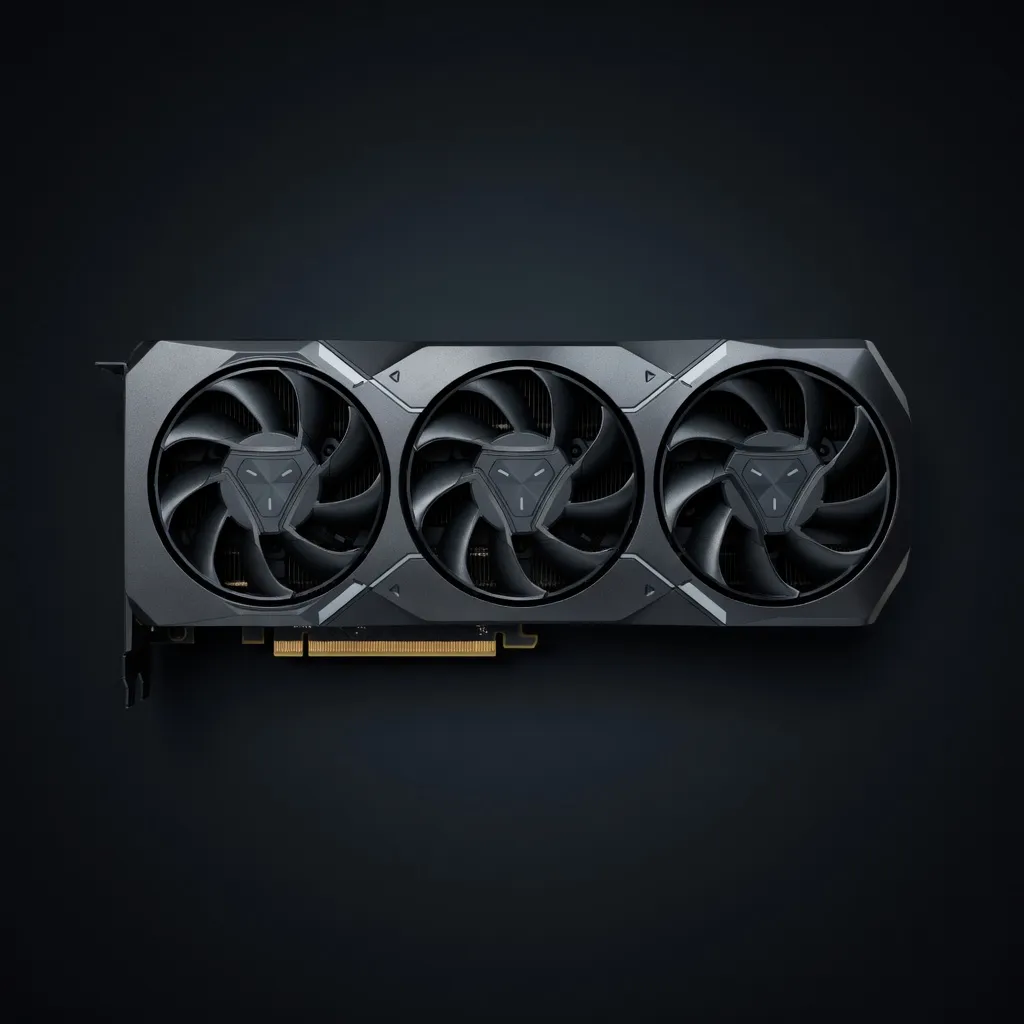
RDNA 3 mid-range GPU with 16GB GDDR6 on a 256-bit bus. Excellent 1440p performance and generous VRAM at a competitive price point. Still widely available.
Good balance for indie developers running local copilots and chat. 30B+ models are reachable but only with aggressive quantization and short context. Pricing puts it well above average on raw compute-per-dollar, which matters more than peak FLOPS for steady inference loads.
Generated from this product’s spec sheet. Editor reviews refine it over time.
The AMD Radeon RX 7800 XT represents one of the most cost-effective entry points for local AI inference in the current market. Built on the RDNA 3 architecture (Navi 32), this mid-range consumer GPU bridges the gap between budget gaming hardware and professional-grade compute cards. For practitioners, the primary draw is the 16GB GDDR6 VRAM paired with a 256-bit memory bus, a configuration that is increasingly rare at the $499 MSRP.
While NVIDIA remains the dominant force in AI due to CUDA, the RX 7800 XT is a formidable contender for developers leveraging the ROCm (Radeon Open Compute) ecosystem. It is specifically positioned as a high-value alternative to the NVIDIA RTX 4070 (12GB) and the RTX 4060 Ti (16GB). For engineers building agentic workflows or running local LLMs, the extra 4GB of VRAM over the standard 4070 is often the difference between running a high-quality quantized model locally or being forced to rely on cloud APIs.
When evaluating the AMD Radeon RX 7800 XT for AI, the raw compute power is significant: 74.6 TFLOPS of FP16 performance. In the context of AI inference, FP16 throughput determines how quickly the GPU can process the mathematical operations required by modern neural networks.
For local LLM inference, memory bandwidth is typically the primary bottleneck rather than raw TFLOPS. The 7800 XT features a memory bandwidth of 624 GB/s. This high throughput allows for faster token generation compared to cards with narrower bit-buses. When running an AMD Radeon RX 7800 XT local LLM setup, this bandwidth ensures that the model weights are moved from VRAM to the compute units efficiently, maintaining high tokens-per-second (t/s) even as context windows grow.
With a TDP of 263 W, the 7800 XT requires a capable power supply and adequate cooling. While it is less power-efficient than some of its Ada Lovelace competitors, the RDNA 3 architecture introduces dedicated "AI Accelerators" designed to handle the matrix multiplications central to transformer-based models.
The 16GB GPU for AI category is the "sweet spot" for 2025. It allows practitioners to run the most popular open-source models without aggressive quantization that degrades intelligence.
The RX 7800 XT is optimized for running 7B at Q4 parameter models with plenty of headroom for extended context. However, its 16GB capacity allows for much more:
The RX 7800 XT is frequently cited as being best for Computer Vision tasks in its price bracket. The 16GB VRAM is ample for:
For the AMD Radeon RX 7800 XT AI inference performance, the sweet spot is generally Q5_K_M or Q6_K quantization. These levels provide near-native FP16 intelligence while keeping the model small enough to leave room for a 8k-16k context window within the 16GB VRAM.
The 7800 XT is an ideal choice for best hardware for local AI agents 2025. Developers building agentic workflows (using frameworks like CrewAI, AutoGen, or LangChain) need a GPU that can handle a local LLM serving as the "brain" for the agent. The 16GB VRAM allows the agent to maintain a larger "scratchpad" or memory without crashing.
For those working on object detection (YOLOv10/v11) or image segmentation, the 7800 XT provides the VRAM necessary to handle larger batch sizes during inference, which is critical for processing video feeds in real-time.
If your goal is to run a "private ChatGPT" using Ollama, LM Studio, or LocalAI, this card provides the best price-to-VRAM ratio currently available in the new market. It avoids the 12GB limitation of the RTX 4070, which often forces users to choose between model quality and speed.
When choosing the best AMD GPUs for running AI models locally, the 7800 XT is often compared against its internal siblings and its green-team rivals.
The RTX 4070 is more power-efficient and has better software support via CUDA. However, the 4070 only offers 12GB of VRAM. For AI workloads, VRAM is king. The 7800 XT's 16GB allows you to run larger models (like 12B or 14B parameters) that simply will not fit on the 4070 without offloading to slower system RAM.
The 4060 Ti 16GB is the closest competitor in terms of memory capacity. While the 4060 Ti has the advantage of CUDA and lower power draw, the 7800 XT has a significantly wider memory bus (256-bit vs 128-bit). This results in much higher memory bandwidth (624 GB/s vs 288 GB/s), making the AMD Radeon RX 7800 XT tokens per second significantly higher for LLM inference.
It is important for practitioners to note that while AMD amd gpus for AI development have come a long way, the software setup can be more involved. Most major frameworks (PyTorch, TensorFlow) now support ROCm on Linux natively. Windows users will typically use ONNX Runtime or llama.cpp (via CLBlast or Vulkan) to achieve high performance. If your workflow depends on a specific CUDA-only library (like bitsandbytes for certain training scripts), you may face additional configuration steps compared to an NVIDIA card.
For inference-heavy workloads and local deployment of open-source models, the AMD Radeon RX 7800 XT stands as a premier best AI chip for local deployment for those who prioritize VRAM capacity and bandwidth over brand ecosystem.
The top models this device can run at 4-bit, ranked by fit and speed.
| Model | Grade | Speed | VRAM |
|---|---|---|---|
| Mixtral 8x7B InstructMistral AI | SS | 44.2 tok/s | 11.4 GB |
| AliceAI-Foundation-80B-A3B-Baseyandex | SS | 58.9 tok/s | 8.5 GB |
| DiffusionGemma 26B-A4BGoogle | SS | 47.9 tok/s | 10.5 GB |
| Gemma 4 26B-A4B ITGoogle | SS | 45.6 tok/s | 11.0 GB |
| Xing4.0-29B-A4BChina Telecom AI | SS | 44.8 tok/s | 11.2 GB |
Among 6 similar devices, the AMD Radeon RX 7800 XT ranks #4 for memory and #4 for memory bandwidth.
Also in Our Store
Docks, fast storage, cables, and a UPS sized for a local AI machine.

Rent this class of GPU by the hour before you buy. Live prices from RunPod and Vast.ai.
Find the break-even between buying this hardware and paying for a cloud API.
Mac vs NVIDIA for local inference, if you are still choosing a platform.