- Services
Advertising disclosure: we earn commissions when you shop through the links below.
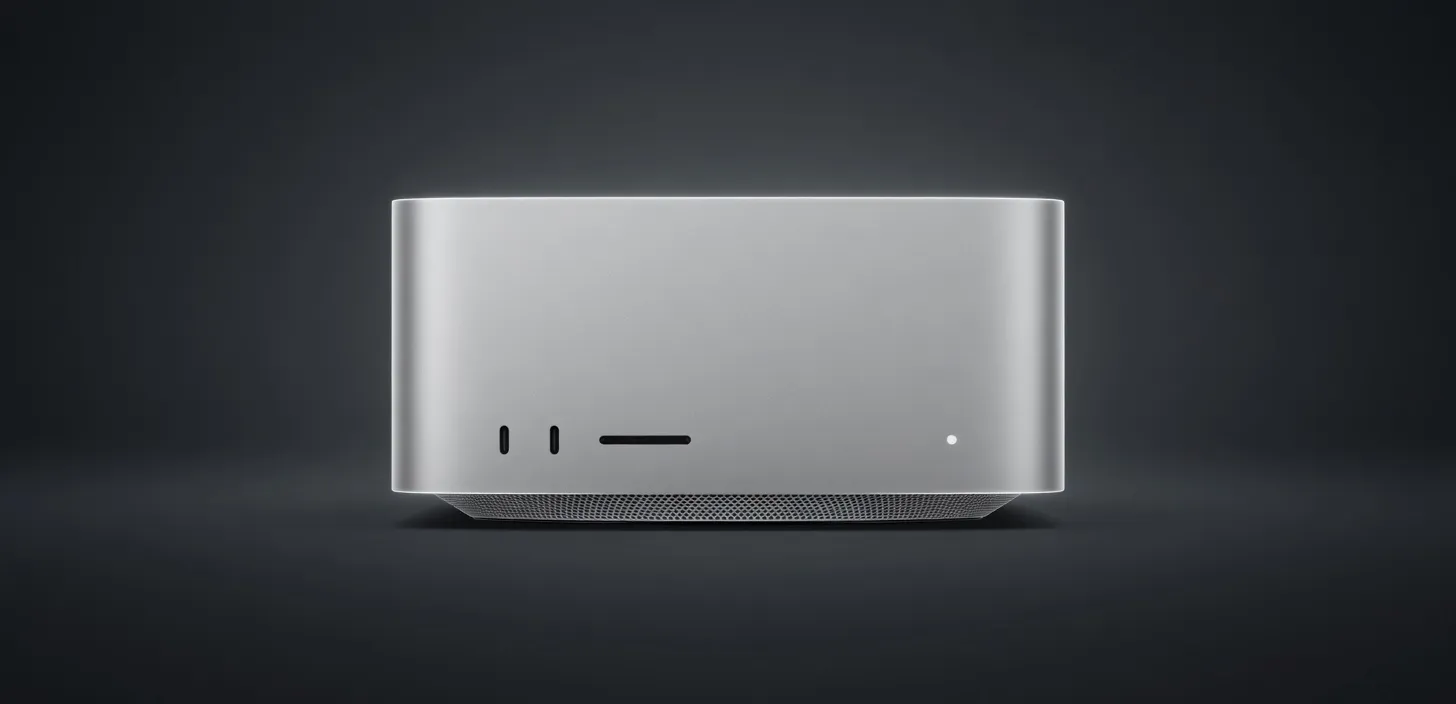
The original Mac Studio with M1 Max — Apple's first compact pro desktop. Up to 10-core CPU, 32-core GPU, 64GB unified memory at 400 GB/s in a stackable form factor designed for creative professionals.
The first tier where 70B-class models stop feeling cramped. Headroom for KV cache means 32K+ context on Q4 quants without falling off the GPU.
Generated from this product’s spec sheet. Editor reviews refine it over time.
The Apple Mac Studio (M1 Max, 2022) remains a cornerstone for practitioners entering the world of local inference. While technically discontinued by Apple in favor of newer iterations, it occupies a specific "sweet spot" in the secondary market for AI engineers and researchers. As Apple's first dedicated compact pro desktop, it introduced the high-bandwidth unified memory architecture to a form factor that doesn't require the footprint of a Mac Pro or the thermal constraints of a MacBook Pro.
For AI workloads, the M1 Max variant is a "Prosumer Plus" machine. It competes directly with mid-to-high-end NVIDIA consumer GPUs but offers a distinct advantage: Unified Memory. In a market where VRAM is the primary bottleneck for large language models (LLMs), the Mac Studio’s ability to allocate up to 64GB of system memory for GPU tasks makes it a formidable tool for running models that would otherwise require multiple enterprise-grade GPUs.
When evaluating the Apple Mac Studio (M1 Max, 2022) for AI, three metrics define its utility: memory capacity, memory bandwidth, and the efficiency of the Neural Engine.
The most critical advantage of the M1 Max is its 64GB of LPDDR5 unified memory. Unlike traditional PC architectures where the CPU and GPU have separate memory pools, Apple Silicon allows the GPU to access the majority of the system RAM. For AI practitioners, a 64GB Mac Studio effectively functions as a 64GB GPU for AI, allowing for the loading of massive weights that far exceed the 24GB limit of an NVIDIA RTX 4090.
In LLM inference, the speed of token generation is often limited by how fast data can move from memory to the processor. The M1 Max delivers 400 GB/s memory bandwidth. While this is lower than the 800 GB/s found in the M1 Ultra or the 1 TB/s+ found in H100s, it is significantly higher than standard DDR5 desktop memory (typically 50-100 GB/s). This bandwidth ensures that even large models remain responsive during interactive chat sessions.
The Apple Mac Studio (M1 Max, 2022) AI inference performance is best categorized by its ability to handle "medium-weight" models with high precision or "heavyweight" models with quantization.
With 64GB of unified memory, this machine is the hardware for running 30B at Q4 with 64GB unified memory parameter models with significant headroom for KV cache (context window).
The M1 Max is highly capable for Stable Diffusion XL (SDXL) and Flux.1 (Schenell). While it won't match the raw iterations-per-second of a dedicated RTX 4080, the 64GB of memory allows you to keep the model, the refiner, and the VAE all in memory simultaneously, eliminating the "swapping" lag common on lower-tier hardware.
The Mac Studio (M1 Max, 2022) is perhaps the best hardware for local AI agents 2025 for developers who need a "set it and forget it" box. Because it is silent and power-efficient, it can act as a local inference server for a home or office, serving API requests via Ollama or vLLM to other devices on the network.
For developers building AI-powered applications, the Mac Studio provides a stable Unix-based environment (macOS) that mirrors many cloud deployment targets. It is ideal for:
For researchers handling sensitive data that cannot leave local infrastructure, the 64GB VRAM capacity allows for running sophisticated open-source models (like Command R or Llama 3) entirely offline with sufficient context for analyzing large document sets.
When choosing the best apple silicon for running AI models locally, the M1 Max Mac Studio is often compared to the following:
An RTX 4090 will outperform the M1 Max in raw tokens per second for any model that fits in its 24GB VRAM. However, the 4090 hits a "memory wall" at 24GB. The M1 Max is the superior choice for practitioners who need to run 30B+ models that simply will not fit on a single consumer NVIDIA card. To match the M1 Max's 64GB capacity in the NVIDIA ecosystem, you would need three 3090/4090s or an expensive enterprise A6000.
The M2 and M3 Max iterations offer higher memory bandwidth (up to 400 GB/s is maintained, but M3 Max goes higher) and more GPU cores. However, because the M1 Max (2022) is now available on the refurbished and used markets for significantly less than its $1,999 MSRP, its price-to-VRAM ratio is often better than the newer models for those on a budget.
While they share the same chip, the Mac Studio has a vastly superior thermal design. Under sustained AI inference or fine-tuning loads, the MacBook Pro may thermal throttle, whereas the Mac Studio’s large internal heatsink and fans allow it to maintain peak 400 GB/s bandwidth and GPU clock speeds indefinitely.
The top models this device can run at 4-bit, ranked by fit and speed.
| Model | Grade | Speed | VRAM |
|---|---|---|---|
| AliceAI-Foundation-80B-A3B-Baseyandex | SS | 37.7 tok/s | 8.5 GB |
| Qwen3-30B-A3BAlibaba | SS | 59.8 tok/s | 5.4 GB |
| North Mini CodeCohere | SS | 38.4 tok/s | 8.4 GB |
| Nemotron 3 Nano OmniNVIDIA | SS | 37.7 tok/s | 8.5 GB |
| Qwen3.6 35B-A3BAlibaba | SS | 37.7 tok/s | 8.5 GB |
Among 6 similar devices, the Apple Mac Studio (M1 Max, 2022) ranks #5 for memory and #4 for memory bandwidth.
Also in Our Store
Docks, fast storage, cables, and a UPS sized for a local AI machine.

Rent this class of GPU by the hour before you buy. Live prices from RunPod and Vast.ai.
Find the break-even between buying this hardware and paying for a cloud API.
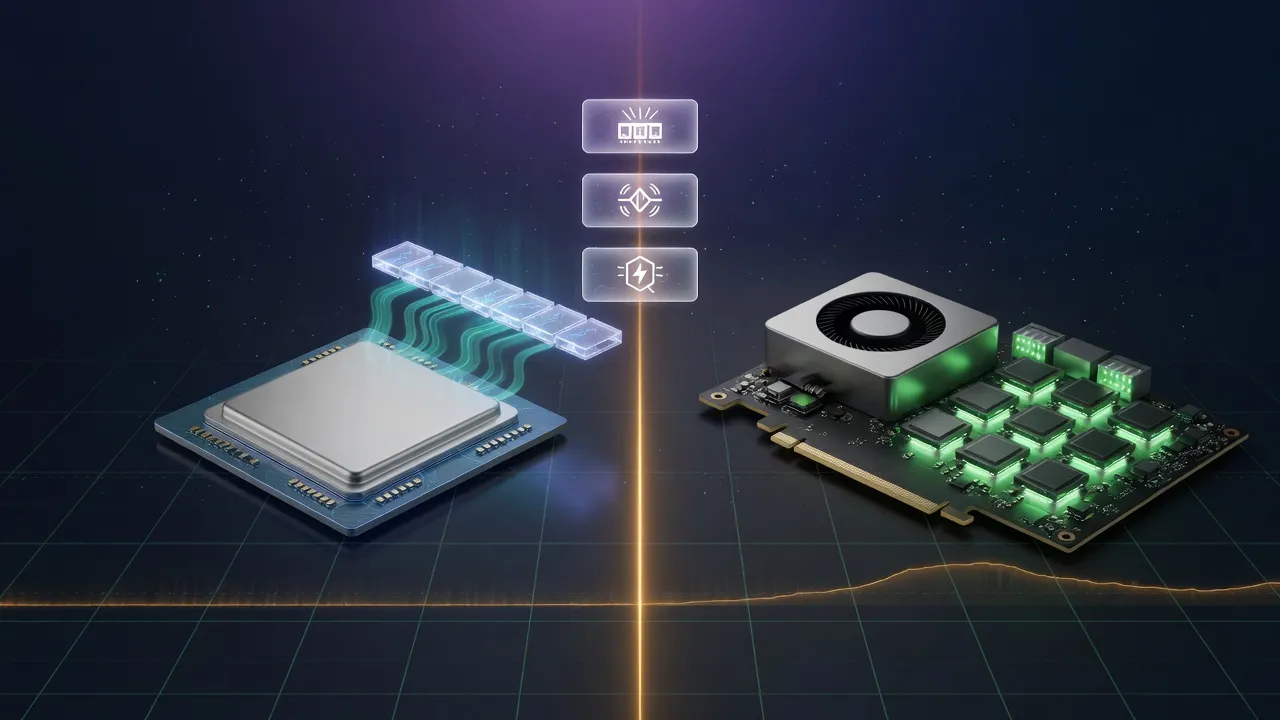
Mac vs NVIDIA for local inference, if you are still choosing a platform.