- Services
Advertising disclosure: we earn commissions when you shop through the links below.
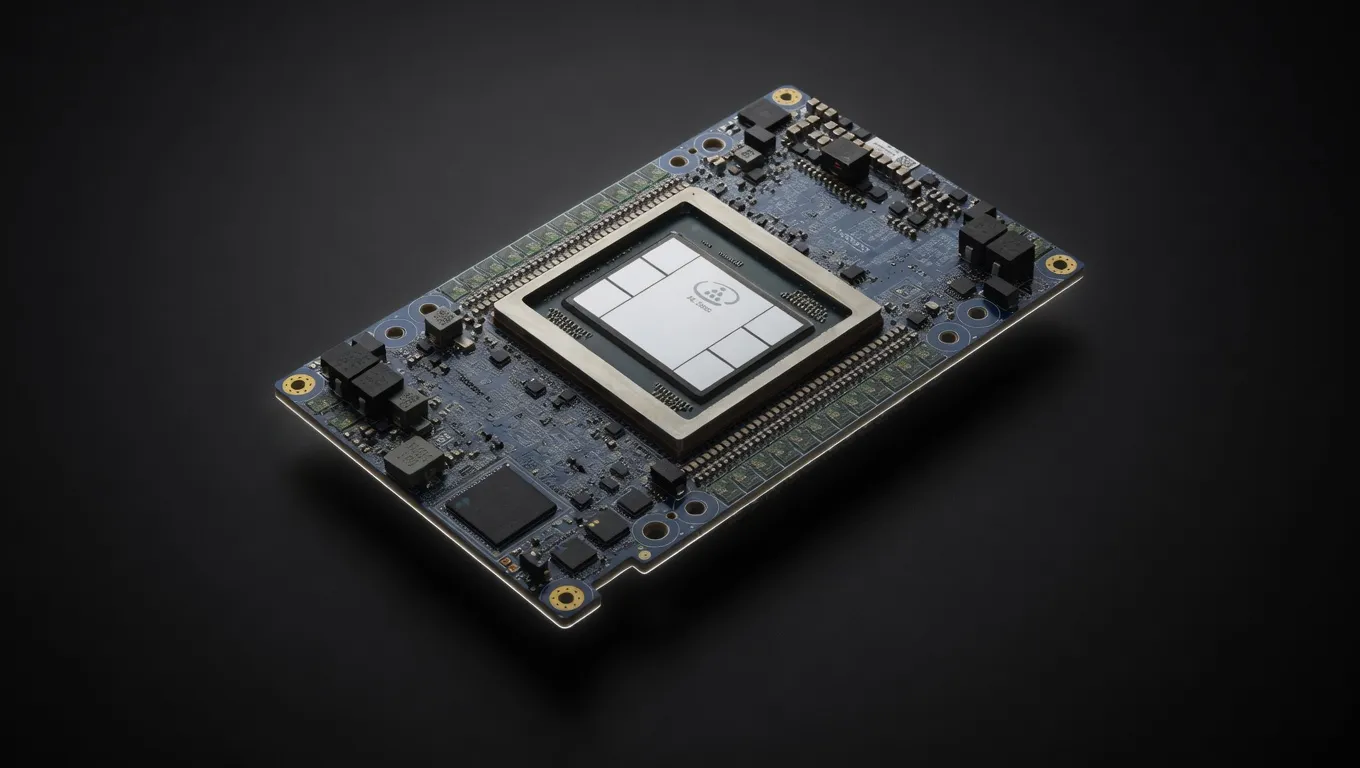
Intel GPU D270 is the first card in Intel's GPU D-Series, a data center accelerator built for AI inference on the Xe3P architecture. It offers up to 480GB of LPDDR5X memory on partner designs, with Intel's own card at 160GB, plus 1.5TB/s of memory bandwidth and 1.3 petaflops of FP8 compute in a 350W air-cooled PCIe 5.0 card. Intel says a single card can hold models up to roughly 300 billion parameters, and an eight-card server can serve models over one trillion parameters. Customer sampling is underway and Intel has not announced pricing or a general availability date.
Sized for production serving of 70B–200B class models at full or lightly-quantized precision. Overkill for a homelab; right call when the workload pays for itself in token volume.
Generated from this product’s spec sheet. Editor reviews refine it over time.
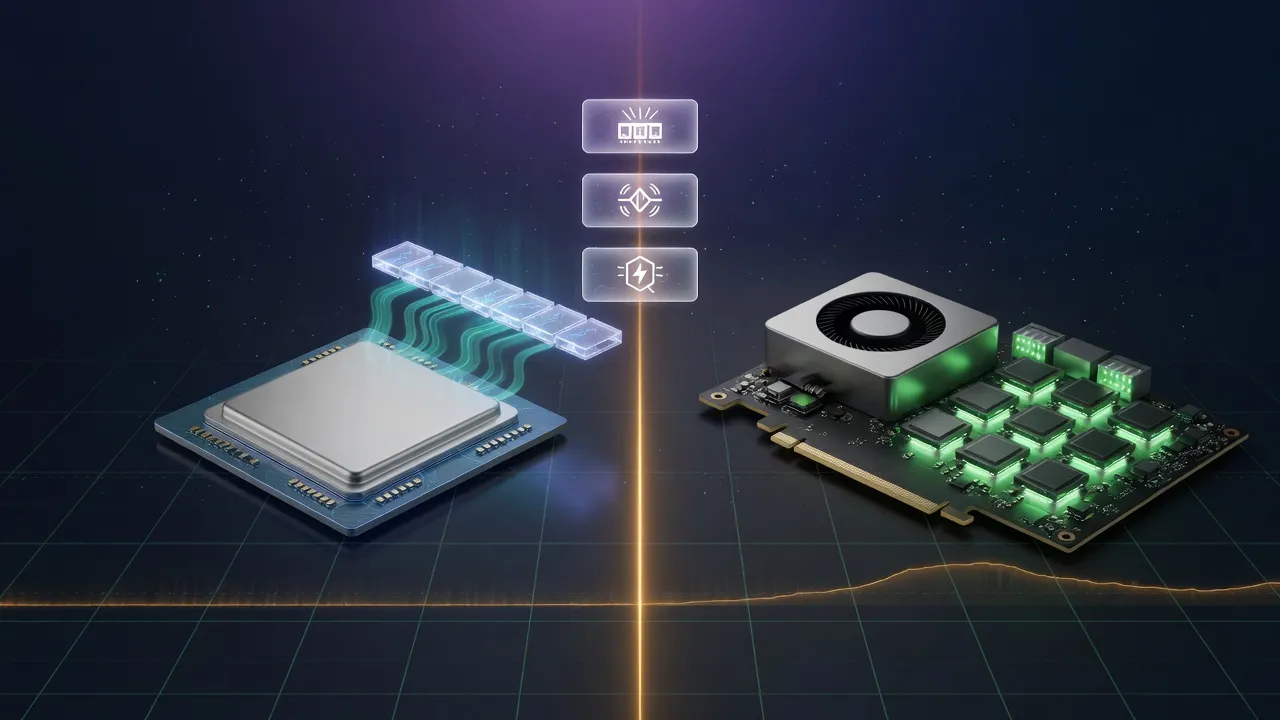
The Intel GPU D270 is a dedicated data center accelerator engineered specifically for large-scale AI inference. Representing the debut of Intel's GPU D-Series (previously code-named Crescent Island), the D270 departs from conventional GPU conventions by stripping out legacy 3D graphics hardware, rasterization units, and ray-tracing pipelines. Every square millimeter of its silicon is committed to compute and high-density memory handling, establishing the card as an enterprise accelerator built to tackle the memory-capacity bottlenecks that stall large language model deployment.
Available in a standard dual-slot PCIe 5.0 x16 form factor with a 350W thermal design power (TDP), the D270 runs on passive air cooling. This design choice bypasses the expensive liquid-cooling loops and specialized infrastructure modifications required by many contemporary accelerators. The card ships in two distinct hardware profiles: an Intel-branded reference configuration carrying 160GB of memory, and partner board designs scaling up to a massive 480GB of LPDDR5X memory.
By prioritizing dense LPDDR5X capacity over raw High Bandwidth Memory (HBM) pin-speed, Intel targets real-world production environments where model footprints and massive key-value (KV) caches dictate hardware requirements. For engineers evaluating the best hardware for running AI models locally or across on-prem cluster nodes, the D270 shifts the economics of running 70B to 300B parameter models on minimal PCIe slots.
Evaluating the Intel GPU D270 for AI workloads requires looking at how its architecture balances memory capacity against compute density. Built on the Xe3P architecture, the D270 features 32 Xe3P execution cores and 256 Intel Xe Matrix Extensions (XMX) engines backed by 32MB of unified L2 cache.
In LLM serving, token generation is memory-bandwidth bound during the decode phase. At 1.5 TB/s, the D270 matches or exceeds typical GDDR6-based cards, though it trails the 3.0 TB/s to 5.3 TB/s seen on flagship HBM3e accelerators. However, the use of LPDDR5X allows a single card to hold up to 480GB of memory. This solves the primary failure mode of local LLM serving: running out of VRAM when allocating memory for expanded context windows and multi-user concurrency.
The card delivers 1.3 PFLOPS of dense FP8 throughput. The 256 XMX engines handle matrix multiplication directly in 8-bit precision, enabling high-throughput prompt evaluation (prefill phase) where operations are compute-bound rather than memory-bound. At a 350W envelope, the D270 achieves strong compute density per watt, allowing data center operators to populate standard 4U and 8U air-cooled chassis without exceeding standard rack power limits.
The practical value of a 480GB GPU for AI is the elimination of multi-node tensor parallelism for large model tiers. A single D270 partner card can fit models up to 300 billion parameters that traditionally required four to eight discrete accelerators.
The architecture is tuned for FP8 execution. While INT4 provides higher absolute generation speed, FP8 maintains near-lossless accuracy on modern architectures like Qwen 2.5 and Llama 3.1 while fully engaging the 1.3 PFLOPS XMX matrix engines.
In single-stream generation, Intel GPU D270 tokens per second correlate with memory bandwidth:
The Intel GPU D270 addresses specific enterprise and production requirements rather than home desktop setups.
Agentic architectures generate extended prompt histories, multi-turn tool outputs, and autonomous reasoning loops that blow past normal VRAM budgets. The D270 is among the best hardware for local AI agents, offering the capacity needed to keep multi-agent contexts hot in memory without context truncation or continuous re-summarization.
Organizations running private AI inference behind corporate firewalls can deploy the D270 directly into existing standard 19-inch server racks. Because the card uses standard passive heat sinks and a PCIe 5.0 form factor, IT departments do not need to replace power distribution units (PDUs) or plumb liquid cooling lines.
To position the D270 within the current hardware landscape, it helps to compare it against alternative PCIe enterprise options.
The NVIDIA L40S is a popular PCIe-based enterprise inference card based on the Ada Lovelace architecture.
The H100 NVL is NVIDIA's dedicated dual-GPU PCIe inference card.
The Intel GPU D270 delivers an effective, high-density solution for teams looking for an alternative to fragmented multi-GPU setups, offering the capacity to serve 300B parameter models within a manageable 350W air-cooled envelope.
The top models this device can run at 4-bit, ranked by fit and speed.
| Model | Grade | Speed | VRAM |
|---|---|---|---|
| Qwen3.5-122B-A10BAlibaba | SS | 44.3 tok/s | 27.3 GB |
| KolibriAleph Alpha | SS | 46.0 tok/s | 26.2 GB |
| minimax-m2.5MiniMax | SS | 53.2 tok/s | 22.7 GB |
| Mixtral 8x7B InstructMistral AI | SS | 106.3 tok/s | 11.4 GB |
| AliceAI-Foundation-80B-A3B-Baseyandex | SS | 141.5 tok/s | 8.5 GB |
Among 5 similar devices, the Intel GPU D270 ranks #1 for memory and #3 for memory bandwidth.
Also in Our Store
Docks, fast storage, cables, and a UPS sized for a local AI machine.

Rent this class of GPU by the hour before you buy. Live prices from RunPod and Vast.ai.

Find the break-even between buying this hardware and paying for a cloud API.
Mac vs NVIDIA for local inference, if you are still choosing a platform.