- Services
Advertising disclosure: we earn commissions when you shop through the links below.
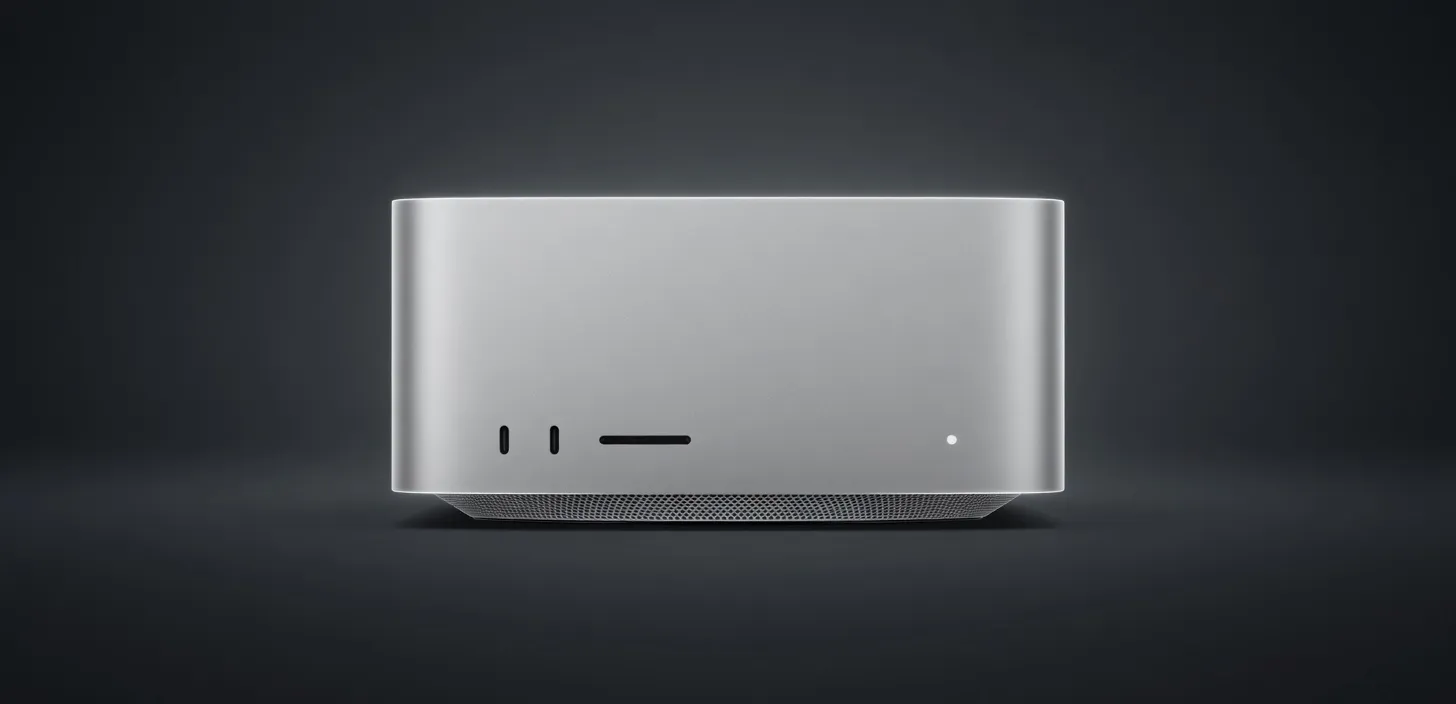
Apple's Mac mini desktop configured with the Apple M5 Pro chip, announced August 25, 2026 and available starting September 22, 2026. It is offered with a 15-core CPU and 16-core GPU or an 18-core CPU and 20-core GPU, a 16-core Neural Engine, and 307GB/s memory bandwidth. Memory options are 24GB, 48GB or 64GB unified memory with 512GB to 8TB SSD storage. Pricing starts at $1,699.
The first tier where 70B-class models stop feeling cramped. Headroom for KV cache means 32K+ context on Q4 quants without falling off the GPU.
Generated from this product’s spec sheet. Editor reviews refine it over time.
Apple's Mac mini with the M5 Pro is the high-end half of the 2026 Mac mini lineup, announced August 25, 2026 and shipping September 22. It starts at $1,699 for a 15-core CPU, 16-core GPU, 24GB of unified memory, and a 512GB SSD, and it scales to an 18-core CPU, 20-core GPU, and 64GB of unified memory with up to 8TB of storage. The chassis is the same 5 by 5 inch aluminum block Apple introduced in 2024, which means it fits under a monitor or behind a display arm while pulling a fraction of the power a discrete-GPU workstation needs.
For AI work, the interesting part is not the CPU core count. It is the combination of up to 64GB of unified memory and 307GB/s of memory bandwidth in a machine that idles at single-digit watts. That puts the M5 Pro Mac mini in a specific niche: prosumer and small-team local inference, not data center training. It sits above the $899 M6 Mac mini (16GB, 256GB) and below the Mac Studio, and it competes directly with NVIDIA's DGX Spark and the various Ryzen AI Max+ 395 mini PCs that have colonized the same "big unified memory, small box" territory.
Worth flagging up front: the M5 Pro is a previous-generation Pro chip relative to the M6 in the cheaper Mac mini, and Apple's memory and SSD upgrade pricing has climbed sharply since the M4 generation. The 64GB configuration costs substantially more than the $1,699 headline price. Budget accordingly before you commit.
Memory bandwidth is the number that determines decode speed for large language models. Autoregressive token generation reads the entire model weights from memory for every token, so throughput scales roughly with bandwidth divided by model size. At 307GB/s, the M5 Pro is about 12% ahead of the DGX Spark's 273GB/s, roughly a sixth of an RTX 5090's 1.79TB/s, and well behind a Mac Studio with M3 Ultra at 819GB/s.
The 64GB ceiling is the real story. Unified memory means the GPU can address the full pool, so a 64GB configuration behaves like a 64GB GPU for inference purposes, with no PCIe transfer overhead between host and device. That is enough to hold models that simply do not fit on a 24GB or 32GB discrete card at any quantization. The tradeoff is bandwidth: you get capacity, not speed.
Apple does not publish TFLOPS figures for the M5 Pro, and prefill throughput is not the bottleneck here anyway. Prompt processing is compute-bound and benefits from the Neural Accelerators and the wider GPU, but decode is bandwidth-bound. Plan your expectations around the 307GB/s figure.
Power draw is the underrated spec. A Mac mini under sustained inference load draws a small fraction of what a 600W-class GPU desktop pulls, and it does so near-silently. For always-on agent workloads, that changes the economics of running a model 24/7.
At 64GB, the M5 Pro Mac mini covers the 70B parameter class at 4-bit quantization with room to spare, plus a handful of larger MoE models.
Quantization guidance: Q4_K_M is the sweet spot. Quality loss versus FP16 is small for most tasks, and it is what makes 70B fit in 64GB. Step up to Q5_K_M or Q6_K for 32B models where you have headroom; the quality gain is real and the speed cost is modest. Q8 on a 70B model needs roughly 75GB and will not fit.
Long context is where the 64GB ceiling bites. KV cache grows with context length, and a 70B model at Q4 already consumes 40GB of weights. You will have room for moderate context windows, not 128K-token sessions. Smaller models leave plenty of headroom for long-context work.
On the 24GB base configuration, the picture narrows to 7B-14B models at Q4 and 32B models at aggressive quantization with short context. If your workload is 70B-class, the 48GB or 64GB upgrade is mandatory, not optional.
Local chatbot and assistant hobbyists: this is overkill for a single 8B model. The $899 M6 Mac mini handles that. Buy the M5 Pro if you want to run 32B or 70B models locally without a cloud dependency.
Developers building AI applications: the Mac mini makes a good always-on development target. MLX, llama.cpp, Ollama, and PyTorch via MPS all run natively, and the low idle power means leaving an inference endpoint running costs almost nothing. The 10Gb Ethernet option matters if you are serving multiple machines on a LAN.
Small teams running inference servers: a single M5 Pro Mac mini will serve a handful of concurrent users on a 32B model. Beyond that, throughput per dollar favors a Mac Studio or a discrete-GPU server.
Agentic workflows: agent loops generate many short completions and benefit from prompt caching. The M5 Pro handles this well at 32B, and the small form factor means you can stack several units rather than buying one large box.
Training: this is an inference machine. Fine-tuning small models with LoRA is feasible at 7B-14B scale. Full fine-tunes and anything resembling pretraining are not.
Versus NVIDIA DGX Spark ($3,999-ish, 128GB, 273GB/s): the Spark doubles the memory and gives you CUDA, which matters if your stack depends on it. The Mac mini is cheaper, faster on bandwidth, quieter, and runs macOS. Pick the Mac mini unless you need CUDA or the extra 64GB.
Versus Mac Studio (M4 Max or M3 Ultra): the Studio's M3 Ultra delivers 819GB/s, roughly 2.7x the bandwidth, which translates almost directly into faster decode on large models. If you are running 70B models interactively, the Studio is worth the extra spend. The Mac mini wins on price, size, and power.
Versus an RTX 5090 desktop (32GB, 1.79TB/s): the 5090 is dramatically faster per token but caps out at 32GB, which rules out 70B models at usable quantization. Choose the Mac mini for capacity and CUDA-free simplicity, the 5090 for raw speed on models that fit.
The Mac mini (M5 Pro) is the right pick when you need 48GB to 64GB of addressable GPU memory in a small, quiet, low-power box, and you are willing to trade token throughput for it.
The top models this device can run at 4-bit, ranked by fit and speed.
| Model | Grade | Speed | VRAM |
|---|---|---|---|
| Qwen3-30B-A3BAlibaba | SS | 45.9 tok/s | 5.4 GB |
| Holo4-35B-A3BHcompany | AA | 105.7 tok/s | 2.3 GB |
| LensVLM-9BApple | AA | 41.1 tok/s | 6.0 GB |
| Carnice-9b for Hermes agentkai-os | AA | 41.1 tok/s | 6.0 GB |
| Llama 3 8B InstructMeta | AA | 43.6 tok/s | 5.7 GB |
Among 6 similar devices, the Mac mini (M5 Pro) ranks #6 for memory and #6 for memory bandwidth.
Also in Our Store
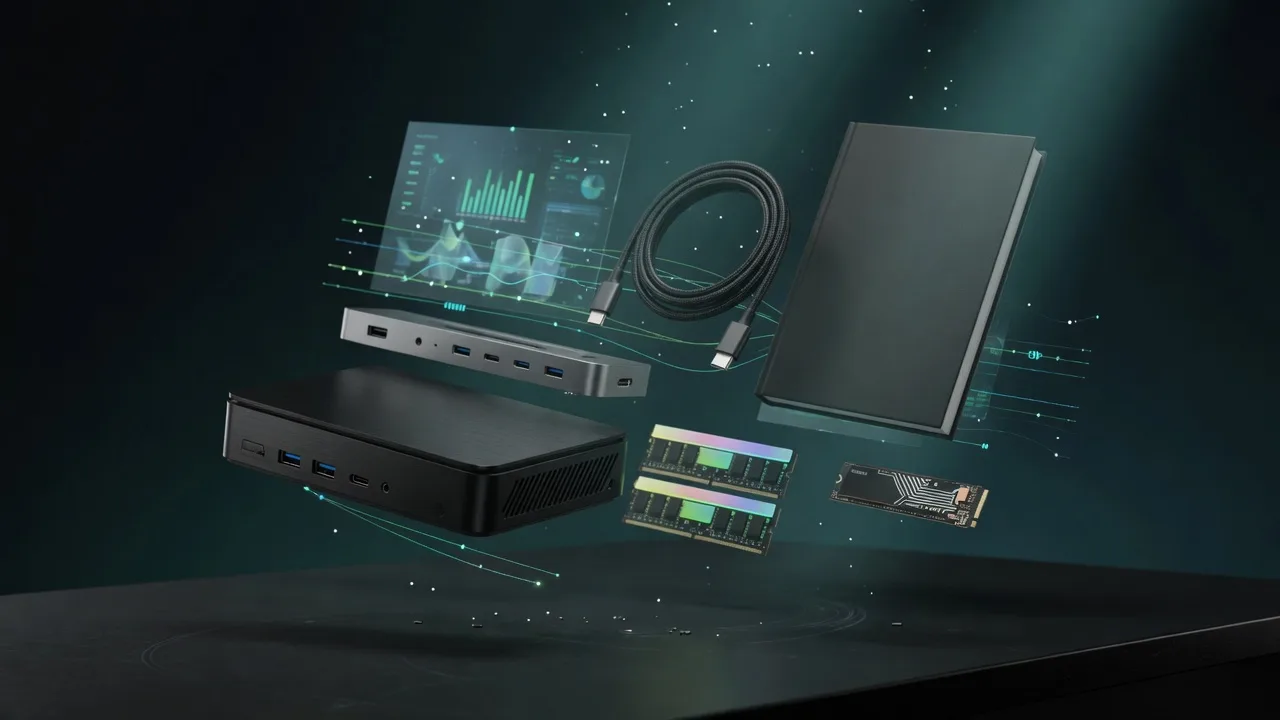
Docks, fast storage, cables, and a UPS sized for a local AI machine.

Rent this class of GPU by the hour before you buy. Live prices from RunPod and Vast.ai.
Find the break-even between buying this hardware and paying for a cloud API.
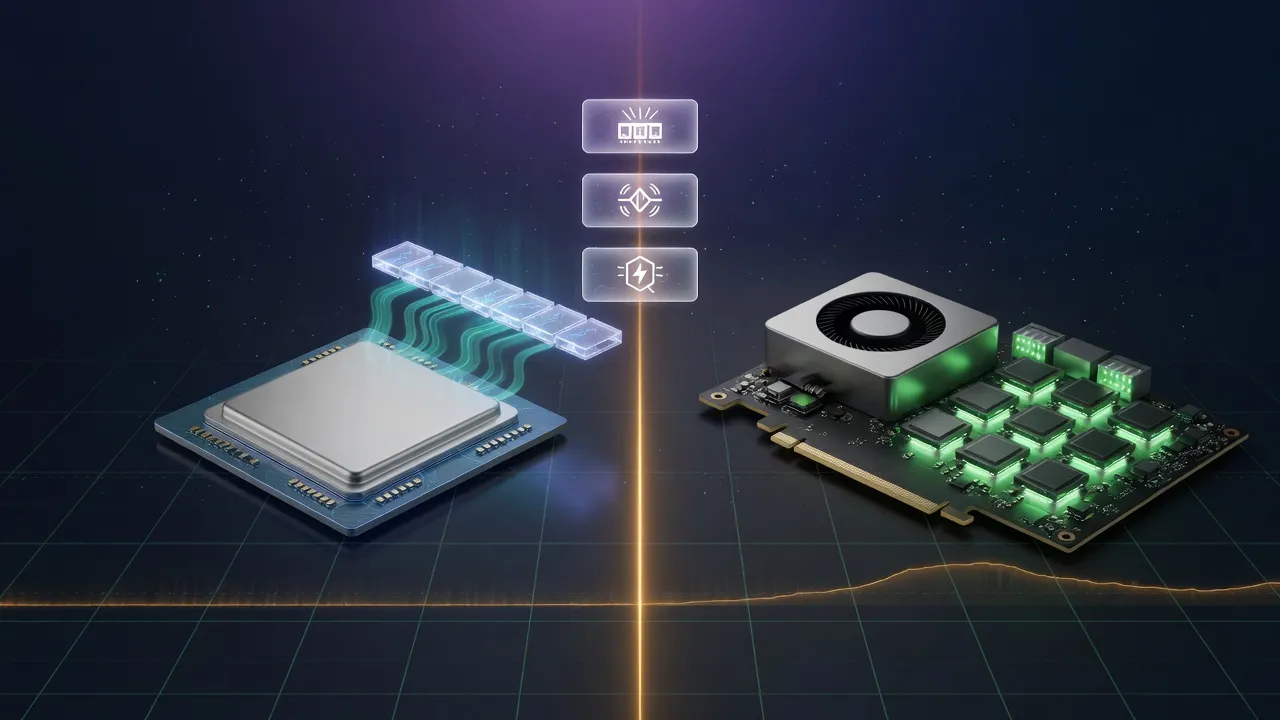
Mac vs NVIDIA for local inference, if you are still choosing a platform.