- Services
Advertising disclosure: we earn commissions when you shop through the links below.
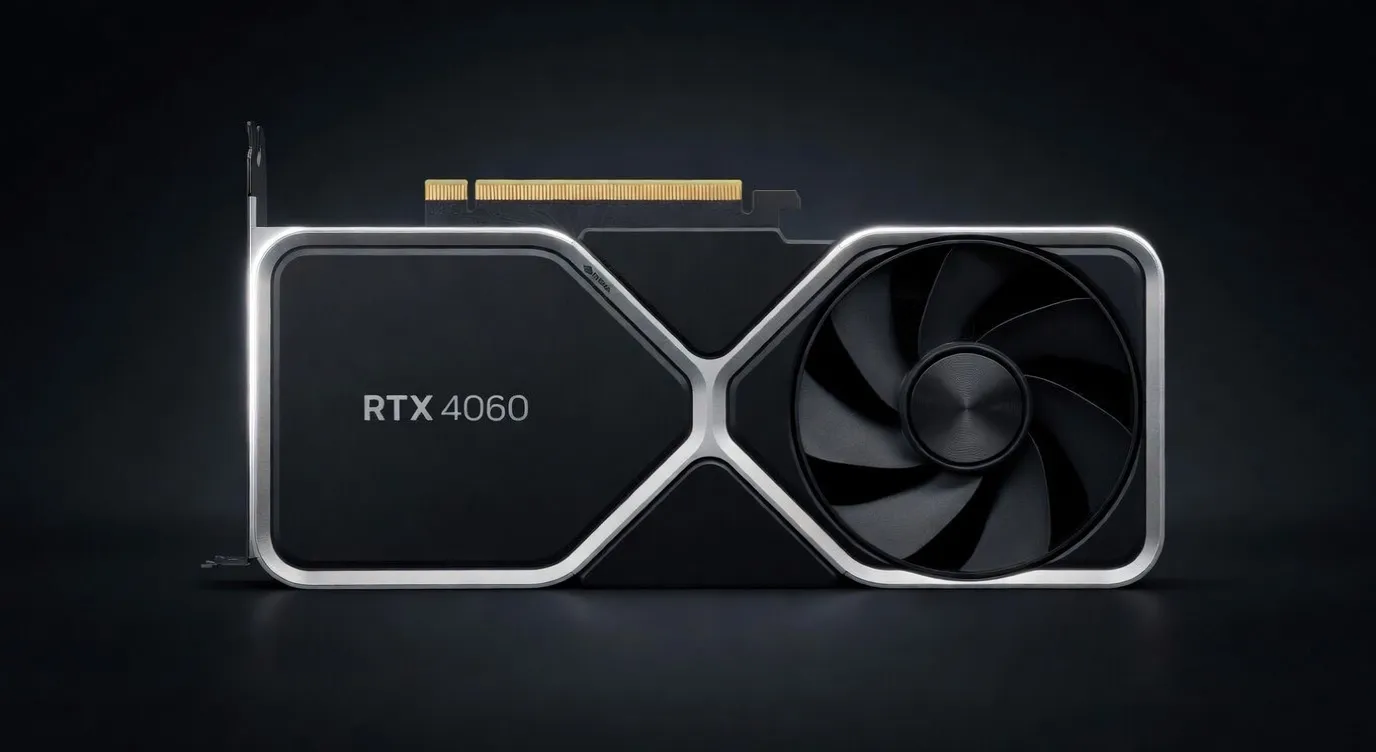
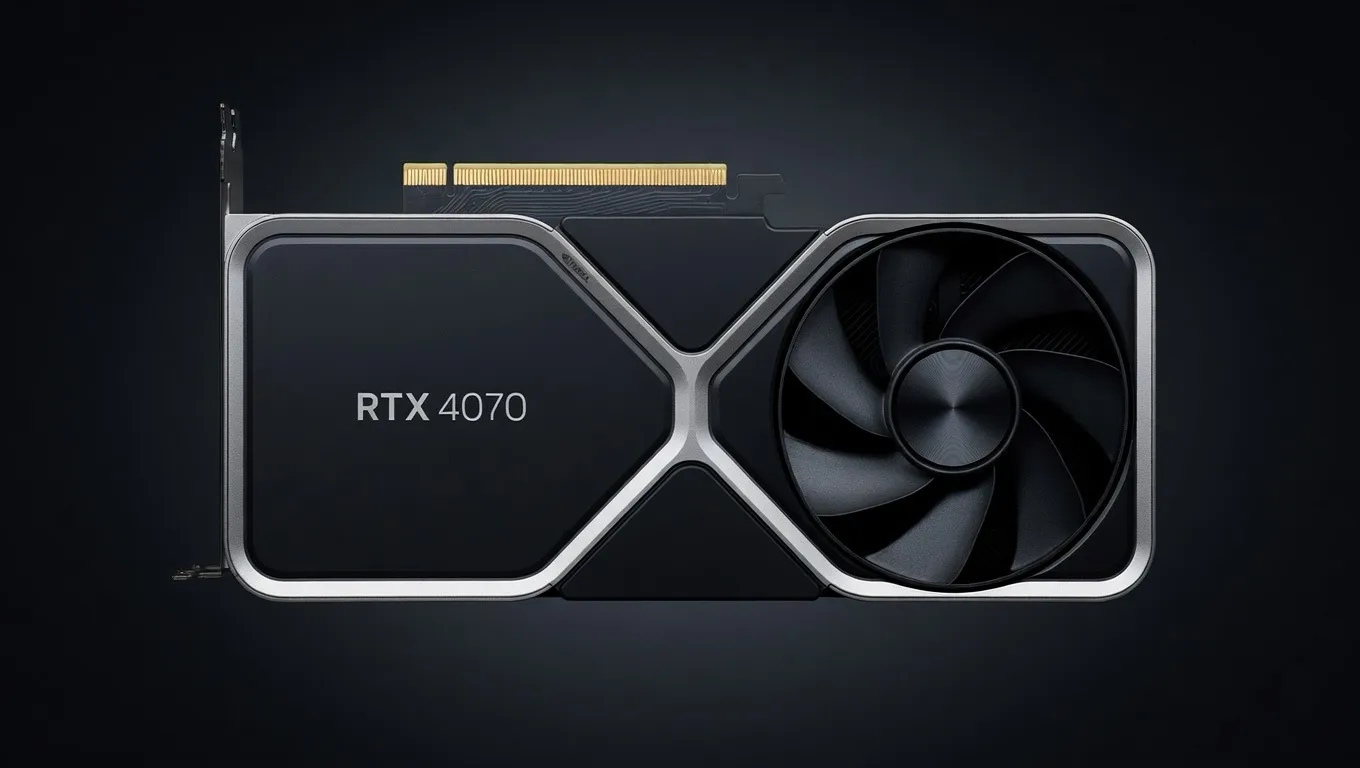
Budget Ada Lovelace GPU with 3,072 CUDA cores and 8GB GDDR6. The most affordable current-gen NVIDIA GPU, still widely available at MSRP.
8 GB will run a 7B Q4 quant and most embedding models, but the KV cache budget is tight. Better as a stepping stone than a long-term home for AI work. Pricing puts it well above average on raw compute-per-dollar, which matters more than peak FLOPS for steady inference loads.
Generated from this product’s spec sheet. Editor reviews refine it over time.
The NVIDIA GeForce RTX 4060 represents the entry point for the Ada Lovelace architecture, serving as a high-efficiency gateway for developers and hobbyists entering the local AI ecosystem. While positioned as a consumer-grade gaming card, its 4th-generation Tensor Cores and TSMC 4N process make it a highly capable silicon for low-latency inference on small language models (SLMs) and edge-based AI agents. At an MSRP of $299, it is currently the most accessible modern NVIDIA GPU for those who require CUDA compatibility without the overhead of high power consumption or enterprise-level pricing.
In the context of local AI development, the RTX 4060 competes primarily with legacy hardware like the RTX 3060 12GB (which offers more VRAM but slower compute) and AMD’s Radeon RX 7600. However, for practitioners building agentic workflows or integrating AI into software stacks, the RTX 4060 remains the preferred budget choice due to the maturity of the CUDA ecosystem and the superior efficiency of the Ada Lovelace architecture for FP16 and INT8 workloads.
When evaluating the NVIDIA GeForce RTX 4060 for AI workloads, the primary bottleneck is the 8GB GDDR6 VRAM. While 8GB is sufficient for basic tasks, it limits the card to smaller models or highly quantized versions of mid-sized models. However, what it lacks in capacity, it compensates for in compute efficiency. With 32.3 TFLOPS of FP16 performance and 258 TOPS of INT8 performance, the 4060 punches significantly above its weight class for real-time inference tasks where low latency is more critical than massive context windows.
The card features a 128-bit memory bus providing 272 GB/s of bandwidth. In the world of local LLM inference, memory bandwidth is the primary driver of tokens per second (t/s). While the 4060's bandwidth is lower than its higher-tier siblings like the 4070 or 4080, its 2.46 GHz boost clock and architectural improvements ensure it maintains high throughput for models that fit entirely within its VRAM buffer. Furthermore, the 115W TDP makes it one of the most energy-efficient GPUs for AI, allowing for deployment in small form factor (SFF) workstations or edge nodes where thermal management is a concern.
The NVIDIA GeForce RTX 4060 AI inference performance is optimized for the "Small Language Model" category. For practitioners looking to run a local LLM, the 8GB VRAM capacity dictates the quantization level and model size.
For a standard Llama 3 8B (Q4_K_M) setup using llama.cpp or ExLlamaV2:
The RTX 4060 is not a "training" card in the traditional sense, but it is a highly effective "deployment" and "prototyping" card.
For developers building agentic workflows, the 4060 is an ideal "development" seat. It allows you to run a local embedding model (like bge-small-en-v1.5) alongside a 7B-class LLM to test Retrieval-Augmented Generation (RAG) pipelines without incurring API costs. The low power draw means you can leave a local agent server running 24/7 with minimal impact on your electricity bill.
If your goal is to run a local chatbot for personal use or to process sensitive documents locally, the 4060 provides the most cost-effective entry point into the NVIDIA ecosystem. It supports all major frameworks (Ollama, LM Studio, vLLM, Text-Generation-WebUI) out of the box.
The 115W TDP and compact physical footprint of most RTX 4060 models make them perfect for edge deployments. Whether it's an on-site computer vision system or a localized voice-to-text (Whisper) transcription server, the 4060 provides the specialized Tensor cores needed for high-speed INT8 inference in a constrained environment.
When choosing the best hardware for local AI agents in 2025, the RTX 4060 is often compared to two specific alternatives:
The RTX 3060 12GB is the 4060's biggest internal rival. The 3060 has 4GB more VRAM, which allows it to run 7B-11B models at higher precision or larger context windows. However, the 4060 is faster in raw compute, more energy-efficient, and features newer 4th-gen Tensor cores.
While AMD's hardware (like the RX 7600) offers competitive price-to-performance in gaming, NVIDIA remains the dominant choice for AI development. The CUDA library is the industry standard; most cutting-edge research and local LLM optimizations (like Flash Attention 2 and specialized kernels) are developed for NVIDIA first. Using an RTX 4060 ensures a "plug-and-play" experience with almost every AI repository on GitHub, whereas AMD often requires ROCm configuration, which can be a significant hurdle for practitioners.
The NVIDIA GeForce RTX 4060 is the definitive budget AI GPU for 2025. While the 8GB VRAM limit requires disciplined model selection, its architectural efficiency and CUDA compatibility make it the most reliable entry-level chip for running AI models locally. For teams deploying lightweight agents or developers prototyping LLM applications, it offers a professional-grade experience at a consumer-grade price point.
The top models this device can run at 4-bit, ranked by fit and speed.
| Model | Grade | Speed | VRAM |
|---|---|---|---|
| Qwen3-30B-A3BAlibaba | SS | 40.7 tok/s | 5.4 GB |
| Apertus 8BEPFL, ETH Zurich, CSCS | SS | 40.5 tok/s | 5.4 GB |
| Llama 3 8B InstructMeta | SS | 38.7 tok/s | 5.7 GB |
| Holo4-35B-A3BHcompany | SS | 93.6 tok/s | 2.3 GB |
| LensVLM-9BApple | SS | 36.4 tok/s | 6.0 GB |
Also in Our Store
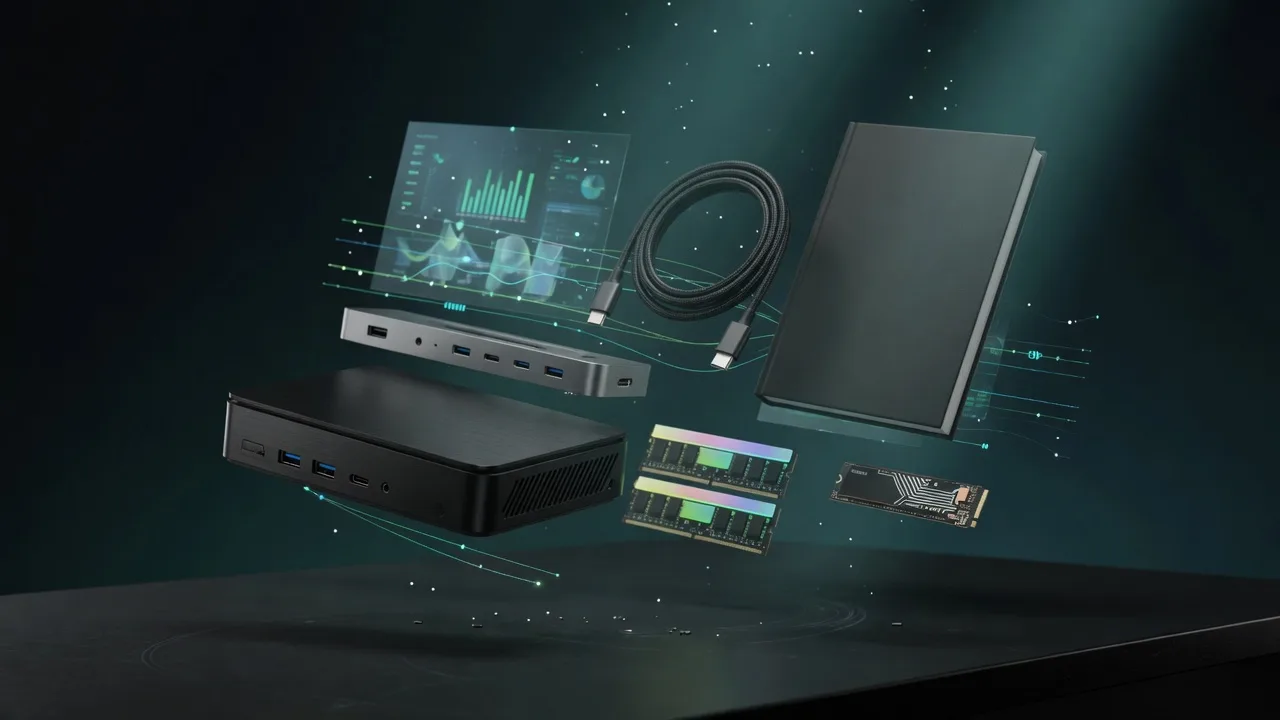
Docks, fast storage, cables, and a UPS sized for a local AI machine.
Rent this class of GPU by the hour before you buy. Live prices from RunPod and Vast.ai.
Find the break-even between buying this hardware and paying for a cloud API.
Mac vs NVIDIA for local inference, if you are still choosing a platform.