- Services
Advertising disclosure: we earn commissions when you shop through the links below.
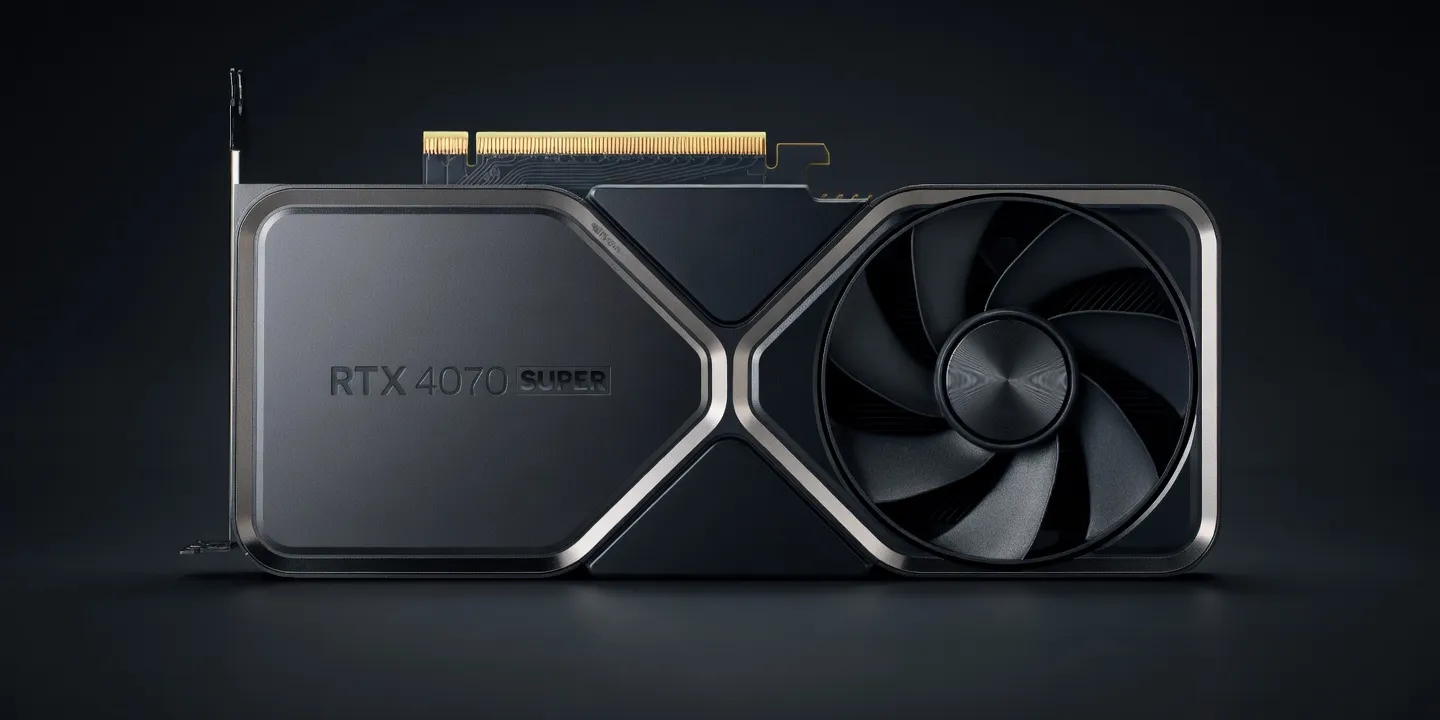
Popular mid-range Ada Lovelace GPU with 7,168 CUDA cores and 12GB GDDR6X. Exceptional 1440p performance and a strong option for running 7B models locally.
12 GB is the modern minimum for usable local LLMs. Comfortable with 7B at FP16 or 13B at Q4; anything bigger pushes context windows down to single-digit thousands. Pricing puts it well above average on raw compute-per-dollar, which matters more than peak FLOPS for steady inference loads.
Generated from this product’s spec sheet. Editor reviews refine it over time.
The NVIDIA GeForce RTX 4070 SUPER is a high-efficiency mid-range GPU built on the Ada Lovelace architecture (AD104). While marketed primarily as a consumer gaming card, it has become a staple for AI engineers and researchers looking for a cost-effective entry point into local AI development. Positioned as a significant upgrade over the base 4070, the SUPER variant provides 20% more CUDA cores, making it a formidable choice for local LLM inference, computer vision tasks, and agentic workflow prototyping.
For practitioners building with local AI agents, the RTX 4070 SUPER represents the "efficiency sweet spot." It delivers 75.8 TFLOPS of FP16 performance and a massive 606 TOPS of INT8 compute via its 4th-generation Tensor Cores. While its 12GB VRAM buffer limits the scale of models it can host, its high memory bandwidth of 504 GB/s ensures that for models that do fit, token generation is exceptionally fast. In the current market, it competes directly with the AMD Radeon RX 7900 GRE and NVIDIA’s own RTX 4070 Ti SUPER; however, NVIDIA’s superior software ecosystem (CUDA, TensorRT, Triton) makes the 4070 SUPER the preferred choice for AI development.
When evaluating the NVIDIA GeForce RTX 4070 SUPER for AI, raw compute is only half the story. In AI workloads, memory bandwidth is often the primary bottleneck for inference, while VRAM capacity dictates the maximum parameter count of the models you can load.
The 4070 SUPER features 7,168 CUDA cores and 224 4th-generation Tensor Cores. These Tensor Cores are specifically designed to accelerate deep learning operations, supporting advanced data types like FP8 and BF16. Built on the TSMC 4N process, the card is remarkably power-efficient with a 220W TDP. This allows it to be deployed in standard workstations without requiring specialized cooling or high-wattage power supplies, making it one of the best NVIDIA GPUs for running AI models locally in small-form-factor builds.
The 12GB of GDDR6X VRAM on a 192-bit bus provides 504 GB/s of bandwidth. For AI inference performance, this bandwidth determines how quickly the weights can be moved from memory to the compute units. Compared to the 12GB RTX 3060, the 4070 SUPER offers significantly faster throughput, though it shares the same VRAM ceiling. If your workload involves processing large batches of images or high-throughput text generation, the 4070 SUPER provides a meaningful performance delta over previous-generation 12GB cards.
The NVIDIA GeForce RTX 4070 SUPER VRAM for large language models is the defining constraint for practitioners. With 12GB of VRAM, this card is the gold standard for running 7B and 8B parameter models with high precision or larger models with aggressive quantization.
For a 7B model at Q4 quantization using llama.cpp or ExLlamaV2, users can expect:
This speed is ideal for real-time agentic workflows where latency is critical for tool-use and multi-step reasoning.
The 4070 SUPER is categorized as "Best for Computer Vision" because its 12GB buffer is more than sufficient for running multiple concurrent streams of YOLOv8/v10, or for fine-tuning Stable Diffusion XL (SDXL) via LoRA. For image generation, the 4070 SUPER can generate a 1024x1024 SDXL image in under 5 seconds using TensorRT acceleration.
For developers building local AI agents, the 4070 SUPER is the entry-level professional choice. It provides enough headroom to run a local LLM (like Llama 3) alongside a vector database (like ChromaDB or Weaviate) and an orchestration framework (like LangChain or AutoGPT).
If you are moving beyond cloud-based APIs and want to experiment with local LLM inference performance, this card provides the best price-to-performance ratio in the $599 MSRP bracket. It allows for experimentation with RAG (Retrieval-Augmented Generation) without the latency of the cloud.
Because of its 220W TDP and high INT8 throughput, the 4070 SUPER is an excellent proxy for developing models intended for edge deployment. Engineers can optimize their models using TensorRT on this card before deploying to Jetson Orin or smaller industrial PCs.
While the 4070 SUPER is an inference powerhouse, it is not intended for training large models from scratch. However, it is highly capable of Parameter-Efficient Fine-Tuning (PEFT). Using techniques like QLoRA, you can fine-tune an 8B parameter model on a single 4070 SUPER within a few hours.
The 4060 Ti 16GB offers more VRAM, which allows for running larger models (like a 14B or 20B model at Q4). However, the 4060 Ti has a much narrower 128-bit memory bus, resulting in significantly slower token generation speeds. If your priority is model size, the 4060 Ti wins. If your priority is speed and compute for 7B/8B models or computer vision, the 4070 SUPER is the superior choice.
The Ti SUPER variant increases VRAM to 16GB and memory bandwidth to 672 GB/s. For AI practitioners, the Ti SUPER is a substantial upgrade because that extra 4GB of VRAM unlocks the ability to run 14B and 30B (quantized) models that simply will not fit on the 4070 SUPER. If your budget allows for the jump from $599 to ~$799, the Ti SUPER is generally recommended for LLM work.
While AMD’s RX 7900 GRE offers 16GB of VRAM at a similar price point, the NVIDIA GeForce RTX 4070 SUPER for AI remains the safer bet due to the CUDA ecosystem. Most libraries (vLLM, AutoGPTQ, BitsAndBytes) are built for CUDA first. While ROCm (AMD's equivalent) is improving, NVIDIA remains the standard hardware for local AI agents in 2025 due to its seamless "plug-and-play" compatibility with almost every AI repository on GitHub.
The top models this device can run at 4-bit, ranked by fit and speed.
| Model | Grade | Speed | VRAM |
|---|---|---|---|
| AliceAI-Foundation-80B-A3B-Baseyandex | SS | 47.6 tok/s | 8.5 GB |
| North Mini CodeCohere | SS | 48.4 tok/s | 8.4 GB |
| Nemotron 3 Nano OmniNVIDIA | SS | 47.6 tok/s | 8.5 GB |
| Qwen3.6 35B-A3BAlibaba | SS | 47.6 tok/s | 8.5 GB |
| Qwen3.5-35B-A3BAlibaba | SS | 47.6 tok/s | 8.5 GB |
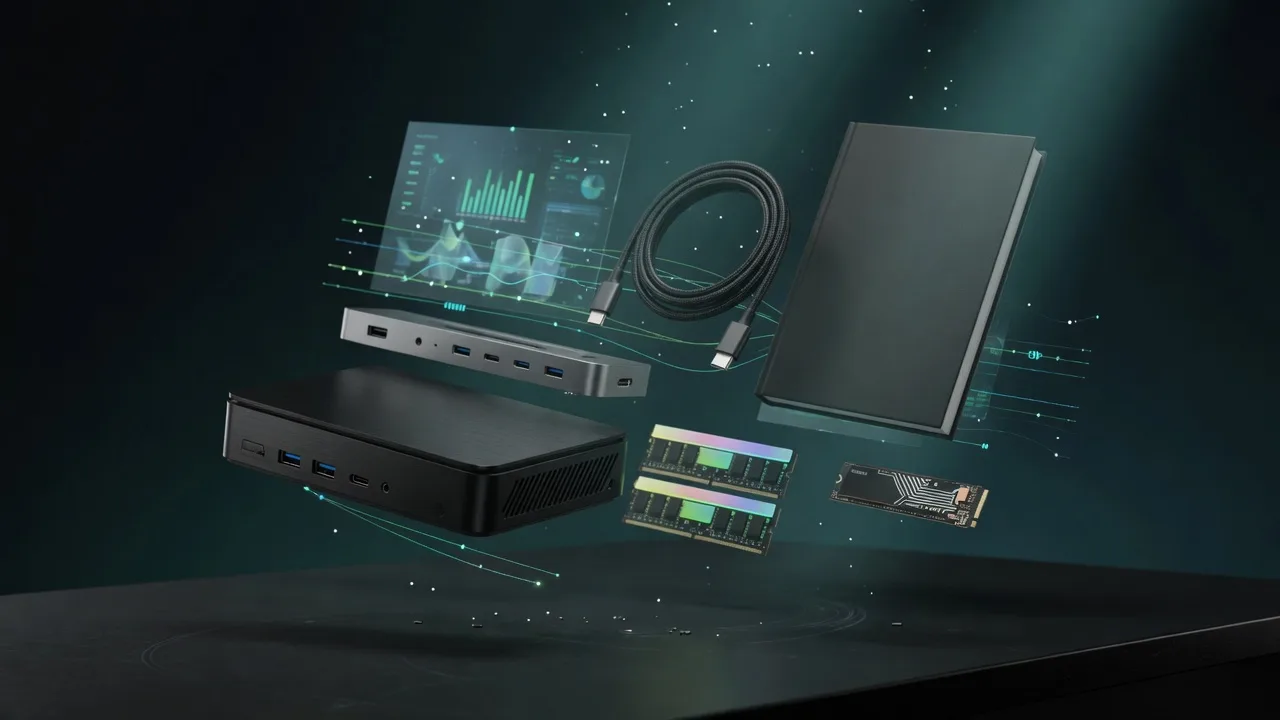
Also in Our Store
Docks, fast storage, cables, and a UPS sized for a local AI machine.

Rent this class of GPU by the hour before you buy. Live prices from RunPod and Vast.ai.
Find the break-even between buying this hardware and paying for a cloud API.
Mac vs NVIDIA for local inference, if you are still choosing a platform.