- Services
Advertising disclosure: we earn commissions when you shop through the links below.
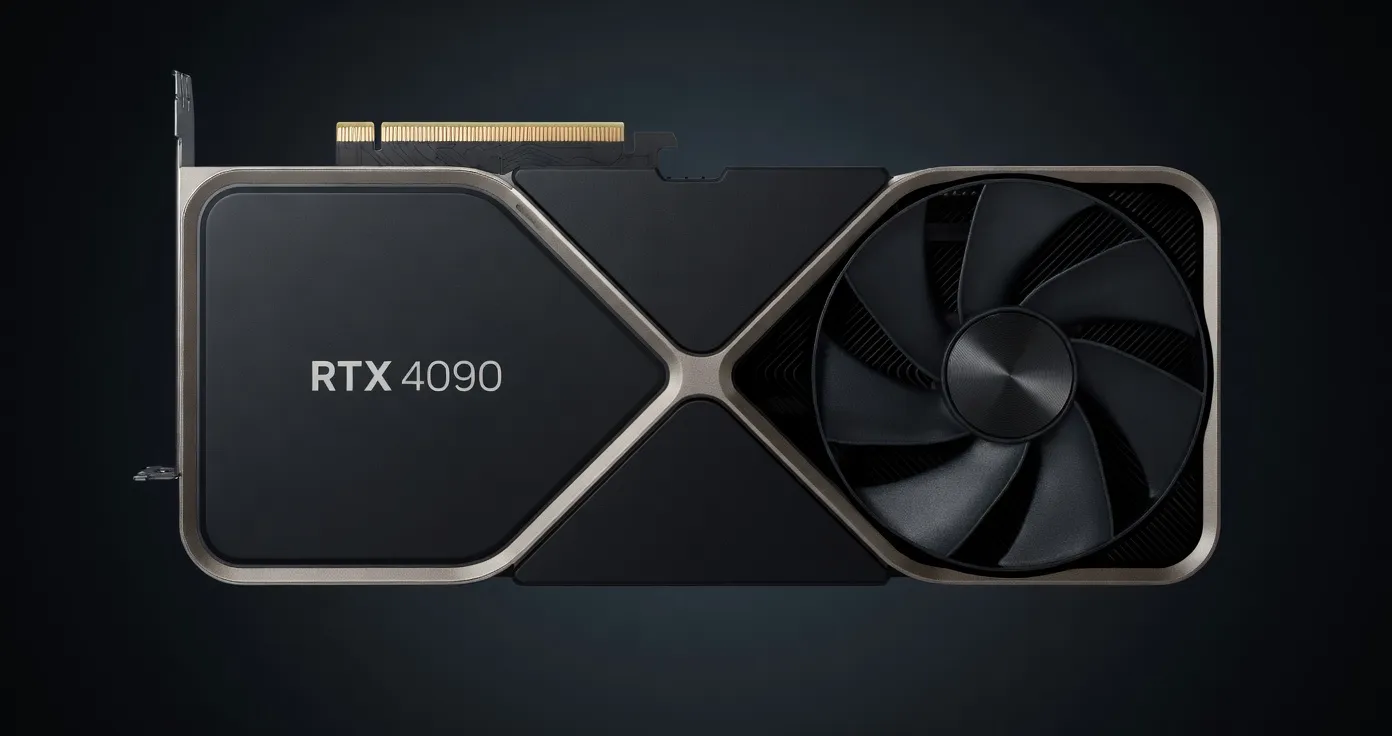
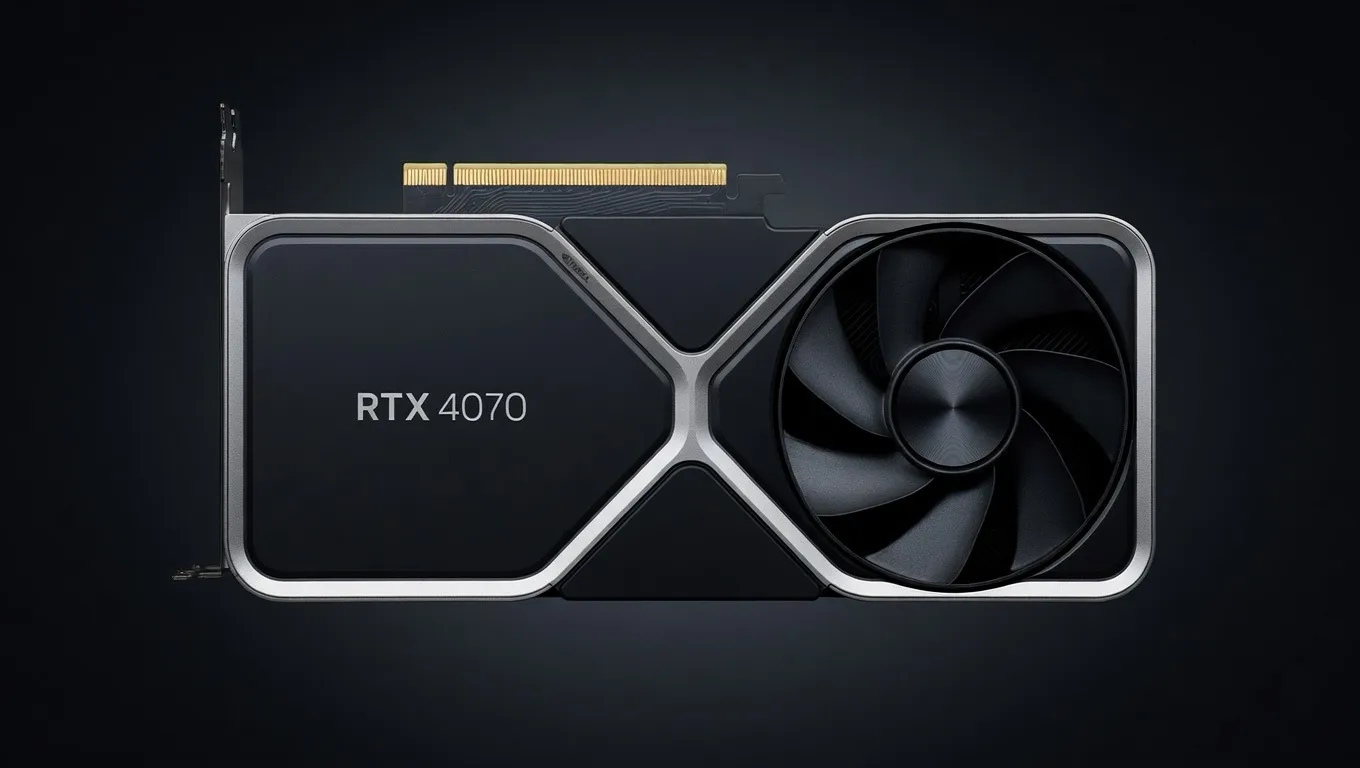
Previous-generation flagship with 24GB GDDR6X and 16,384 CUDA cores. Still extremely capable for AI inference and local LLM work, and widely available on the secondhand market.
The 24 GB tier is where most local-LLM tooling assumes you live. Strong fit for code agents, RAG, and 30B-class reasoning models without exotic quants. Pricing puts it well above average on raw compute-per-dollar, which matters more than peak FLOPS for steady inference loads.
Generated from this product’s spec sheet. Editor reviews refine it over time.
GPU Rental Price Index
From $0.34 per GPU-hour, NVIDIA GeForce RTX 4090 on RunPod.
The NVIDIA GeForce RTX 4090 Founders Edition remains the definitive benchmark for consumer-grade AI hardware. Built on the Ada Lovelace (AD102) architecture, this GPU bridged the gap between enthusiast gaming hardware and professional workstation performance. While officially discontinued by NVIDIA to make room for newer iterations, its combination of 24GB GDDR6X VRAM and massive compute density makes it the most sought-after card on the secondhand market for local AI development.
For practitioners building agentic workflows or deploying local inference servers, the 4090 FE is a high-throughput workhorse. It competes directly with professional-tier cards like the RTX 5000 Ada or the RTX 6000 Ada, offering a significantly better price-to-performance ratio for researchers who do not require ECC memory or multi-GPU NVLink support. In the context of the best NVIDIA GPUs for running AI models locally, the 4090 FE is the gold standard for single-GPU setups.
When evaluating the NVIDIA GeForce RTX 4090 Founders Edition for AI, three metrics dictate its utility: VRAM capacity, memory bandwidth, and tensor core throughput.
The 24GB GDDR6X VRAM is the critical threshold for modern LLMs. With a 1008 GB/s memory bandwidth, the 4090 FE avoids the bottlenecks common in lower-tier cards. In LLM inference, the speed at which weights are moved from VRAM to the compute cores determines the tokens per second (t/s). The 384-bit memory bus ensures that even when running near-capacity models, the generation speed remains fluid.
The card features 16,384 CUDA cores and 512 4th Gen Tensor Cores. This hardware delivers 165.2 TFLOPS of FP16 performance and a staggering 1321 TOPS of INT8 performance. For AI practitioners, this means high-speed batch processing for computer vision tasks and rapid execution of transformer-based architectures.
The Founders Edition design utilizes a premium "flow-through" cooling system, which is essential given the 450W TDP. While power-hungry, the efficiency of the TSMC 4N node means the 4090 provides more "work per watt" than the previous 30-series flagships. For local deployment, ensure your PSU is rated for at least 850W+ and your chassis allows for significant airflow.
The NVIDIA GeForce RTX 4090 Founders Edition VRAM for large language models allows for a wide range of deployment options, particularly when utilizing quantization techniques like GGUF, EXL2, or AWQ.
The 4090 FE is the best hardware for local AI agents 2025 because it comfortably fits the "sweet spot" of model sizes:
Beyond text, the 4090 FE excels at Stable Diffusion XL (SDXL) and Flux.1. With 24GB of VRAM, you can run Flux.1 [dev] or [schnell] at full resolution without tiling, and train LoRAs locally in a matter of hours. It is also highly capable for video generation models like SVD (Stable Video Diffusion).
For developers building autonomous agents, the 4090 FE provides the necessary headroom for "Chain of Thought" processing. The high NVIDIA GeForce RTX 4090 Founders Edition AI inference performance allows an agent to make multiple LLM calls in the background without the latency of cloud APIs.
While not a "training" card in the data-center sense, the 4090 is the best AI GPU for agent training at the hobbyist and prosumer level. Using techniques like QLoRA, you can fine-tune a 70B model (quantized) or a 13B model (full) on a single card.
Teams building agentic workflows often use the 4090 as a local sandbox. It allows for testing RAG (Retrieval-Augmented Generation) pipelines and vector database integrations locally before deploying to expensive A100 or H100 instances in the cloud.
The 3090 Ti also offers 24GB of VRAM, making it a popular budget choice. However, the 4090 FE provides roughly 2x the FP16 performance and features 4th Gen Tensor Cores with FP8 support, which is increasingly vital for modern inference engines like vLLM and TensorRT-LLM.
The AMD 7900 XTX also offers 24GB of VRAM at a lower price point. However, for AI development, NVIDIA remains the industry standard. The CUDA ecosystem, widespread support for bitsandbytes quantization, and native integration with PyTorch and Flash Attention 2 give the 4090 FE a significant advantage in software compatibility and "plug-and-play" usability for AI practitioners.
The 4080 Super is limited to 16GB of VRAM. For AI workloads, this is a dealbreaker for many. The extra 8GB on the 4090 FE allows for significantly larger context windows and the ability to run 30B+ parameter models that simply will not fit on 16GB cards without extreme quantization that degrades model intelligence.
The NVIDIA GeForce RTX 4090 Founders Edition remains the most capable 24GB GPU for AI for those who need maximum local compute without moving into the five-figure price bracket of enterprise silicon. For hardware for running 30B at Q4, 13B at FP16 parameter models, it is still the undisputed leader in the consumer category.
The top models this device can run at 4-bit, ranked by fit and speed.
| Model | Grade | Speed | VRAM |
|---|---|---|---|
| Mixtral 8x7B InstructMistral AI | SS | 71.4 tok/s | 11.4 GB |
| Holo4-27BHcompany | SS | 47.6 tok/s | 17.0 GB |
| Xing4.0-29B-A4BChina Telecom AI | SS | 72.4 tok/s | 11.2 GB |
| Gemma 4 26B-A4B ITGoogle | SS | 73.7 tok/s | 11.0 GB |
| DiffusionGemma 26B-A4BGoogle | SS | 77.4 tok/s | 10.5 GB |
Also in Our Store
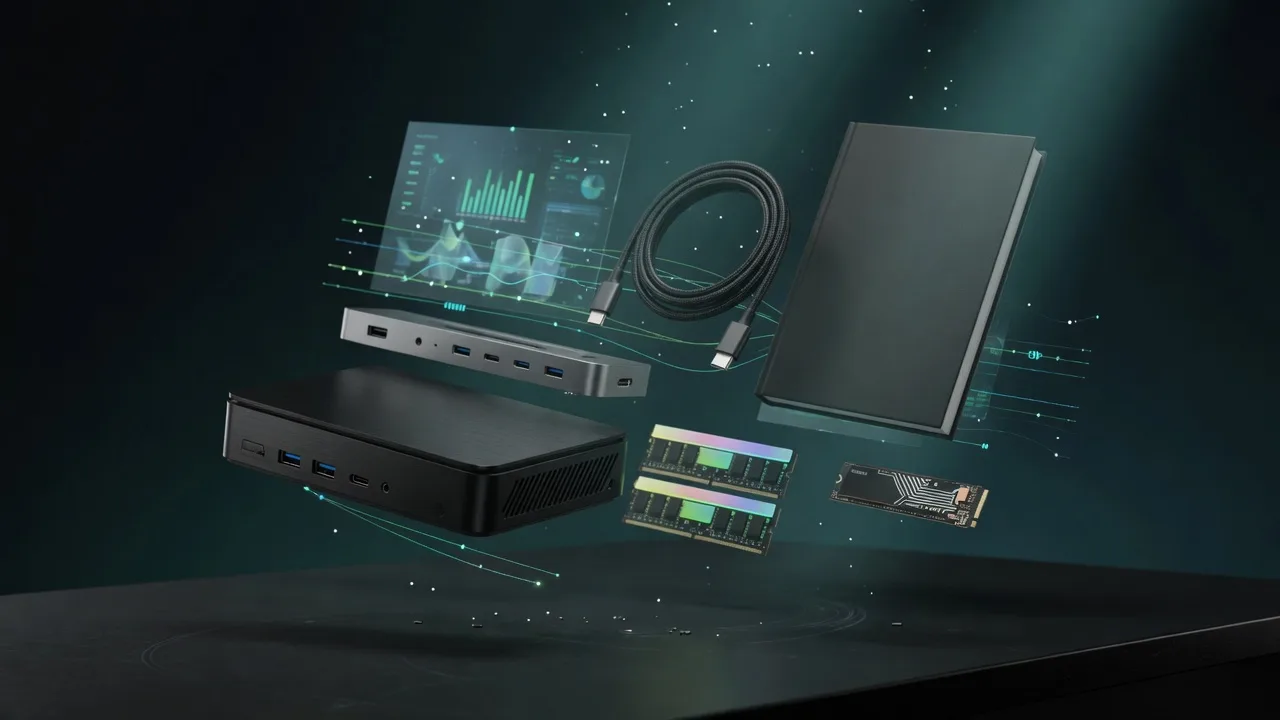
Docks, fast storage, cables, and a UPS sized for a local AI machine.
Rent this class of GPU by the hour before you buy. Live prices from RunPod and Vast.ai.
Find the break-even between buying this hardware and paying for a cloud API.
Mac vs NVIDIA for local inference, if you are still choosing a platform.