- Services
Advertising disclosure: we earn commissions when you shop through the links below.
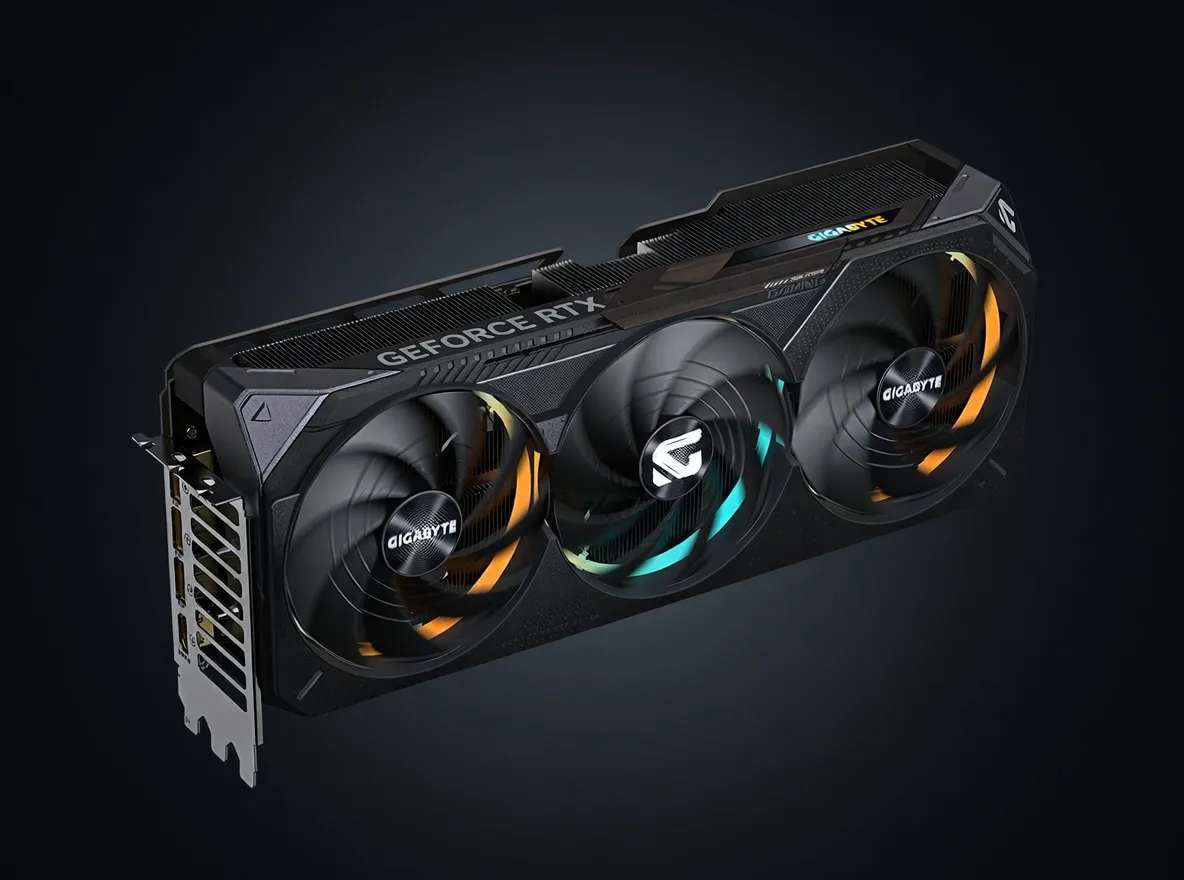
Upper-mid-range Blackwell GPU with 16GB GDDR7, 8,960 CUDA cores, and excellent 1440p/4K performance. Shares the GB203 die with the RTX 5080 at a lower price point.
Good balance for indie developers running local copilots and chat. 30B+ models are reachable but only with aggressive quantization and short context. Pricing puts it well above average on raw compute-per-dollar, which matters more than peak FLOPS for steady inference loads.
Generated from this product’s spec sheet. Editor reviews refine it over time.
The NVIDIA GeForce RTX 5070 Ti represents a strategic pivot in NVIDIA’s Blackwell consumer lineup, specifically designed to bridge the gap between high-end gaming hardware and professional-grade AI development tools. Built on the GB203 architecturethe same silicon powering the more expensive RTX 5080, the 5070 Ti is a premium, upper-mid-range GPU that offers a high-bandwidth entry point for local AI inference. At an MSRP of $749, it targets the "prosumer" sweet spot where VRAM capacity and memory throughput become the primary bottlenecks for agentic workflows.
For AI engineers and ML researchers, the RTX 5070 Ti is significant because it introduces GDDR7 memory to the 70-series tier. This transition significantly elevates memory bandwidth to 896 GB/s, a critical metric for autoregressive LLM inference where the speed of token generation is often limited by how fast data can move from VRAM to the compute cores. While positioned as a consumer card, its 16GB VRAM and 1406 INT8 TOPS make it one of the best NVIDIA GPUs for running AI models locally in a workstation environment without the five-figure investment required for H100 or H200 Enterprise silicon.
The technical profile of the RTX 5070 Ti is defined by its efficiency and high-density compute capabilities. Leveraging the TSMC 4N process node, the Blackwell architecture delivers a substantial jump in FP16 performance (87.6 TFLOPS) and 5th Generation Tensor Cores optimized for the latest transformer architectures.
The most critical spec for AI workloads is the 16GB GDDR7 VRAM on a 256-bit bus. In the context of "NVIDIA GeForce RTX 5070 Ti VRAM for large language models," this 16GB buffer is the minimum threshold for serious local development. The move to GDDR7 provides a nearly 900 GB/s bandwidth, which directly translates to higher tokens per second (t/s) compared to the previous generation’s GDDR6X.
With 8,960 CUDA cores and 280 Tensor Cores, the 5070 Ti excels in parallelized tasks.
The card carries a 300W TDP, requiring a 750W PSU. It utilizes the PCIe 5.0 x16 interface, ensuring that data transfer between the CPU and GPU does not become a bottleneck during the loading of large model weights or multi-modal data streams.
The RTX 5070 Ti is optimized for "hardware for running 13B at Q4, 7B at FP16 parameter models." For practitioners, this means it handles the current generation of open-weights models with high efficiency.
The RTX 5070 Ti is tagged as Best for Computer Vision due to its high TFLOPS and Tensor Core count. It can run:
The NVIDIA GeForce RTX 5070 Ti for AI is best suited for scenarios where low latency and local data privacy are paramount.
For developers building local AI agents in 2025, the 5070 Ti provides the necessary headroom for Retrieval-Augmented Generation (RAG). The 16GB VRAM allows you to host an LLM (like Llama 3 8B) alongside a vector database and an embedding model (like BGE-Large) on a single card.
Engineers building wrappers or agentic workflows can use this card to test and iterate locally before deploying to the cloud. It is the ideal "sandbox" GPU, powerful enough to simulate production environments without the cost of cloud-based A100 instances.
Because of its standard PCIe form factor and 300W TDP, it can be integrated into standard rackmount servers or edge workstations for on-site inference in industries like manufacturing, healthcare, or security where data cannot leave the local network.
While the 5070 Ti is an inference powerhouse, it is limited for full-scale model training. However, it is excellent for LoRA fine-tuning of 7B and 8B models. If your workflow involves fine-tuning small models on proprietary datasets to act as specialized agents, this card is a cost-effective solution.
When evaluating the best AI chip for local deployment, the RTX 5070 Ti sits in a competitive bracket.
The 5080 offers more CUDA cores and a higher power limit, but both share the same 16GB VRAM capacity. For many AI inference tasks, the 5070 Ti provides nearly identical model compatibility at a significantly lower MSRP ($749 vs. $999+). Unless your workload is compute-bound (e.g., heavy video rendering or massive batch training), the 5070 Ti offers better price-to-performance for LLM inference.
The AMD RX 7900 XT offers 20GB of VRAM at a similar price point, which allows for larger models (up to 20B parameters). However, NVIDIA remains the industry standard for AI development due to the CUDA ecosystem. Most libraries (vLLM, AutoGPTQ, TensorRT-LLM) are optimized first for NVIDIA. The 5070 Ti’s 1406 INT8 TOPS and superior software support make it the more reliable choice for practitioners who need "plug-and-play" compatibility with the latest GitHub repositories and agent frameworks.
The previous generation 4070 Ti Super also featured 16GB of VRAM, but the 5070 Ti’s move to the Blackwell architecture and GDDR7 memory provides a massive jump in memory bandwidth (896 GB/s vs 672 GB/s). This results in a tangible increase in tokens per second for local LLMs, making the 5070 Ti the superior choice for high-speed agentic workflows.
The top models this device can run at 4-bit, ranked by fit and speed.
| Model | Grade | Speed | VRAM |
|---|---|---|---|
| Mixtral 8x7B InstructMistral AI | SS | 63.5 tok/s | 11.4 GB |
| AliceAI-Foundation-80B-A3B-Baseyandex | SS | 84.5 tok/s | 8.5 GB |
| DiffusionGemma 26B-A4BGoogle | SS | 68.8 tok/s | 10.5 GB |
| Gemma 4 26B-A4B ITGoogle | SS | 65.5 tok/s | 11.0 GB |
| Xing4.0-29B-A4BChina Telecom AI | SS | 64.4 tok/s | 11.2 GB |
Also in Our Store
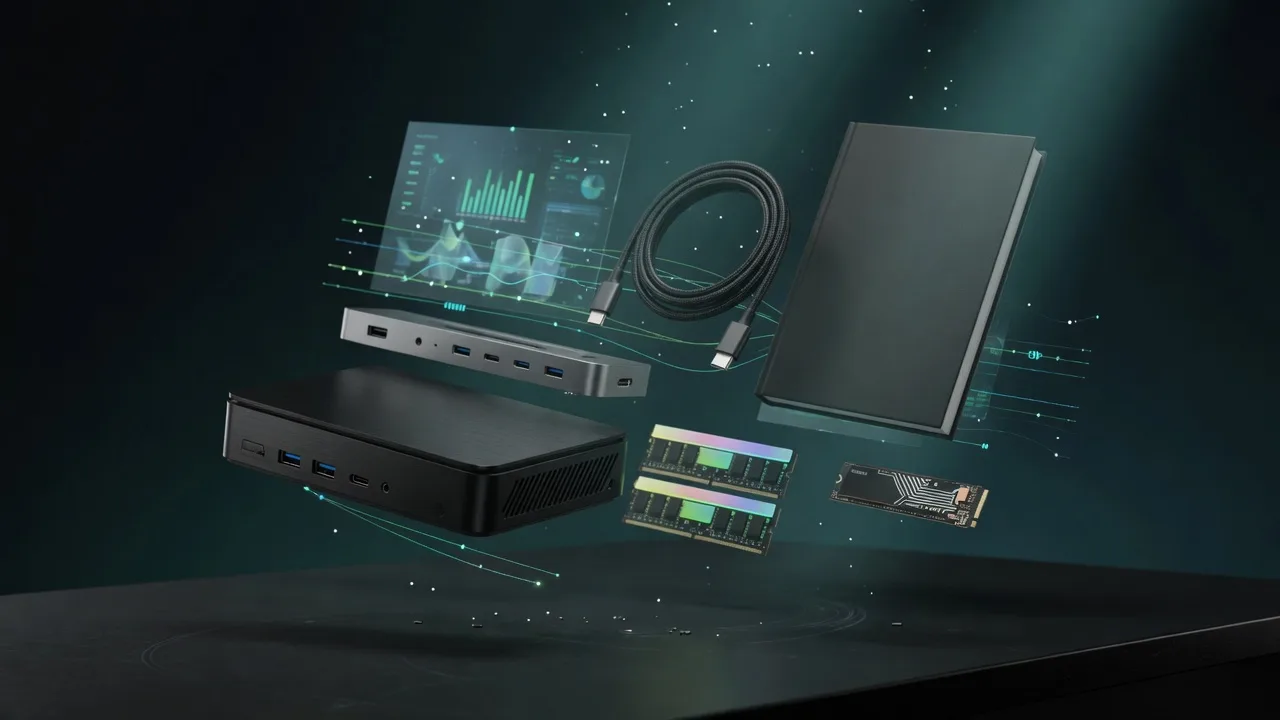
Docks, fast storage, cables, and a UPS sized for a local AI machine.

Rent this class of GPU by the hour before you buy. Live prices from RunPod and Vast.ai.
Find the break-even between buying this hardware and paying for a cloud API.
Mac vs NVIDIA for local inference, if you are still choosing a platform.