- Services

SenseTime released and open-sourced SenseNova U1.6 on 2026-11-24, an 8B image generation model in its U series that unifies understanding and generation. It adds native image self-correction: the model drafts an image, checks it against the original prompt, and regenerates to fix text errors such as typos, garbled characters and wrong numbering. SenseTime reports about a 10% aesthetic score gain for U1.6 Lite over U1.5 Lite, and UltraTextBench dense infographic scores rising from 86.04 in a single pass to 92.28 with self-correction. Weights are open, and the model is available in ComfyUI and in SenseTime products such as SenseNova Studio and SenseNova Token Plan.
A situational 8B-parameter dense image generator from SenseTime. Treat the modality benchmarks above as the leading indicator of fit — composite scoring across modalities is still maturing. Newly released, so production-readiness is still being shaken out.
Generated from this model’s benchmarks and ranking signals. Editor reviews refine it over time.
No benchmark data available for this model yet.
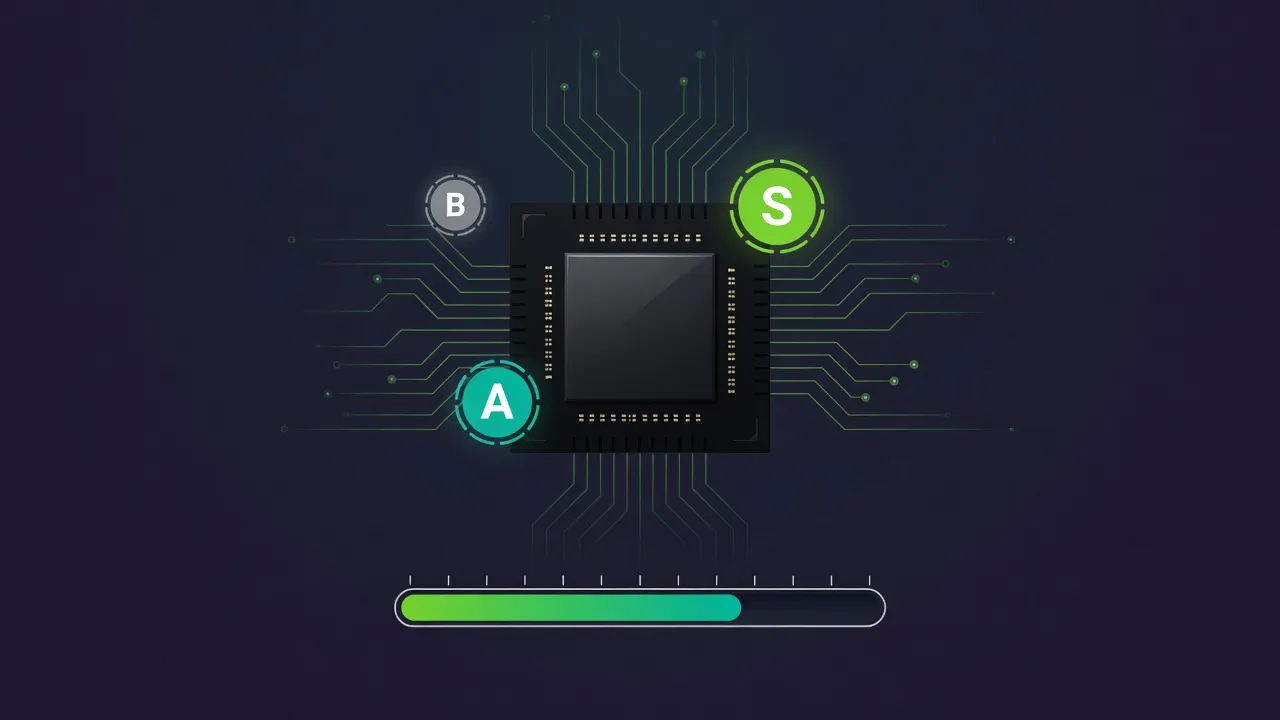
The top devices for this model at 4-bit, ranked by fit and speed.
| Device | Grade | VRAM |
|---|---|---|
| ACEMAGIC M1A Pro (i9-13900HK + ARC A770)ACEMAGIC | SS | 5.4 GB |
| Acer Veriton GN100 AI MiniAcer | SS | 5.4 GB |
| AI TOP ATOM ATAGB10-9003Gigabyte | SS | 5.4 GB |
| AMD Instinct MI300XAMD | SS | 5.4 GB |
| AMD Instinct MI325XAMD | SS | 5.4 GB |

Explore the Provider
Aggregate stats, leaderboard, release timeline, and benchmark coverage across every SenseTime model we track.
Benchmark data sourced from: Hugging Face, Arena.ai, Artificial Analysis.
SenseNova U1.6 is an open-weights 8B foundation model developed by SenseTime, designed around a unified vision-and-language framework called NEO-unify. Rather than separating visual encoding, text processing, and diffusion rendering into disconnected pipelines, SenseTime built U1.6 as an integrated 8B dense model capable of understanding, generating, and editing visual content in an interleaved fashion. Released in late 2026 under a permissive open license, the model establishes a distinct niche among open-weights systems by introducing native image self-correction: it generates a preliminary draft, reviews the visual output against the original prompt, detects discrepancies or corrupted text, and regenerates specific segments to fix typos, misaligned numbering, and garbled glyphs.
For engineers and local deployment practitioners evaluating a local AI model 8B parameters 2026 release, SenseNova U1.6 offers a compelling alternative to traditional decoupled text-to-image pipelines. By pairing dense 8B parameters with an encoder-free and VAE-free visual path, the model drastically reduces the overhead of passing intermediate embeddings between multiple networks. Its core strength lies in complex graphic rendering: posters, multi-lingual typographic designs, and dense infographics where standard diffusion models frequently drop characters or hallucinate nonsensical letterforms.
SenseNova U1.6 abandons the traditional multi-stage stack (such as a T5 text encoder paired with an independent diffusion transformer and a separate VAE decoder) in favor of the unified NEO-unify paradigm. It operates as an 8B dense model where the same network processes tokenized prompt representations and direct visual tokens.
Key architectural components include:
Because it is a dense 8B model, all parameters participate in every forward pass. This creates predictable compute requirements and uniform memory bandwidth consumption during generation, avoiding the uneven execution profiles associated with mixture-of-experts (MoE) routing.
SenseNova U1.6 targets production environments requiring both aesthetic polish and semantic precision. Rather than optimizing purely for generic photo realism, SenseTime trained specialized aesthetic feedback sub-models targeting distinct visual disciplines.
The standout capability of U1.6 is rendering legible, complex typography inside complex visual compositions. On the UltraTextBench benchmark for dense infographics, standard single-pass generation scores 86.04. When native self-correction is toggled, scores jump to 92.28, representing a 7% relative accuracy boost. This makes U1.6 well-suited for:
SenseTime calibrated U1.6 to respond directly to technical photography instructions. The model interprets shutter-speed parameters, dynamic motion blur, macro framing, low-angle perspectives, retro film grains, and specific lens profiles without relying heavily on generic quality buzzwords.
In internal benchmarks against its predecessor, SenseNova U1.5 Lite, the U1.6 release achieved an approximate 10% aesthetic score improvement. The model exhibits distinct handling of expressive strokes, Chinese ink washes, gouache textures, and felt-material styles, avoiding the plastic smoothing typical of over-aligned latent models.
To run SenseNova U1.6 locally, practitioners must account for the unified 8B architecture, which acts both as an LLM and a direct visual generator. The model is natively supported in ComfyUI (version 0.46.0 and above) via custom integration nodes, and standard inference scripts support raw PyTorch, vLLM forks, and GGUF runtimes.
Memory consumption depends on whether you run unquantized BF16 weights or compressed formats. The figures below reflect model weight allocation plus the runtime visual activation buffers required for standard 1024x1024 generation.
| Precision / Quantization | Model Weight Footprint | Minimum VRAM (Generation) | Recommended VRAM (Self-Correction) | Recommended Hardware |
|---|---|---|---|---|
| BF16 (Full Precision) | ~16 GB | 20 GB | 24 GB | RTX 3090, RTX 4090, A5000 (24 GB) |
| FP8 / INT8 (W8A8) | ~8.5 GB | 12 GB | 16 GB | RTX 4070 Ti Super, RTX 4080 (16 GB) |
| GGUF Q6_K | ~6.8 GB | 10 GB | 12 GB | RTX 3060 (12 GB), RTX 4070 |
| GGUF Q4_0 / Q4_K_M | ~4.8 GB | 8 GB | 10 GB | RTX 3060, Apple M2/M3/M4 (16 GB unified) |
Running self-correction increases activation overhead because the system retains the primary generation state while calculating coordinate bounding boxes and triggering the repair pass. If you plan to run native self-correction loops at native resolutions, plan for at least 16 GB of VRAM.
The best quantization for SenseNova U1.6 depends on your latency and memory budget:
The best GPU for SenseNova U1.6 in an unquantized single-card workstation is an NVIDIA GeForce RTX 4090 (24 GB) or an RTX 5000-class workstation card. On an RTX 4090 running the FP8 weights paired with the distilled 8-step LoRA, generation latencies typically hit 1.8 to 2.5 seconds per 1024x1024 frame. Activating the full self-correction pass approximately doubles generation time, landing in the 4.0 to 5.5 second range.
For Apple Silicon users, machines equipped with 32 GB or more of unified memory (such as an M3 Max or M4 Max) run the GGUF Q6_K variant via llama.cpp or MLX-based ComfyUI wrappers with reliable throughput. When measuring base text token processing during the comprehension stage, SenseNova U1.6 performance delivers roughly 45 to 60 tokens per second on mid-tier hardware, ensuring the visual verification step does not introduce a massive compute bottleneck.
If your focus is evaluating the model's text-comprehension mechanics prior to building graphical workflows, lightweight runtimes like Ollama provide the fastest route to inspect prompt ingestion and tokenizer behavior. For full image synthesis and self-correction workflows, ComfyUI remains the recommended host environment.
To understand where SenseNova U1.6 fits in a production stack, it helps to compare it against prominent alternatives in the 8B-to-12B parameter range.
Black Forest Labs' FLUX.1 models (12B parameters) represent the open standard for pure latent diffusion quality.
Stable Diffusion 3.5 Medium is an 8B parameter diffusion model designed for consumer accessibility.
Cheapest current cloud rentals with at least 5 GB VRAM, refreshed hourly.
Advertising disclosure: we earn commissions when you shop through the links below.
| Option | Cost / GPU-hour |
|---|---|
NVIDIA GeForce RTX 4060 TiVast.ai · Spot · 8 GB VRAM | $0.04 |
NVIDIA GeForce RTX 5060 TiVast.ai · Spot · 16 GB VRAM | $0.08 |
NVIDIA RTX A4000Vast.ai · Spot · 16 GB VRAM | $0.08 |
NVIDIA GeForce RTX 3080 TiVast.ai · Spot · 12 GB VRAM | $0.08 |
NVIDIA GeForce RTX 4060 TiVast.ai · On-Demand · 8 GB VRAM | $0.08 |
Per-GPU rate across RunPod, the Vast.ai marketplace, DigitalOcean, and Vultr.
Spot tier is interruptible. Plan for restarts when comparing against on-demand prices.