- Services
Advertising disclosure: we earn commissions when you shop through the links below.
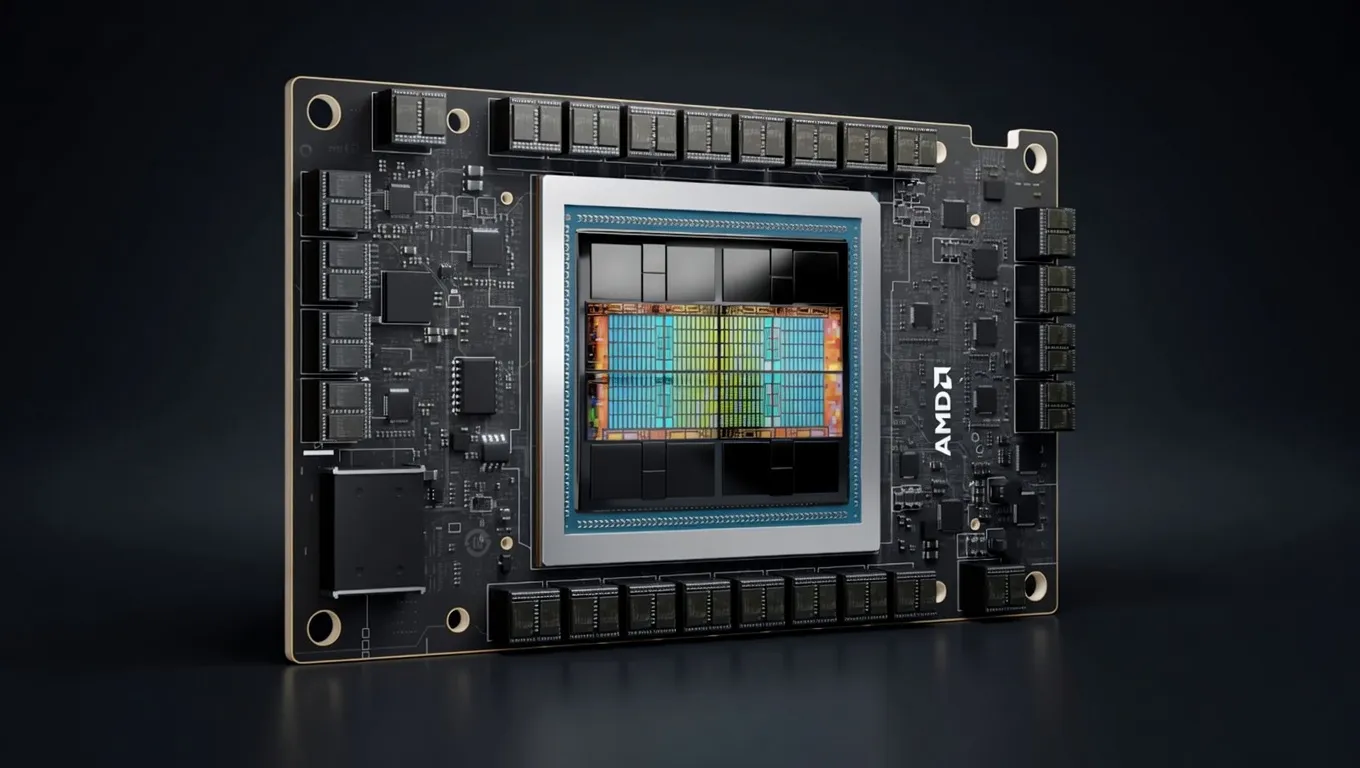
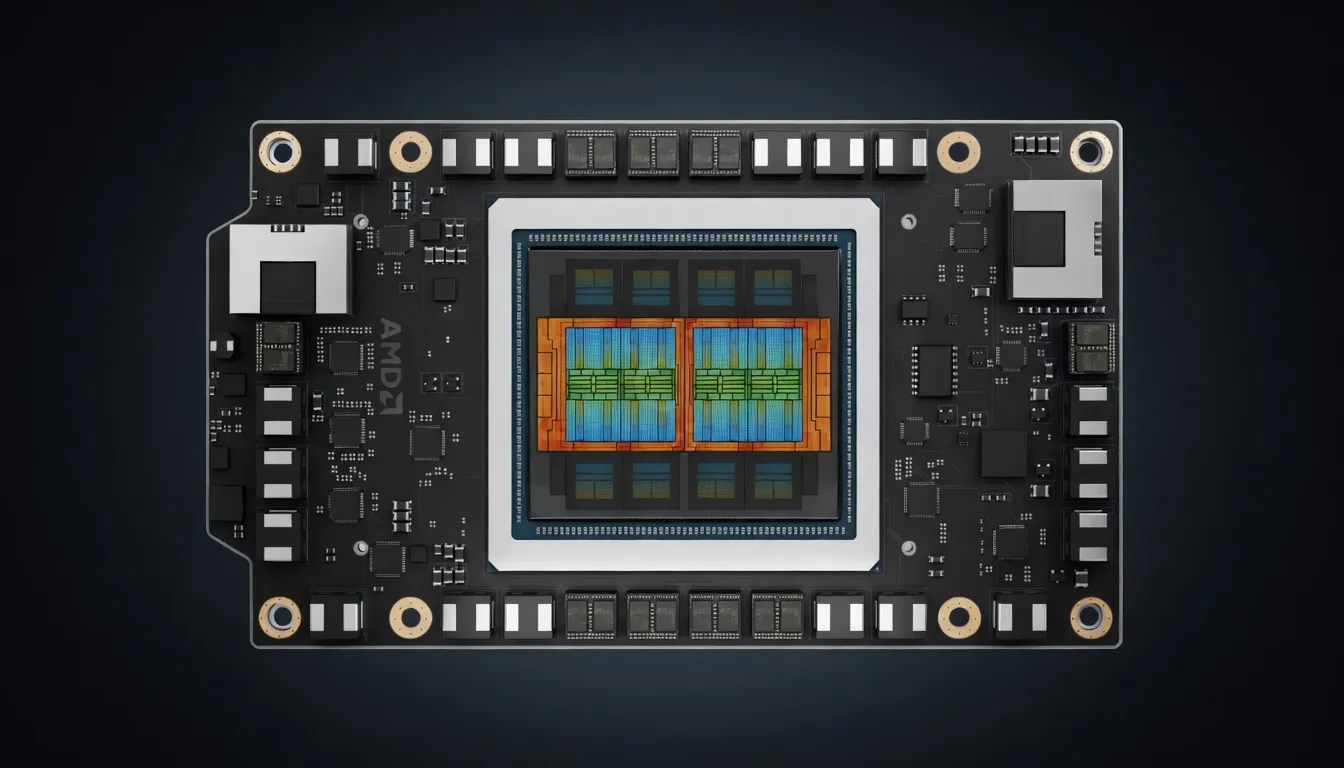
Upgraded CDNA 3 accelerator with 256GB HBM3e and 6 TB/s bandwidth. A memory-focused upgrade over the MI300X for serving the largest frontier models.
Sized for production serving of 70B–200B class models at full or lightly-quantized precision. Overkill for a homelab; right call when the workload pays for itself in token volume. Notably efficient for its compute class — strong perf-per-watt makes it a natural pick for always-on inference.
Generated from this product’s spec sheet. Editor reviews refine it over time.
GPU Rental Price Index
From $3.8 per GPU-hour, AMD Instinct MI325X on DigitalOcean.
The AMD Instinct MI325X is a high-performance data center GPU designed specifically to address the memory bottleneck in frontier-scale AI inference. Built on the CDNA 3 architecture, the MI325X is an iterative but significant upgrade over the MI300X, specifically targeting the deployment of massive Large Language Models (LLMs) and complex agentic workflows. While NVIDIA’s H100 and H200 dominate much of the market conversation, the MI325X positions itself as a superior alternative for memory-intensive workloads, offering the highest VRAM capacity currently available in a single OAM module.
For engineers and researchers, the MI325X represents a shift toward "memory-first" hardware. As models like Llama 3.1 405B and DeepSeek-V3 push the boundaries of what can fit on a single node, the MI325X’s 256GB of HBM3e provides the headroom necessary to serve these models with higher precision and longer context windows. It is designed for enterprise production environments and high-throughput inference servers where minimizing the number of GPUs required to host a model directly impacts TCO (Total Cost of Ownership).
The defining characteristic of the AMD Instinct MI325X for AI is its massive memory subsystem. With 256GB of HBM3e memory and a staggering 6.0 TB/s of memory bandwidth, this GPU is engineered to eliminate the I/O bottlenecks that typically throttle LLM token generation. In inference, the "prefill" stage is often compute-bound, while the "decode" stage (generating tokens one by one) is almost entirely memory-bandwidth bound. The 6 TB/s bandwidth ensures that even the largest models maintain high tokens-per-second (TPS) during sustained generation.
When evaluating NVIDIA vs AMD for AI inference, the MI325X holds a distinct advantage in raw capacity. For comparison, the NVIDIA H200 offers 141GB of HBM3e. This means a single MI325X can hold nearly double the parameters or KV cache of an H200. With 1307.4 TFLOPS of FP16 compute, the MI325X provides the raw horsepower needed for both training and high-throughput inference, making it one of the best AMD GPUs for running AI models locally or in private clouds. However, practitioners must account for the 1000W TDP, which requires specialized liquid-cooled or high-airflow rack infrastructure.
The AMD Instinct MI325X is the premier 256GB GPU for AI, enabling the execution of models that previously required multi-GPU clusters. Its primary value proposition is the ability to run 180B+ parameter models at FP16 on a single GPU.
For AMD Instinct MI325X AI inference performance, the sweet spot for many practitioners is using FP8 or INT8 quantization. With 2614.9 TOPS of INT8 performance, the MI325X can drive incredible throughput for high-concurrency applications. Because the VRAM is so large, you can often avoid heavy 4-bit quantization, opting instead for 8-bit or 16-bit weights to preserve model intelligence and "vibes" while still maintaining high speed.
The MI325X is not a consumer-grade card; it is a specialized tool for AMD AI development at scale.
For organizations building LLM-powered products, the MI325X is a high-throughput workhorse. It is ideal for serving API endpoints where low latency and high concurrency are required. The 256GB VRAM allows for larger batch sizes, which is critical for maximizing the utilization of the 1307.4 TFLOPS of compute.
The best hardware for local AI agents 2025 must account for long-term memory and tool-use overhead. Agents often require large context windows to store conversation history and documentation. The MI325X's memory capacity allows agents to maintain massive "active memories" in the KV cache, preventing the performance degradation often seen when agents are forced to truncate their context.
While optimized for inference, the MI325X is an exceptional AI GPU for agent training and fine-tuning. The 256GB buffer allows for fine-tuning 70B+ parameter models using techniques like LoRA or QLoRA with very large batch sizes or longer sequence lengths than are possible on 80GB or 141GB cards.
When choosing the best AI chip for local deployment or data center expansion, the MI325X is typically compared against the NVIDIA H200 and the previous-generation MI300X.
The H200 is the industry standard, supported by the mature CUDA ecosystem. However, the MI325X offers significantly more VRAM (256GB vs 141GB) and higher memory bandwidth (6 TB/s vs 4.8 TB/s). If your workload is limited by memory capacity, such as running 405B models or massive batches, the MI325X is the superior hardware choice. The trade-off remains the software stack; while AMD’s ROCm 6.x has made massive strides in compatibility with PyTorch and vLLM, CUDA still offers a more "plug-and-play" experience for niche kernels.
The MI325X is a direct evolution of the MI300X. While the compute architecture remains CDNA 3, the upgrade from HBM3 to HBM3e increases the memory capacity from 192GB to 256GB and the bandwidth from 5.3 TB/s to 6.0 TB/s. For practitioners already on the MI300X platform, the MI325X is a drop-in upgrade that provides roughly 1.3x more memory headroom, allowing for even larger model deployments on the same OAM infrastructure.
The AMD Instinct MI325X is ultimately the most capable "big memory" GPU on the market. For those prioritizing AMD Instinct MI325X VRAM for large language models, it provides a unique capability to run the world's most complex models with fewer nodes and higher precision than any other single-GPU solution.
The top models this device can run at 4-bit, ranked by fit and speed.
| Model | Grade | Speed | VRAM |
|---|---|---|---|
| Llama 3.1 70B InstructMeta | SS | 42.8 tok/s | 112.8 GB |
| Llama 3.3 70B InstructMeta | SS | 42.8 tok/s | 112.8 GB |
| DeepSeek-V4-FlashDeepSeek | SS | 43.1 tok/s | 112.0 GB |
| Nvidia Nemotron 3 SuperNVIDIA | SS | 46.7 tok/s | 103.5 GB |
| MiMo-V2.6-Flash-RLXiaomi MiMo | SS | 37.4 tok/s | 129.2 GB |
Among 6 similar devices, the AMD Instinct MI325X ranks #2 for memory and #2 for memory bandwidth.
Also in Our Store
Docks, fast storage, cables, and a UPS sized for a local AI machine.

Rent this class of GPU by the hour before you buy. Live prices from RunPod and Vast.ai.

Find the break-even between buying this hardware and paying for a cloud API.
Mac vs NVIDIA for local inference, if you are still choosing a platform.