- Services
Advertising disclosure: we earn commissions when you shop through the links below.
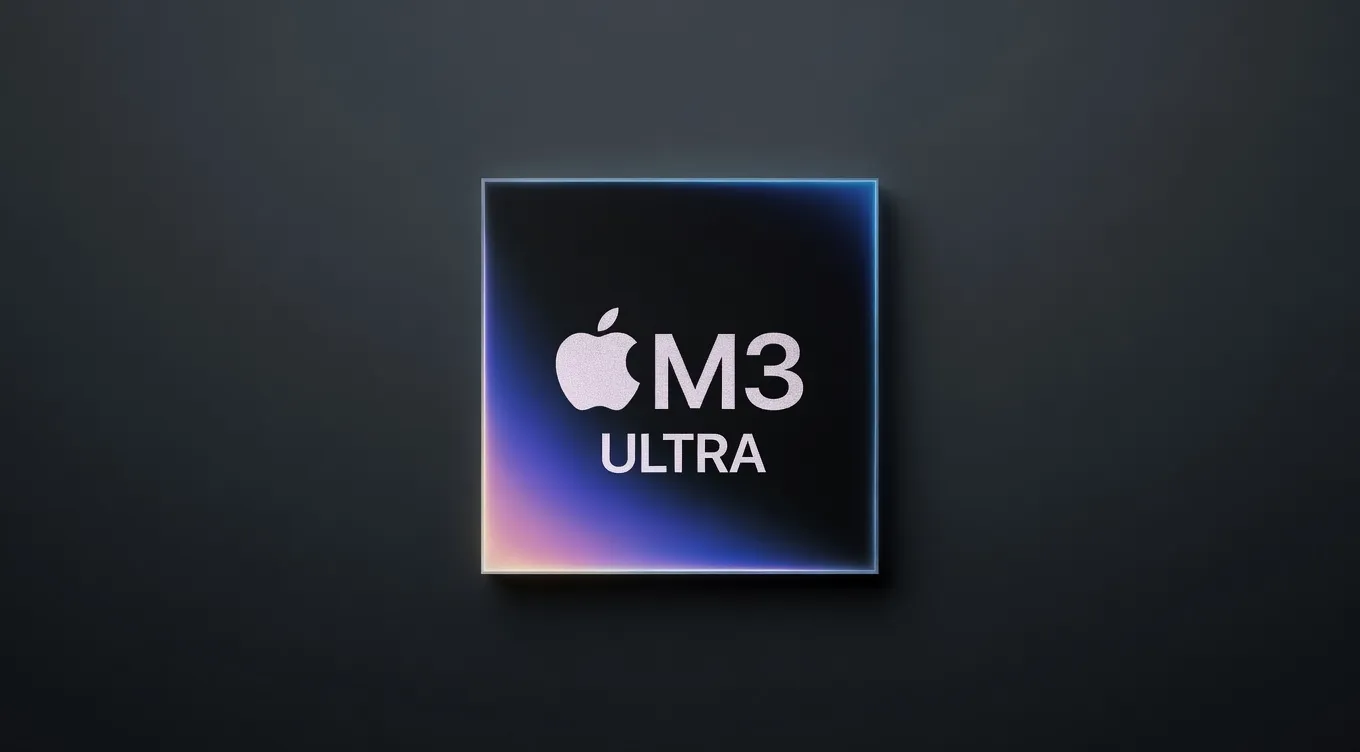
Apple's highest-memory chip with up to 512GB unified memory at 819 GB/s. Powers the Mac Studio 2025 for running LLMs with 600B+ parameters entirely in memory. Apple skipped M4 Ultra.
Sized for production serving of 70B–200B class models at full or lightly-quantized precision. Overkill for a homelab; right call when the workload pays for itself in token volume.
Generated from this product’s spec sheet. Editor reviews refine it over time.
The Apple M3 Ultra with a 32-core CPU and 80-core GPU represents the pinnacle of unified memory architecture for local AI development. Built on TSMC’s 3nm process and utilizing Apple’s proprietary UltraFusion interconnect to link two M3 Max dies, this SoC (System on a Chip) effectively functions as a single, massive processor. For AI engineers and researchers, the M3 Ultra is not merely a workstation chip; it is a specialized inference engine designed to solve the VRAM bottleneck that plagues traditional consumer hardware.
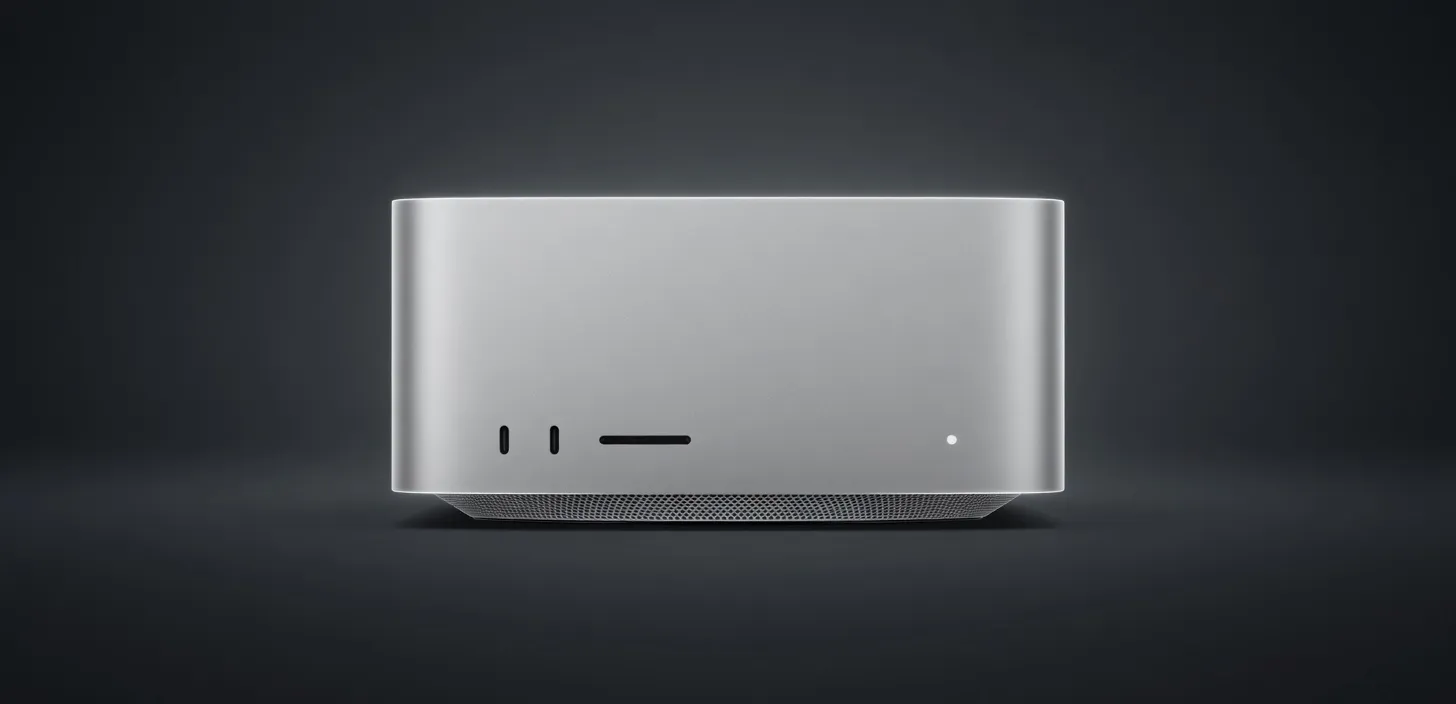
Positioned in the high-end prosumer and production-ready tier, the M3 Ultra competes directly with multi-GPU NVIDIA setups (such as dual RTX 6000 Ada or quad RTX 4090 configurations). While it lacks the raw TFLOPS of dedicated data center hardware like the H100, its unique advantage lies in its massive 512GB unified memory pool. This allows practitioners to run trillion-parameter class models on a single Mac Studio 2025 without the complexities of multi-node clustering or PCIe bandwidth limitations. With Apple skipping the M4 Ultra, this remains the best Apple Silicon for running AI models locally for the foreseeable future.
The Apple M3 Ultra (32-core CPU, 80-core GPU) for AI is defined by its memory architecture rather than its raw clock speed. In AI inference, performance is frequently memory-bound rather than compute-bound, especially during the autoregressive decoding phase of LLMs.
The headline feature is the 512GB of LPDDR5X unified memory. Unlike traditional PCs where the GPU is limited to its own dedicated VRAM (typically 24GB on consumer cards), the M3 Ultra allows the GPU to access the entire system memory pool. With a memory bandwidth of 819 GB/s, the M3 Ultra provides the throughput necessary to feed the 80-core GPU and 32-core Neural Engine rapidly, ensuring that large weights are moved into cache with minimal latency.
The Apple M3 Ultra (32-core CPU, 80-core GPU) VRAM for large language models changes the math on what is possible outside of a data center. It is currently the only single-chip solution capable of hardware for running 600B+ parameter LLMs in memory.
The 512GB memory ceiling allows for significant flexibility in quantization levels:
When evaluating Apple M3 Ultra (32-core CPU, 80-core GPU) tokens per second, performance varies by model size and quantization:
The "sweet spot" for this hardware is running 70B to 120B parameter models at Q8 quantization. This provides a professional-grade quality-to-speed tradeoff, maintaining the nuances of the model while delivering low-latency responses.
The M3 Ultra is the best hardware for local AI agents 2025. Because agents often require multiple model calls, long-context retrieval (RAG), and simultaneous tool-use, the 512GB memory pool allows developers to keep multiple models (e.g., a vision model, an embedding model, and a large reasoning model) resident in VRAM simultaneously. This eliminates the "swapping" latency that degrades agentic performance on lower-spec hardware.
While the M3 Ultra is primarily an inference powerhouse, it is a capable machine for Apple silicon for AI development involving LoRA (Low-Rank Adaptation) and QLoRA fine-tuning. Developers can fine-tune 70B parameter models locally, which is essential for teams working with sensitive data that cannot leave on-premises infrastructure.
Small teams and startups use the M3 Ultra as a "local-first" inference server. Its 160W TDP and Thunderbolt 5 connectivity make it ideal for edge deployment where rack space and high-voltage power are unavailable. It is a "plug-and-play" solution for departments needing a private, local alternative to OpenAI or Anthropic APIs.
To understand the Apple M3 Ultra (32-core CPU, 80-core GPU) vs [competitor] landscape, we must look at both price and specific AI utility.
The RTX 6000 Ada (48GB VRAM) costs approximately $7,000 per card. To match the M3 Ultra’s 512GB capacity, you would need over ten RTX 6000 Ada cards, requiring a massive server chassis, expensive networking, and thousands of watts of power. While the NVIDIA setup would offer significantly higher tokens per second due to superior raw TFLOPS, the M3 Ultra is the winner for capacity-per-dollar. If your priority is "fitting the model" rather than "maximum throughput for 1,000 concurrent users," the Apple Silicon path is more cost-effective.
A liquid-cooled workstation with two RTX 4090s (48GB total VRAM) will outperform the M3 Ultra on small models (under 30B parameters). However, the 4090 is fundamentally limited by its 24GB ceiling. For practitioners focusing on local LLM development with frontier models (70B+), the M3 Ultra is the superior choice because it avoids the "split-GPU" performance penalties and memory limitations of consumer-grade hardware.
The Apple M3 Ultra remains the best AI chip for local deployment when the primary requirement is large-model residency and energy efficiency. For engineers building the next generation of agentic tools, the 512GB unified memory architecture provides a headroom that no other desktop-class hardware can currently match.
The top models this device can run at 4-bit, ranked by fit and speed.
| Model | Grade | Speed | VRAM |
|---|---|---|---|
| Mixtral 8x7B InstructMistral AI | SS | 58.0 tok/s | 11.4 GB |
| AliceAI-Foundation-80B-A3B-Baseyandex | SS | 77.3 tok/s | 8.5 GB |
| DiffusionGemma 26B-A4BGoogle | AA | 62.9 tok/s | 10.5 GB |
| Gemma 4 26B-A4B ITGoogle | AA | 59.9 tok/s | 11.0 GB |
| Xing4.0-29B-A4BChina Telecom AI | AA | 58.8 tok/s | 11.2 GB |
Among 6 similar devices, the Apple M3 Ultra (32-core CPU, 80-core GPU) ranks #1 for memory and #1 for memory bandwidth.
Also in Our Store
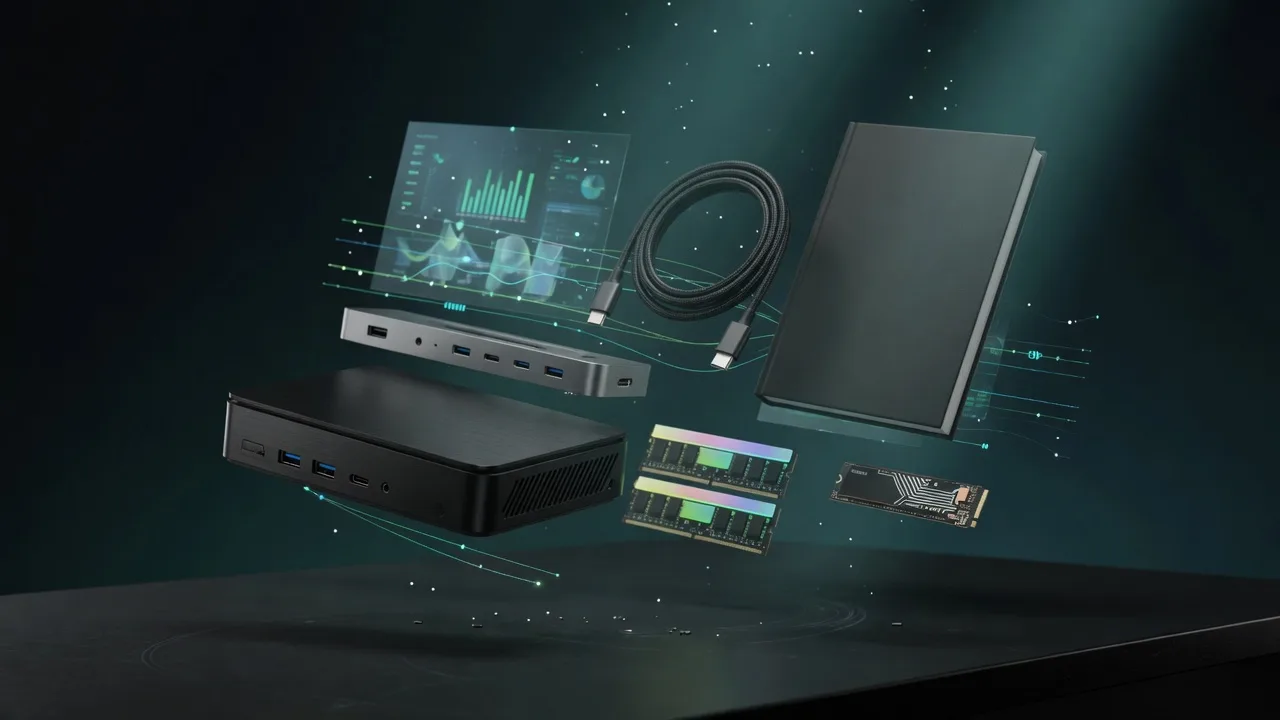
Docks, fast storage, cables, and a UPS sized for a local AI machine.

Rent this class of GPU by the hour before you buy. Live prices from RunPod and Vast.ai.
Find the break-even between buying this hardware and paying for a cloud API.
Mac vs NVIDIA for local inference, if you are still choosing a platform.