- Services
Advertising disclosure: we earn commissions when you shop through the links below.
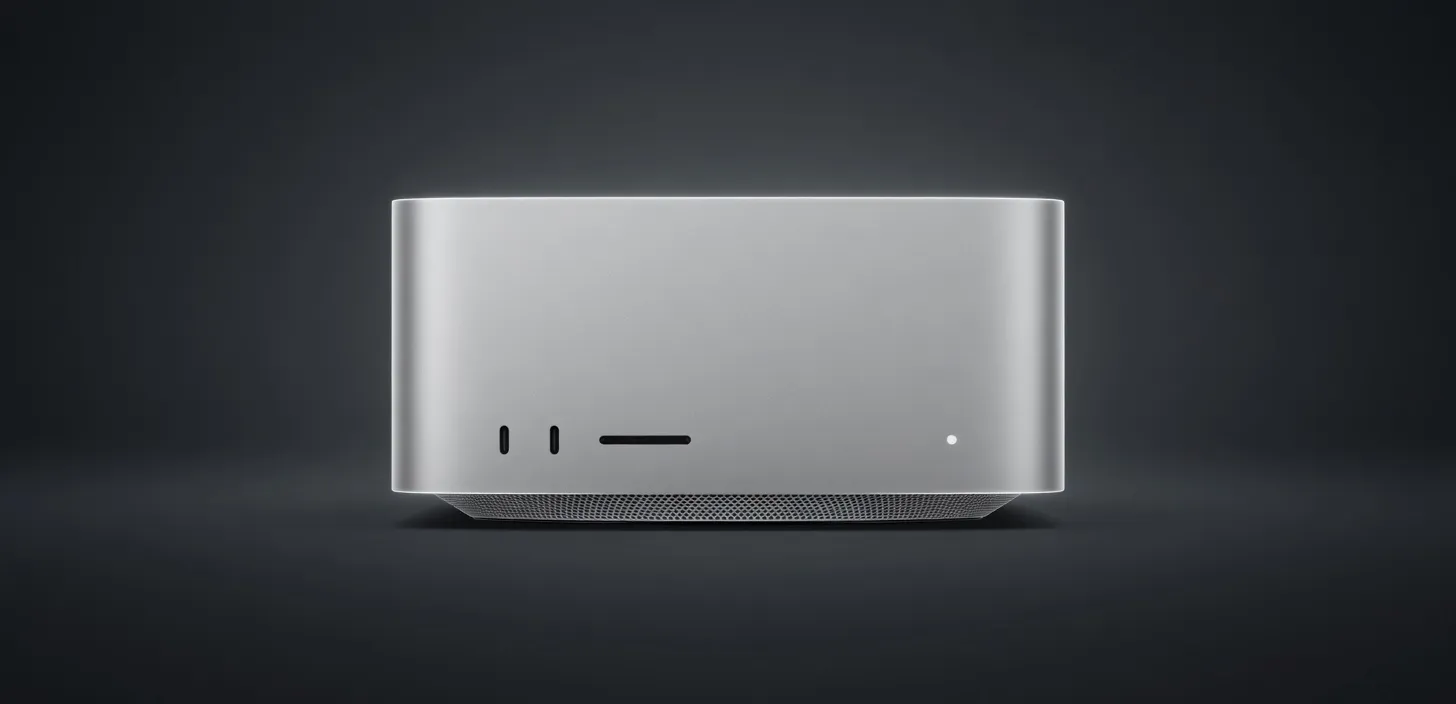
Base M4 chip with 10-core CPU, 10-core GPU, up to 32GB unified memory, and the fastest Neural Engine in any Apple chip at 38 TOPS. Efficient entry point for Apple Intelligence.
A 70B Q4 quant fits with usable context budget left over. Sweet spot if you want a single card that handles every open model worth running locally today.
Generated from this product’s spec sheet. Editor reviews refine it over time.
The Apple M4 represents the entry point into Apple’s fourth-generation silicon architecture, built on TSMC’s second-generation 3nm process. While the "Pro" and "Max" variants garner headlines for heavy lifting, the base M4 is a highly optimized SoC (System on a Chip) designed for efficient, on-device AI inference. For developers and engineers, the M4 serves as a dedicated platform for Apple Intelligence and local agentic workflows, offering a significant leap in Neural Engine (NPU) performance over previous generations.
Positioned as a high-efficiency consumer and prosumer chip, the M4 is the primary competitor to Qualcomm’s Snapdragon X Elite and mid-range mobile GPUs from NVIDIA. For AI practitioners, the value proposition of the Apple M4 for AI lies in its unified memory architecture. Unlike traditional PC builds where the GPU is limited by dedicated VRAM, the M4 allows the GPU and NPU to access up to 32GB of high-speed LPDDR5X memory, making it a viable candidate for running medium-sized Large Language Models (LLMs) that would otherwise struggle on standard consumer laptops.
The Apple M4 is engineered around three pillars of AI compute: the CPU, the GPU, and the upgraded Neural Engine. For local AI deployment, the most critical metric is the 38 TOPS (INT8) rating of the 16-core Neural Engine. This makes it the fastest NPU Apple has released in a base-tier chip, specifically tuned for the matrix multiplication tasks required by transformer-based models.
Memory is the primary bottleneck for LLM inference. The Apple M4 features a 120 GB/s memory bandwidth. While this is lower than the M4 Pro or Max variants, it is sufficient for maintaining responsive token generation on models optimized for the platform. The ability to configure the chip with 32GB of unified memory is the "sweet spot" for practitioners. On macOS, approximately 75-80% of this memory can be allocated to the GPU, providing a ~24GB-26GB functional VRAM pool. This is significantly higher than the 8GB or 12GB typically found in laptops at this price point.
The Apple M4 is an ideal "inference-first" chip for models in the 3B to 8B parameter range. Because of the unified memory, it can comfortably handle 7B at Q4 with 32GB unified memory with ample headroom for system tasks and context windows.
Using frameworks like MLX, llama.cpp, or Ollama, the M4 handles the following workloads:
The 38 TOPS Neural Engine is specifically optimized for vision tasks. Running CLIP, Whisper (Large-v3) for transcription, or Stable Diffusion XL via CoreML is highly efficient. For RAG (Retrieval-Augmented Generation) workflows, the M4 can process embedding models like bge-large or nomic-embed-text with negligible latency.
The Apple M4 is not a training chip; it is a local AI development and deployment workstation.
CoreML or Apple Intelligence, the M4 is the baseline reference hardware. It allows for testing local function calling and agentic loops in a power-efficient environment.When evaluating the best hardware for local AI agents 2025, the M4 sits in a unique position.
The RTX 4060 has a dedicated AI accelerator (Tensor Cores) that may outperform the M4 in raw throughput for small models. However, the RTX 4060 is typically limited to 8GB of VRAM. The Apple M4 with 32GB of unified memory wins on model capacity; you can run a Q8_0 8B model or a Q4 14B model on the M4 that simply will not fit on the 4060's VRAM, forcing it to fall back to slow system RAM.
The jump from M3 to M4 is defined by the Neural Engine. The M4’s NPU is significantly more capable (38 TOPS vs 18 TOPS on the M3). For practitioners specifically looking for Apple M4 AI inference performance, the architectural improvements in the M4 provide better longevity for the next generation of Apple-optimized models.
The Snapdragon X Elite offers a 45 TOPS NPU, technically higher than the M4's 38 TOPS. However, the Apple silicon ecosystem is currently more mature for AI development. Tools like MLX (Apple’s open-source array framework) are specifically optimized for the M-series architecture, often leading to better real-world performance and ease of use for Apple silicon for AI development compared to the current state of Windows on ARM AI libraries.
The top models this device can run at 4-bit, ranked by fit and speed.
| Model | Grade | Speed | VRAM |
|---|---|---|---|
| Holo4-35B-A3BHcompany | SS | 41.3 tok/s | 2.3 GB |
| LFM2.5-8B-A1BLiquid AI | AA | 33.2 tok/s | 2.9 GB |
| Qwen3-30B-A3BAlibaba | BB | 17.9 tok/s | 5.4 GB |
| AliceAI-Foundation-80B-A3B-Baseyandex | BB | 11.3 tok/s | 8.5 GB |
| Mixtral 8x7B InstructMistral AI | BB | 8.5 tok/s | 11.4 GB |
Among 6 similar devices, the Apple M4 ranks #6 for memory and #6 for memory bandwidth.
Also in Our Store
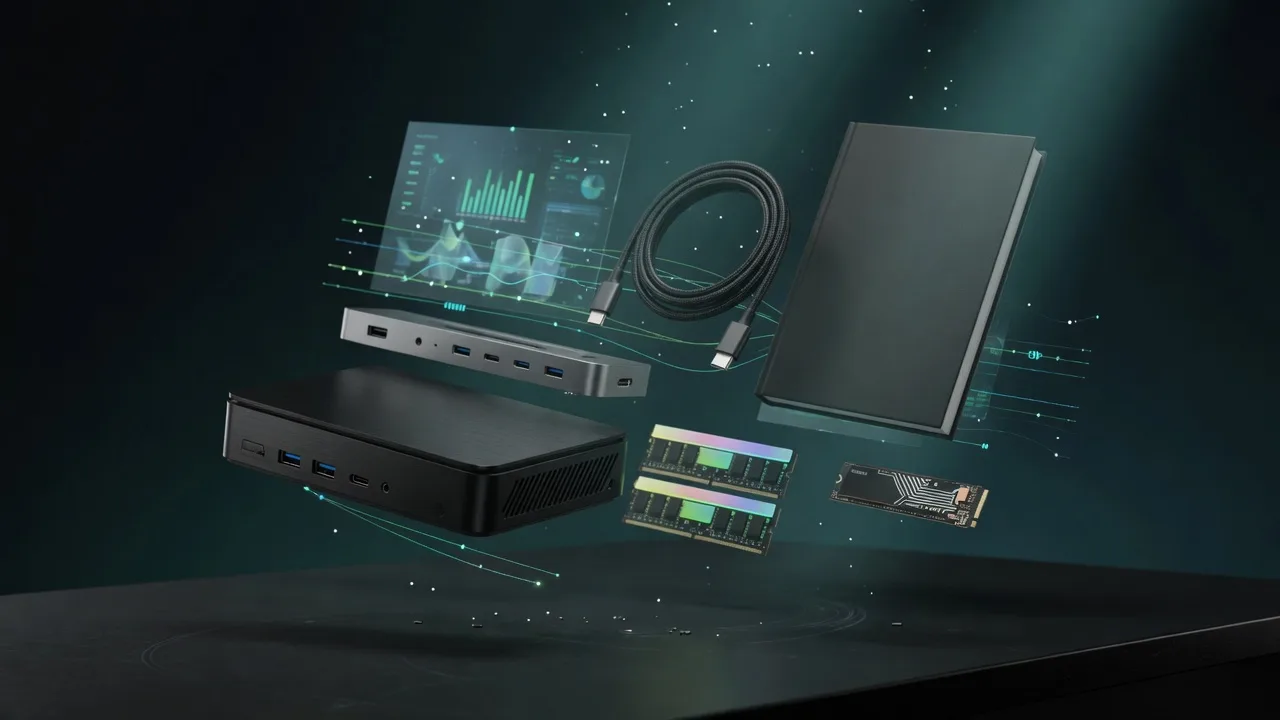
Docks, fast storage, cables, and a UPS sized for a local AI machine.

Rent this class of GPU by the hour before you buy. Live prices from RunPod and Vast.ai.
Find the break-even between buying this hardware and paying for a cloud API.
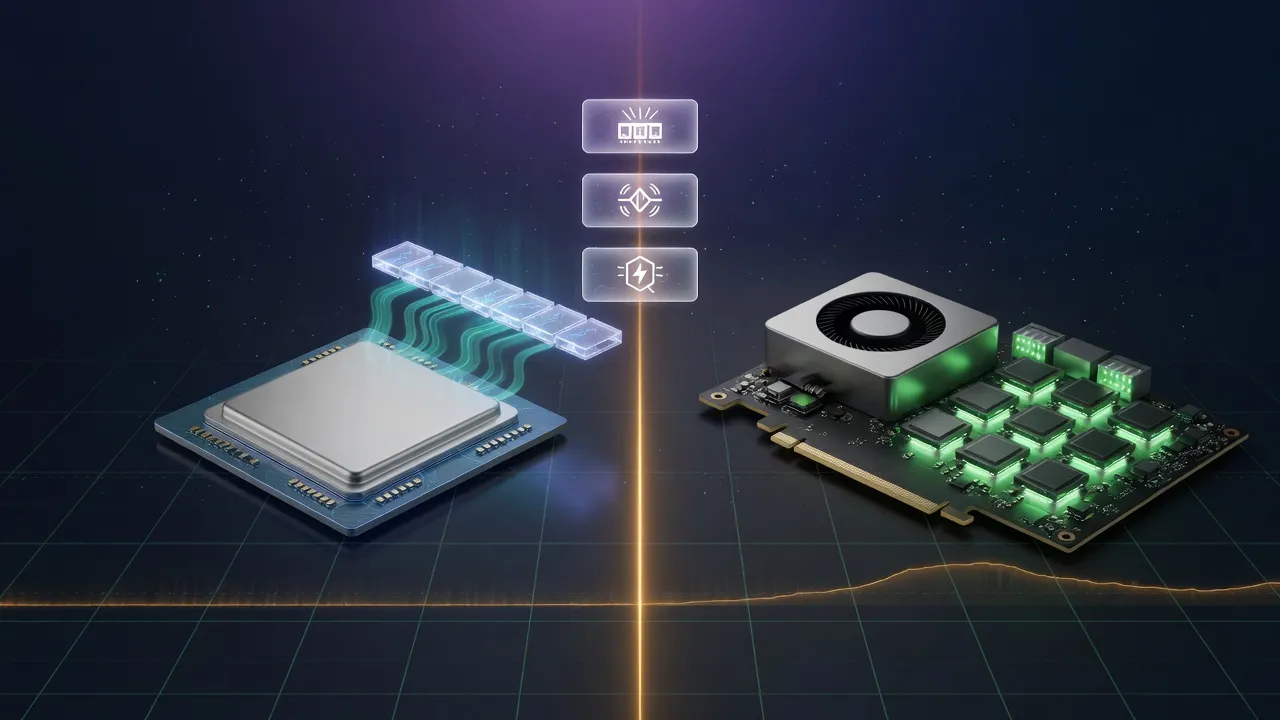
Mac vs NVIDIA for local inference, if you are still choosing a platform.