- Services
Advertising disclosure: we earn commissions when you shop through the links below.
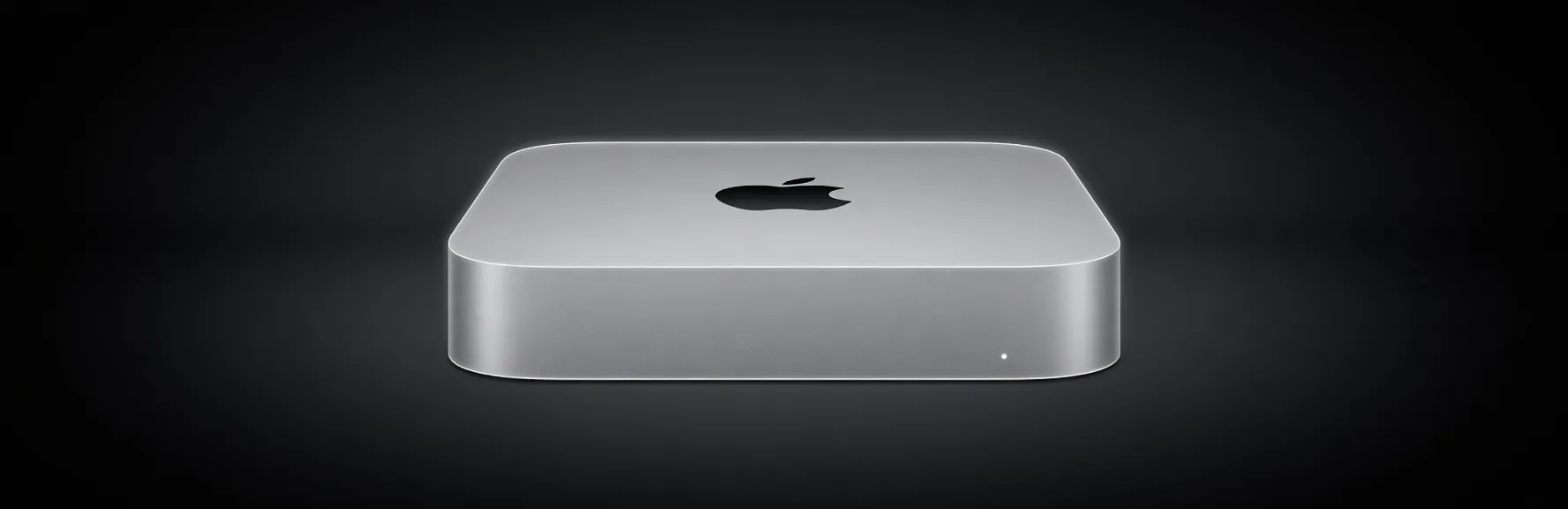
First Mac Mini with a Pro-tier chip. The M2 Pro brought up to 12-core CPU, 19-core GPU, 32GB unified memory at 200 GB/s, and 4 Thunderbolt 4 ports — pro performance in the classic Mac Mini form factor.
A 70B Q4 quant fits with usable context budget left over. Sweet spot if you want a single card that handles every open model worth running locally today.
Generated from this product’s spec sheet. Editor reviews refine it over time.
The Apple Mac Mini (M2 Pro, 2023) represents a pivotal shift in the Mac Mini product line, introducing high-bandwidth "Pro" silicon to Apple's smallest desktop form factor. For AI engineers and researchers, this machine serves as a compact, energy-efficient inference node capable of running mid-sized Large Language Models (LLMs) and complex agentic workflows without the thermal or acoustic overhead of a traditional GPU workstation.
While the M2 Pro Mac Mini has been technically discontinued in favor of M4 iterations, it remains a highly sought-after unit on the secondary and refurbished markets for local AI development. Its primary appeal lies in the unified memory architecture, which allows the GPU to access up to 32GB of VRAM, a capacity that significantly outclasses consumer-grade NVIDIA cards like the RTX 4070 or 4080 in terms of sheer memory volume for large context windows.
When evaluating the Apple Mac Mini (M2 Pro, 2023) for AI, the most critical metric is the unified memory architecture. Unlike traditional PC builds where the CPU and GPU have separate memory pools, the M2 Pro allows the 19-core GPU to address the entire 32GB of LPDDR5 memory. This is foundational for running LLMs, where the model weights must reside entirely in VRAM to achieve acceptable inference speeds.
The M2 Pro features a 200 GB/s memory bandwidth. While this is lower than the M2 Max (400 GB/s) or the M2 Ultra (800 GB/s), it provides a substantial uplift over the base M2 chip (100 GB/s). In practical AI workloads, this bandwidth directly correlates to tokens per second (t/s) during the generation phase. For practitioners choosing hardware for local AI agents in 2025, 200 GB/s represents the "sweet spot" for developers who need more than a hobbyist setup but aren't yet ready to invest in a Mac Studio.
Built on the TSMC 2nd-gen 5nm process, the M2 Pro is exceptionally power-efficient. With a TDP of only 67W, it delivers performance that rivals mid-range desktop GPUs while consuming a fraction of the power. This makes it an ideal candidate for 24/7 "always-on" AI agents or edge deployment where thermal management is a concern. The integrated 16-core Neural Engine further accelerates CoreML-optimized tasks, such as image recognition and voice-to-text, freeing up the GPU for heavy tensor operations.
The Apple Mac Mini (M2 Pro, 2023) AI inference performance is best characterized by its ability to handle 13B and 14B parameter models with high precision, or 30B+ models with heavy quantization.
With the maximum 32GB unified memory configuration, you can comfortably run:
The 32GB VRAM for large language models allows for significant experimentation with long-context tasks. Using llama.cpp or MLX, users can allocate large portions of memory to the KV cache, enabling the processing of long documents or multi-turn agent conversations that would crash an 8GB or 12GB consumer GPU.
The M2 Pro Mac Mini is a specialized tool for specific AI practitioners. It is not a training powerhouse; it is an inference and development workhorse.
When selecting the best apple silicon for running AI models locally, the M2 Pro Mac Mini sits in a unique price-to-performance bracket.
The Mac Studio with an M2 Max chip offers double the memory bandwidth (400 GB/s) and supports up to 96GB of unified memory. If your workload requires running 70B parameter models (like Llama 3 70B) at usable speeds, the Mac Studio is the necessary upgrade. However, for 13B-14B models, the Mac Mini M2 Pro provides nearly identical performance at a lower MSRP.
An NVIDIA-based PC will generally offer faster raw TFLOPS and better compatibility with the broader CUDA ecosystem. However, a 16GB GPU is strictly limited to smaller models. The M2 Pro Mac Mini, with its 32GB GPU for AI, allows you to load models that are twice as large. For LLM practitioners, memory capacity is almost always more important than raw compute speed.
The newer M4 Pro (2024) offers increased memory bandwidth (273 GB/s) and a faster Neural Engine. However, the M2 Pro remains a "Production Ready" veteran that is frequently available at a significant discount, making it one of the most cost-effective ways to acquire 32GB of high-speed unified memory for a local AI stack.
The top models this device can run at 4-bit, ranked by fit and speed.
| Model | Grade | Speed | VRAM |
|---|---|---|---|
| Holo4-35B-A3BHcompany | SS | 68.9 tok/s | 2.3 GB |
| LFM2.5-8B-A1BLiquid AI | AA | 55.4 tok/s | 2.9 GB |
| Qwen3-30B-A3BAlibaba | AA | 29.9 tok/s | 5.4 GB |
| VibeThinker-3BWeiboAI | AA | 42.2 tok/s | 3.8 GB |
| Gemma 4 E2B ITGoogle | AA | 43.4 tok/s | 3.7 GB |
Among 6 similar devices, the Apple Mac Mini (M2 Pro, 2023) ranks #6 for memory and #6 for memory bandwidth.
Also in Our Store
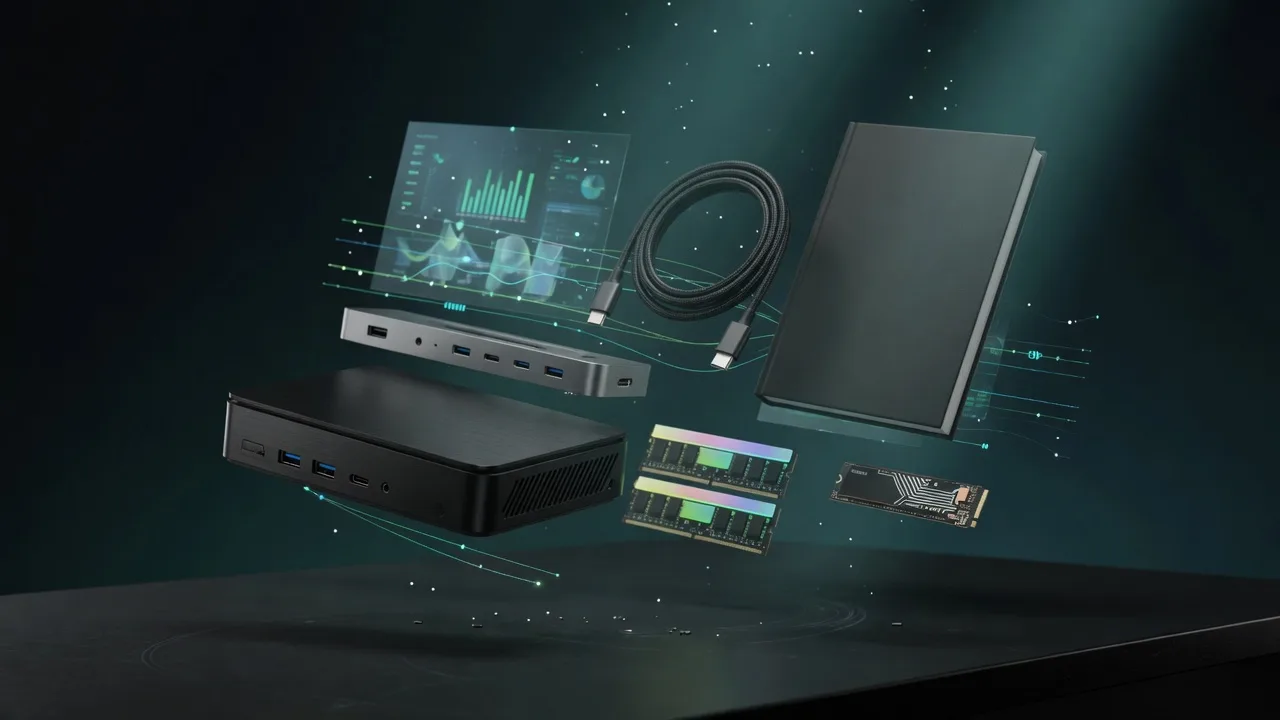
Docks, fast storage, cables, and a UPS sized for a local AI machine.
Rent this class of GPU by the hour before you buy. Live prices from RunPod and Vast.ai.
Find the break-even between buying this hardware and paying for a cloud API.
Mac vs NVIDIA for local inference, if you are still choosing a platform.