- Services
Advertising disclosure: we earn commissions when you shop through the links below.
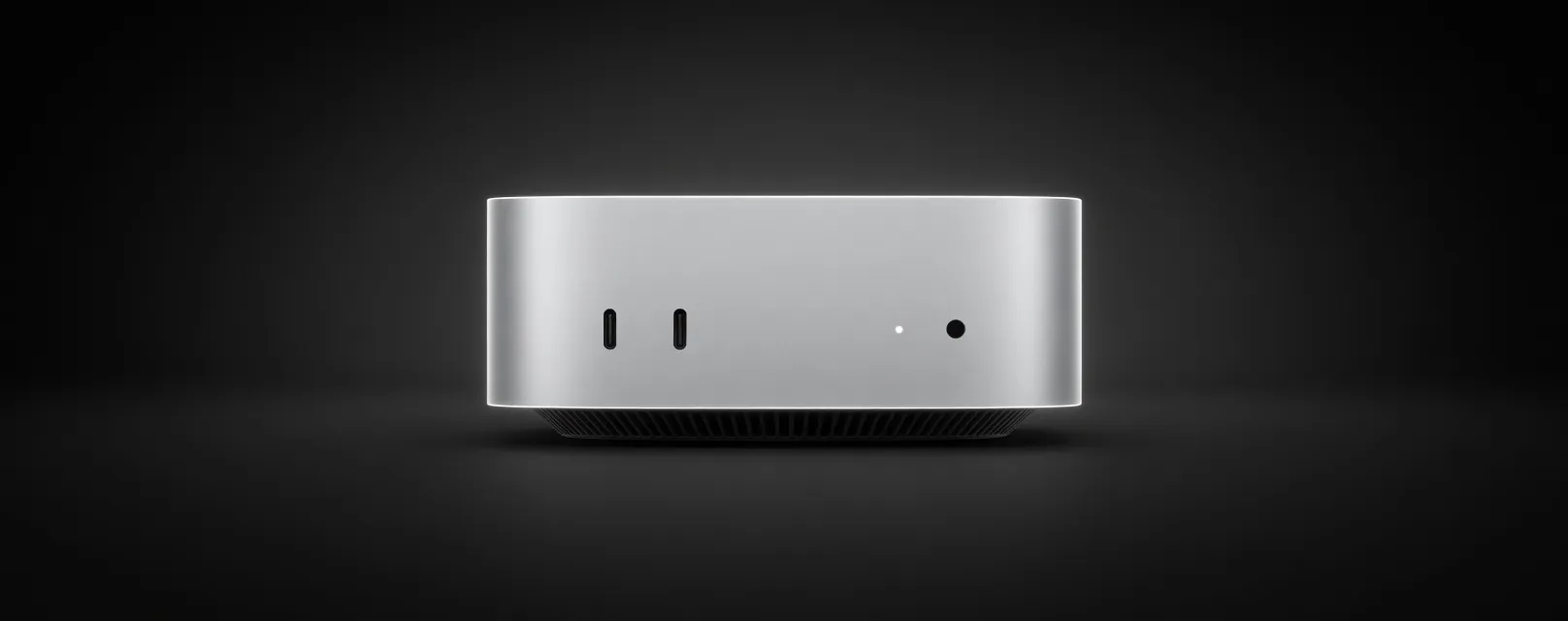
Completely redesigned Mac Mini at just 5×5 inches — the smallest Mac ever. M4 chip with 10-core CPU, 10-core GPU, starting at 16GB unified memory. Front-facing USB-C ports and hardware ray tracing debut on Mac Mini.
A 70B Q4 quant fits with usable context budget left over. Sweet spot if you want a single card that handles every open model worth running locally today.
Generated from this product’s spec sheet. Editor reviews refine it over time.
The Apple Mac Mini (M4, 2024) represents a significant shift in the price-to-performance ratio for local AI development. By shrinking the chassis to a 5x5 inch footprint while debuting the M4 architecture, Apple has positioned this machine as the entry-level standard for Apple Silicon for AI development. For engineers and researchers, the primary draw is the transition to a 16GB minimum memory floor, making it a viable node for modern transformer-based architectures right out of the box.
While technically a consumer-tier desktop, its 38 TOPS Neural Engine and unified memory architecture allow it to outperform many discrete GPU setups in the same price bracket ($499 MSRP). It competes directly with mid-range NUCs and custom-built Linux boxes featuring RTX 3060 or 4060 GPUs. However, the Mac Mini’s advantage lies in its thermal efficiency and the ability for the GPU to address the entire system memory pool, a critical feature for practitioners looking for the best hardware for local AI agents in 2025.
For AI workloads, the most critical metric is the unified memory architecture. The Apple Mac Mini (M4, 2024) supports up to 32GB of LPDDR5X memory with a memory bandwidth of 120 GB/s. In local LLM contexts, memory bandwidth is the primary bottleneck for token generation speed. While 120 GB/s is lower than the M4 Pro or Max variants, it remains sufficient for responsive, real-time inference on 7B and 8B parameter models.
The M4 chip is built on TSMC’s 2nd-generation 3nm process, featuring a 10-core CPU (4 performance, 6 efficiency) and a 10-core GPU. This generation introduces hardware-accelerated ray tracing to the Mac Mini line, which, while primarily a graphics feature, indicates the increased sophistication of the GPU clusters.
The INT8 performance of 38 TOPS via the 16-core Neural Engine specifically targets "Apple Intelligence" features and CoreML-optimized models. However, most practitioners will utilize the GPU via Metal (using frameworks like llama.cpp or MLX) for broader model compatibility. With a TDP of just 55W, the M4 Mac Mini provides a high-density compute-per-watt ratio, making it an ideal candidate for "always-on" local inference servers or agentic loops that don't justify the power draw of a 300W+ NVIDIA workstation.
The Apple Mac Mini (M4, 2024) local LLM capabilities are defined by its 32GB maximum VRAM ceiling. Because Apple Silicon uses unified memory, the GPU can access nearly the entire 32GB pool (minus a small overhead for the OS), effectively acting as a 32GB GPU for AI. This is a massive advantage over consumer NVIDIA cards like the RTX 4060 (8GB) or 4070 (12GB) which often struggle with model fitting.
The "sweet spot" for this hardware is running 7B at Q4 with 32GB unified memory. At this configuration, the model fits entirely in memory with significant room left for a large KV cache (context window).
For practitioners looking for Apple Mac Mini (M4, 2024) tokens per second benchmarks, the bottleneck will rarely be the 10-core GPU's compute power, but rather the 120 GB/s bandwidth. For the best quality-to-speed tradeoff, stick to Q4_K_M or Q5_K_M quantizations.
The small 5x5 inch form factor and 55W TDP make the M4 Mac Mini the ideal hardware for running persistent local agents. If you are building an agentic workflow using frameworks like LangChain or AutoGPT, this machine can act as a dedicated "brain" that remains powered on 24/7 without significant electricity costs.
Developers building apps on macOS can utilize the M4 to test Apple Intelligence integration and CoreML performance. The front-facing USB-C ports make it easier to swap external storage for large model datasets or connect edge devices for testing.
For those who want to run a "Personal AI" without sending data to the cloud, the 32GB SKU offers enough headroom to run a high-quality 8B model with a 32k+ context window. This is perfect for RAG (Retrieval-Augmented Generation) over personal documents.
The 10Gb Ethernet option makes this a powerful edge node. It can be racked (with third-party mounts) to serve as a compact inference server for local networks, processing video feeds or sensor data via local AI models.
When evaluating Apple Mac Mini (M4, 2024) AI inference performance, it is helpful to look at two main competitors: the previous M2 Pro Mac Mini and a custom PC with an NVIDIA RTX 4060 Ti (16GB).
For practitioners who prioritize VRAM capacity and energy efficiency over raw TFLOPS, the M4 Mac Mini is currently the best apple silicon for running AI models locally at the sub-$1,000 price point. Its ability to handle 7B at Q4 with 32GB unified memory makes it a versatile tool for the modern AI engineer's toolkit.
The top models this device can run at 4-bit, ranked by fit and speed.
| Model | Grade | Speed | VRAM |
|---|---|---|---|
| Holo4-35B-A3BHcompany | SS | 41.3 tok/s | 2.3 GB |
| LFM2.5-8B-A1BLiquid AI | AA | 33.2 tok/s | 2.9 GB |
| Qwen3-30B-A3BAlibaba | BB | 17.9 tok/s | 5.4 GB |
| AliceAI-Foundation-80B-A3B-Baseyandex | BB | 11.3 tok/s | 8.5 GB |
| Mixtral 8x7B InstructMistral AI | BB | 8.5 tok/s | 11.4 GB |
Among 6 similar devices, the Apple Mac Mini (M4, 2024) ranks #6 for memory and #6 for memory bandwidth.
Also in Our Store
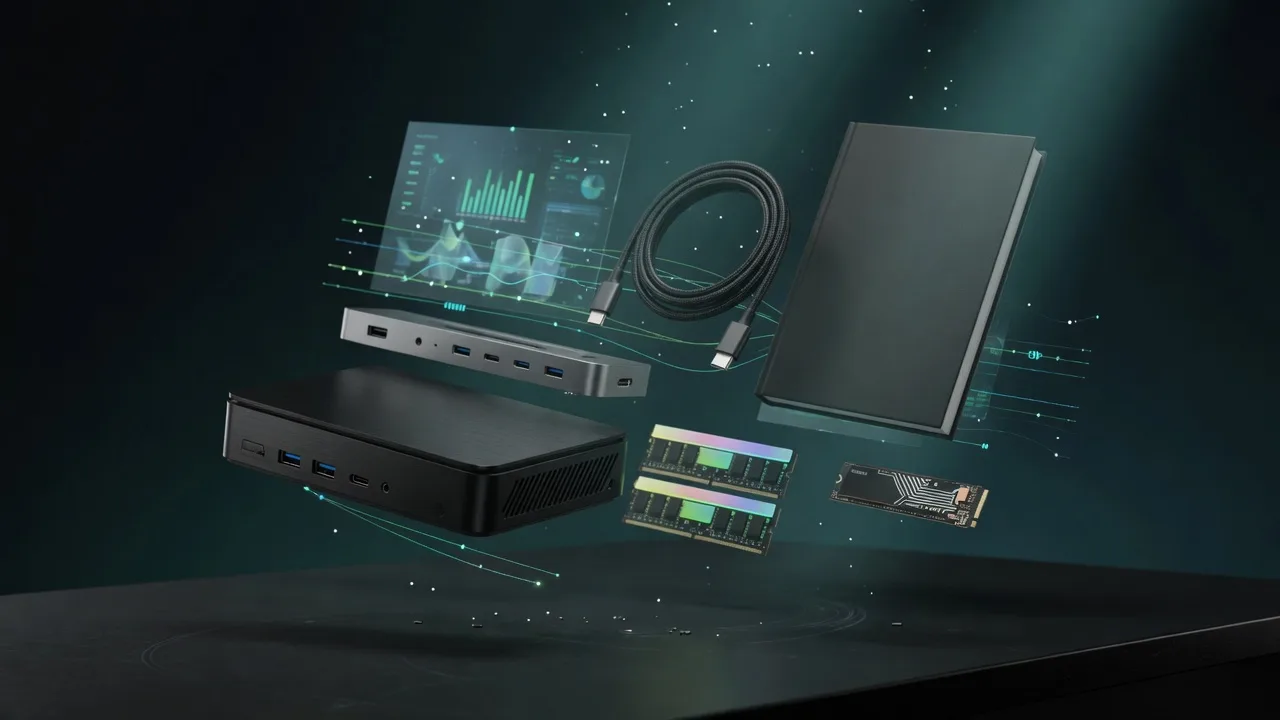
Docks, fast storage, cables, and a UPS sized for a local AI machine.
Rent this class of GPU by the hour before you buy. Live prices from RunPod and Vast.ai.
Find the break-even between buying this hardware and paying for a cloud API.
Mac vs NVIDIA for local inference, if you are still choosing a platform.