- Services
Advertising disclosure: we earn commissions when you shop through the links below.
ASRock makes the Intel Arc Pro B60 Creator 24GB, a workstation graphics card. It uses Intel's Xe2-HPG architecture with 160 XMX AI engines and 24GB of GDDR6 memory. The card offers 456 GB/s memory bandwidth and 197 Int8 TOPS, aimed at AI inference, generative design, and 3D rendering. It was listed at $599, though Intel has not confirmed an official MSRP.
The 24 GB tier is where most local-LLM tooling assumes you live. Strong fit for code agents, RAG, and 30B-class reasoning models without exotic quants.
Generated from this product’s spec sheet. Editor reviews refine it over time.
The Intel Arc Pro B60 Creator 24GB, built by ASRock around Intel's Battlemage Xe2-HPG architecture, represents a notable shift in the workstation and local inference landscape. Historically, securing a 24GB GPU for AI required spending over a thousand dollars on high-end consumer cards or investing heavily in enterprise data center silicon. With a sub-$600 market target, this card brings high-density VRAM into an accessible workstation tier, making it an attractive option for practitioners who prioritize raw frame buffer capacity over raw compute speed.
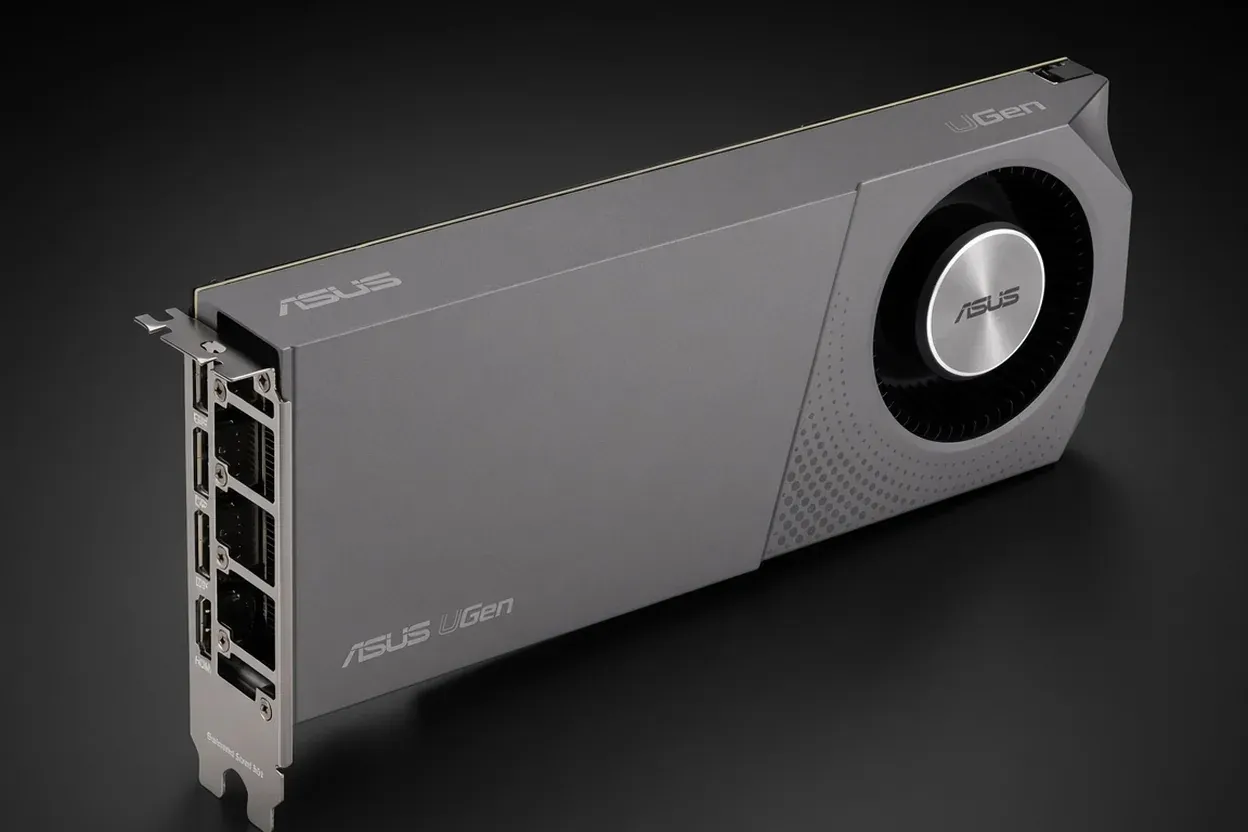
Designed with a dual-slot blower cooler and a single 8-pin power connector, the card is tailored for multi-GPU Linux installations, compact developer rigs, and edge deployment servers. Selecting this Unknown hardware for AI development provides engineers an alternative to NVIDIA's mid-tier consumer offerings, which typically restrict memory bus widths and VRAM pools to protect higher-margin enterprise product lines. The card integrates 160 Intel Xe Matrix Extensions (XMX) AI engines delivering 197 INT8 TOPS, backed by a 192-bit GDDR6 interface.
For teams searching for the best hardware for running AI models locally on a disciplined budget, memory capacity dictates functionality. The Intel Arc Pro B60 Creator 24GB for AI removes the severe memory constraints that plague consumer GPUs in this price range, allowing developers to run mid-sized open weights entirely in onboard memory without falling back to slow system RAM offloading.
Intel Arc Pro B60 Creator 24GB AI inference performance is driven by Intel's second-generation Xe architecture (Xe2-HPG). Rather than focusing purely on peak FP32 rasterization, the B60 dedicates silicon area to matrix math and memory density.
1GPU Architecture: Intel Xe2-HPG (Battlemage)2VRAM Capacity: 24 GB GDDR63Memory Interface: 192-bit4Memory Bandwidth: 456 GB/s5Memory Speed: 19 Gbps6Core Clock: 2400 MHz7XMX AI Engines: 1608Compute Performance: 197 INT8 TOPS9Host Interface: PCI Express 5.010Power Configuration: 1x 8-pin PCIe11Display Connectivity: 4x DisplayPort 2.112Cooler Type: Dual-slot lateral blower
In autoregressive token generation, the memory bandwidth directly establishes the performance ceiling during the single-batch decoding phase. At 456 GB/s, the B60 delivers roughly 58% more bandwidth than a 128-bit card like the RTX 4060 Ti (288 GB/s). While it cannot match the extreme throughput of ultra-wide 384-bit memory buses found on high-end cards, 456 GB/s is sufficient to maintain responsive interaction speeds for interactive chat and local agent execution.
Compute performance peaks at 197 INT8 TOPS via the 160 XMX engines. These dedicated matrix units handle the prompt evaluation (prefill) stage, determining how rapidly a model digests input tokens before generating an answer. Intel's software stack leverages this hardware through OpenVINO, the oneAPI Deep Neural Network Library (oneDNN), and the SYCL backend in llama.cpp and PyTorch (IPEX).
Thermal dissipation and power delivery are designed with workstation stability in mind. Drawing power through a single 8-pin connector keeps the board within standard workstation envelope limits. The lateral blower fan discharges heat straight out the chassis rear bracket, making it ideal for multi-GPU configurations where axial fan cards would otherwise recirculate hot air.
VRAM capacity is the primary constraint when selecting local LLM hardware. With 24GB of dedicated memory, the B60 handles model sizes that are physically impossible to host on 12GB or 16GB hardware without aggressive pruning or hybrid CPU offloading.
Under llama.cpp running via Intel's SYCL backend or OpenVINO GenAI runtime, expected Intel Arc Pro B60 Creator 24GB tokens per second clock as follows:
Beyond pure text models, the card's memory accommodates multimodal weights like LLaVA 1.6 and Whisper large-v3 concurrently, allowing engineers to build multi-model agentic loops on a single board.
This hardware targets specific deployment niches:
Evaluating the Intel Arc Pro B60 Creator 24GB vs competitor options highlights distinct design compromises across the entry workstation market:
1+------------------------------------+--------------------+--------------------+--------------------+2| Specification | Intel Arc Pro B60 | NVIDIA RTX 4060 Ti | Used RTX 3090 |3+------------------------------------+--------------------+--------------------+--------------------+4| VRAM Capacity | 24 GB GDDR6 | 16 GB GDDR6 | 24 GB GDDR6X |5| Memory Bus Width | 192-bit | 128-bit | 384-bit |6| Memory Bandwidth | 456 GB/s | 288 GB/s | 936 GB/s |7| Power Connectors | 1x 8-pin | 1x 8-pin / 16-pin | 2x or 3x 8-pin |8| Cooler Form Factor | 2-slot Blower | 2-slot Axial | 3-slot Axial |9| Software Ecosystem | OpenVINO / SYCL | CUDA / TensorRT | CUDA / TensorRT |10| Primary Strengths | Cost/VRAM, Stacking| Native CUDA tooling| Peak raw bandwidth |11+------------------------------------+--------------------+--------------------+--------------------+
The RTX 4060 Ti provides out-of-the-box CUDA simplicity, but its 16GB frame buffer restricts model selection, preventing practitioners from running 32B class models locally. Furthermore, the 4060 Ti is constrained by a narrow 128-bit bus (288 GB/s), leading to sharp performance degradation during large-context inference. The Arc Pro B60 provides 50% more memory capacity and 58% higher bandwidth, making it a superior choice for complex language models despite requiring the SYCL or OpenVINO software runtime.
The RTX 3090 remains a benchmark in local inference due to its 936 GB/s bandwidth and mature CUDA software support. However, used cards carry hardware degradation risks, lack official warranty coverage, and pull 350W or more under full load. Most RTX 3090 models feature massive 3-slot axial coolers that dump heat inside the chassis and prevent dense, multi-GPU stacking. The Arc Pro B60 Creator delivers a brand-new 24GB GPU for AI in a compact, dual-slot blower format with modest power requirements and PCIe 5.0 support, offering an enterprise-friendly option for dense local infrastructure and the best hardware for local AI agents 2026 deployments.
The top models this device can run at 4-bit, ranked by fit and speed.
| Model | Grade | Speed | VRAM |
|---|---|---|---|
| LFM2.5-24B-A2BLiquid AI | SS | 81.8 tok/s | 17.0 GB |
| Hy-MT3-30B-A3BTencent | SS | 157.0 tok/s | 18.0 GB |
| Nemotron 3.5 LightningNvidia | SS | 157.0 tok/s | 18.0 GB |
| Villanova2-15B-A3B-BaseVillanova.AI | SS | 53.6 tok/s | 13.6 GB |
| Llama 2 13B ChatMeta | SS | 43.4 tok/s | 8.5 GB |
Among 5 similar devices, the Intel Arc Pro B60 Creator 24GB ranks #4 for memory and #5 for memory bandwidth.
Also in Our Store
Docks, fast storage, cables, and a UPS sized for a local AI machine.

Rent this class of GPU by the hour before you buy. Live prices from RunPod and Vast.ai.

Find the break-even between buying this hardware and paying for a cloud API.
Mac vs NVIDIA for local inference, if you are still choosing a platform.