- Services
Advertising disclosure: we earn commissions when you shop through the links below.
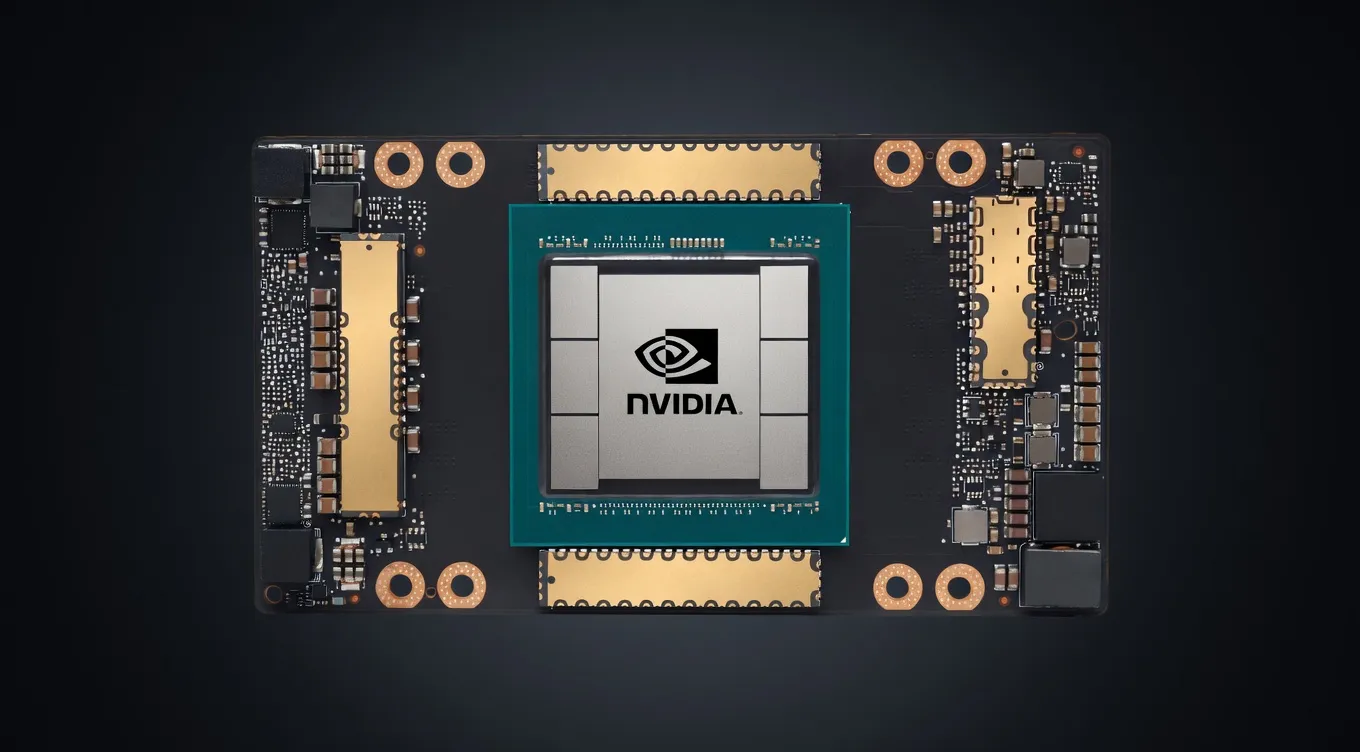
Ampere-architecture data center GPU that remains widely deployed. 80GB HBM2e with multi-instance GPU support makes it a workhorse for training and inference at scale.
Manufacturer's suggested retail price. Current prices can be higher or lower. This is not a live price.
Sized for production serving of 70B–200B class models at full or lightly-quantized precision. Overkill for a homelab; right call when the workload pays for itself in token volume. Notably efficient for its compute class — strong perf-per-watt makes it a natural pick for always-on inference.
Generated from this product’s spec sheet. Editor reviews refine it over time.
GPU Rental Price Index
From $0.40 per GPU-hour, NVIDIA A100 80GB SXM on Vast.ai.
The NVIDIA A100 SXM4 80GB remains one of the most critical pieces of infrastructure for AI development and deployment. While newer Blackwell and Hopper architectures have since debuted, the A100 SXM4 is the industry-standard benchmark for high-density compute. As a dedicated data center GPU built on the Ampere (GA100) architecture, it is designed specifically for massive parallelization, making it a premier choice for NVIDIA GPUs for AI development.
Unlike its PCIe counterpart, the SXM4 form factor is engineered for integration into HGX boards, enabling high-speed interconnectivity via NVLink at 600 GB/s. This makes the A100 SXM4 80GB a foundational component for teams building local AI agents in 2025 who require more than just raw compute, they need the massive memory bandwidth required to prevent bottlenecks during autoregressive decoding. With its 80GB HBM2e VRAM, it occupies a high-tier enterprise position, competing directly with the newer H100 and AMD’s Instinct MI210/MI250 series.
When evaluating the NVIDIA A100 SXM4 80GB for AI, the most critical metric is not just the raw TFLOPS, but the memory throughput. AI inference, particularly for Large Language Models (LLMs), is often memory-bandwidth bound. The A100 SXM4 delivers an impressive 2039 GB/s of memory bandwidth, nearly double that of the original 40GB A100 variant.
The 80GB HBM2e VRAM is the standout feature for practitioners. For local LLM deployment, VRAM capacity dictates the maximum parameter count of the model you can load. At 80GB, this card can comfortably host large-scale models that would require multi-GPU setups on consumer-grade hardware. Furthermore, the 400W TDP reflects its enterprise nature; while power-hungry, the performance-per-watt for training and fine-tuning remains highly competitive for production-ready environments.
The A100 SXM4 80GB is widely considered the best hardware for local AI agents and complex RAG (Retrieval-Augmented Generation) pipelines due to its ability to hold massive context windows in memory.
For practitioners running 80GB GPU for AI workloads, the "sweet spot" is often found in 4-bit or 8-bit quantization (using tools like AutoGPTQ or bitsandbytes).
For a NVIDIA A100 SXM4 80GB local LLM setup, you can generally expect:
The A100 SXM4 80GB is not a consumer card; it is a tool for professional AI inference performance and specialized training.
For startups or enterprise labs, the A100 is the "safe" choice. It is fully supported by every major inference framework, including vLLM, TGI (Text Generation Inference), and NVIDIA TensorRT-LLM. The MIG support allows a team to carve one card into seven 10GB instances for testing smaller models like Phi-3 or Llama 3 8B.
If you are fine-tuning models (SFT or LoRA), the 80GB VRAM is essential. It allows for larger batch sizes and longer sequence lengths compared to 24GB or 48GB cards. This is the best AI chip for local deployment when the workload involves continuous learning or domain-specific fine-tuning.
Engineers building agentic workflows, where multiple LLM calls happen in parallel or sequence, require the stability of enterprise drivers and the thermal overhead of the SXM4 form factor. The A100 ensures that as agents scale in complexity, the hardware won't be the bottleneck.
When selecting the best nvidia gpus for running AI models locally, practitioners often weigh the A100 against newer or consumer alternatives.
The H100 (Hopper) is the direct successor. While the H100 offers significantly higher FP8 performance and a dedicated Transformer Engine, the A100 remains a more cost-effective "workhorse" for many. If your workload is primarily FP16 inference for Llama-based models, the A100 provides a better price-to-performance ratio at current market rates (~$15,000 MSRP vs $30,000+ for H100).
The RTX 6000 Ada is a workstation card with 48GB of VRAM. While the 6000 Ada has newer cores, it lacks the massive 2039 GB/s bandwidth of the A100 and has nearly half the VRAM. For NVIDIA A100 SXM4 80GB VRAM for large language models, the A100 is the clear winner for any model exceeding 30B parameters in high precision.
The AMD Instinct MI250 is a formidable competitor with higher raw VRAM capacity. However, NVIDIA’s CUDA ecosystem and the seamless integration of TensorRT-LLM often make the A100 the preferred choice for practitioners who prioritize software compatibility and "out-of-the-box" performance for local AI agents.
The NVIDIA A100 SXM4 80GB remains a top-tier recommendation for any practitioner requiring high-duty cycle inference, large-scale model hosting, or enterprise-grade reliability in their AI stack.
The top models this device can run at 4-bit, ranked by fit and speed.
| Model | Grade | Speed | VRAM |
|---|---|---|---|
| Qwen3-235B-A22BAlibaba | SS | 45.2 tok/s | 36.3 GB |
| Mistral Small 3 24BMistral AI | SS | 42.1 tok/s | 39.0 GB |
| Apertus 70BEPFL, ETH Zurich, CSCS | SS | 37.8 tok/s | 43.4 GB |
| Llama 2 70B ChatMeta | SS | 37.8 tok/s | 43.4 GB |
| Mixtral 8x22B InstructMistral AI | SS | 37.7 tok/s | 43.6 GB |
Also in Our Store
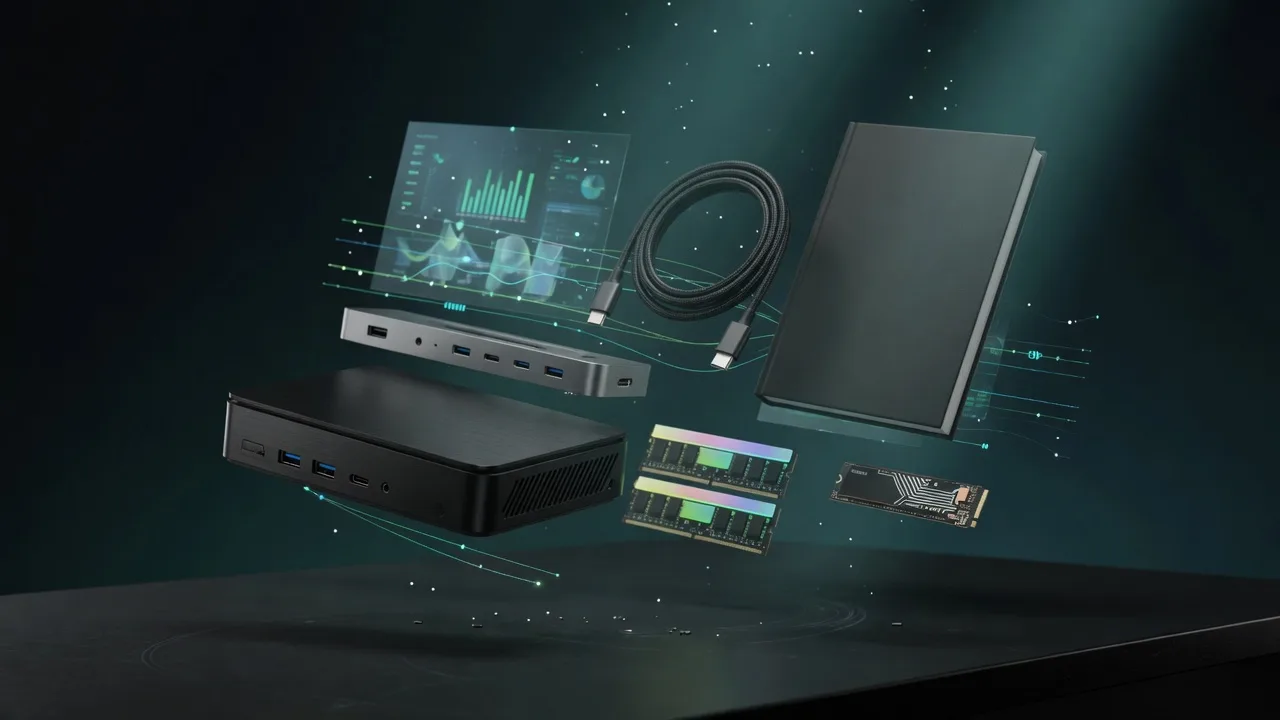
Docks, fast storage, cables, and a UPS sized for a local AI machine.

Rent this class of GPU by the hour before you buy. Live prices from RunPod and Vast.ai.
Find the break-even between buying this hardware and paying for a cloud API.
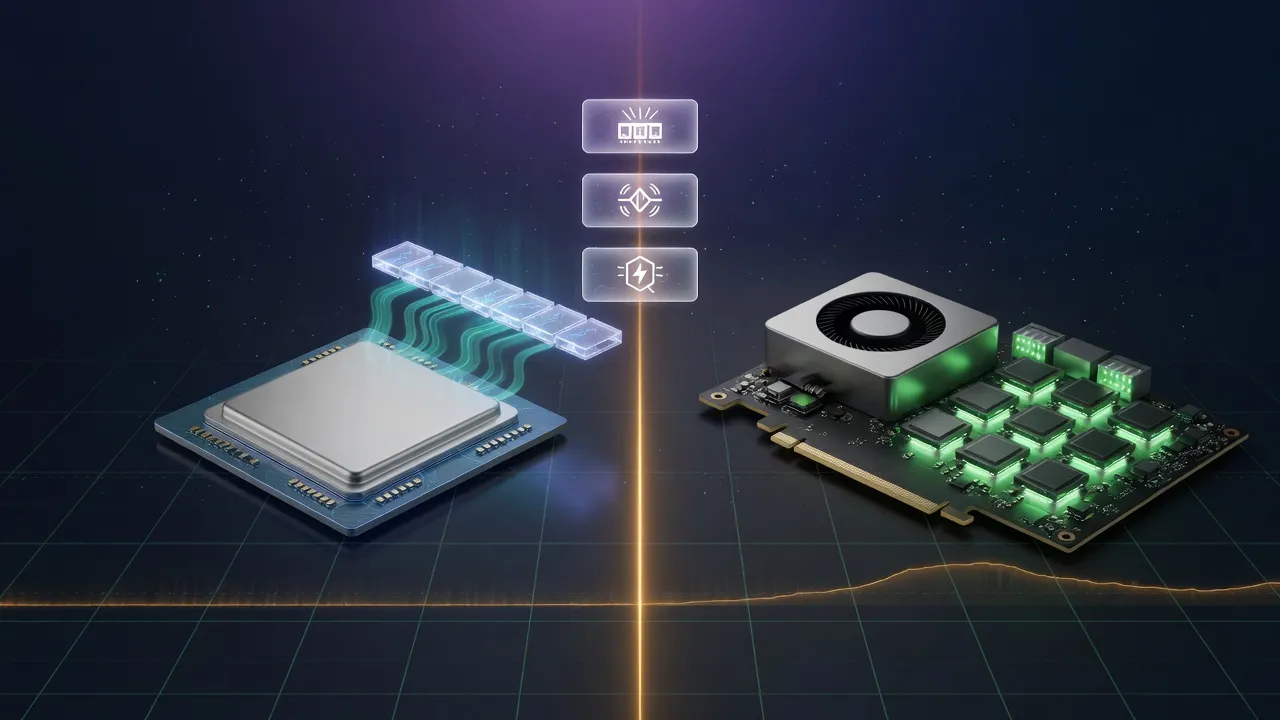
Mac vs NVIDIA for local inference, if you are still choosing a platform.