- Services
Advertising disclosure: we earn commissions when you shop through the links below.
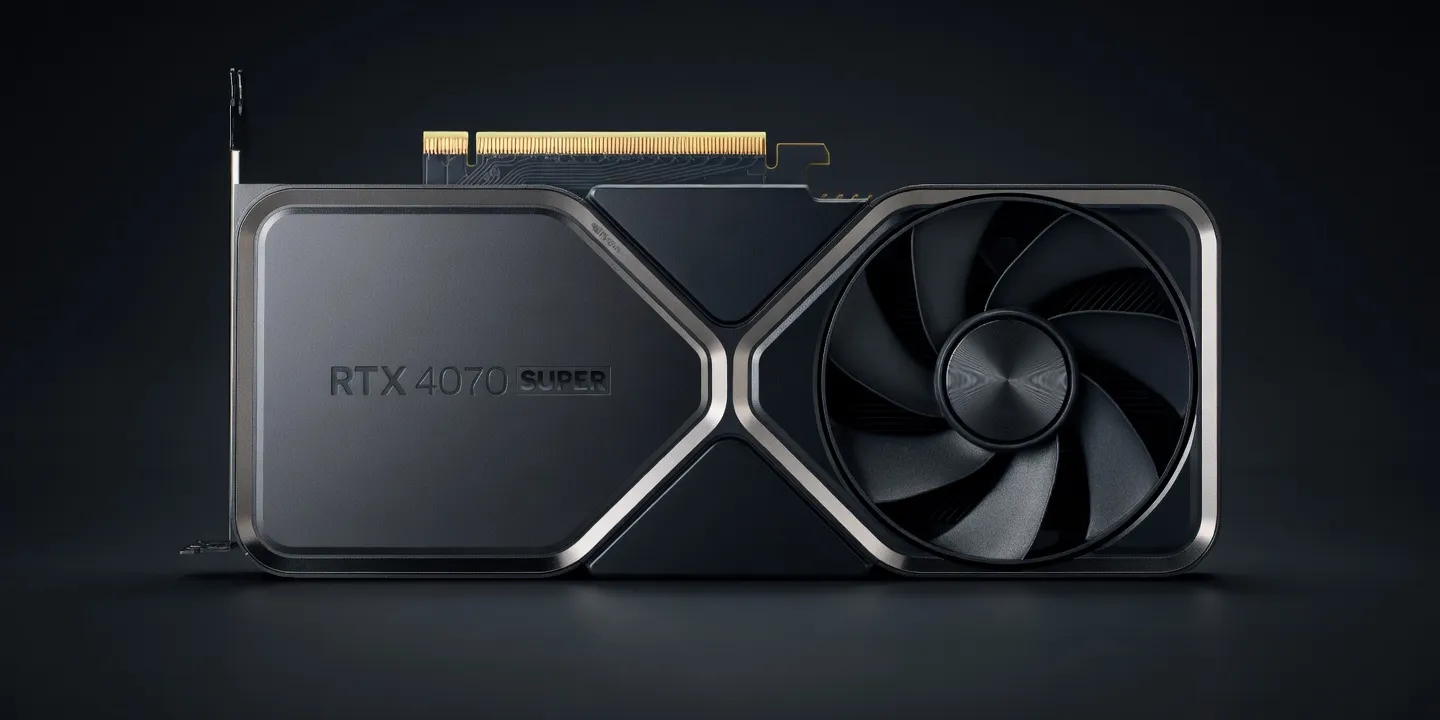
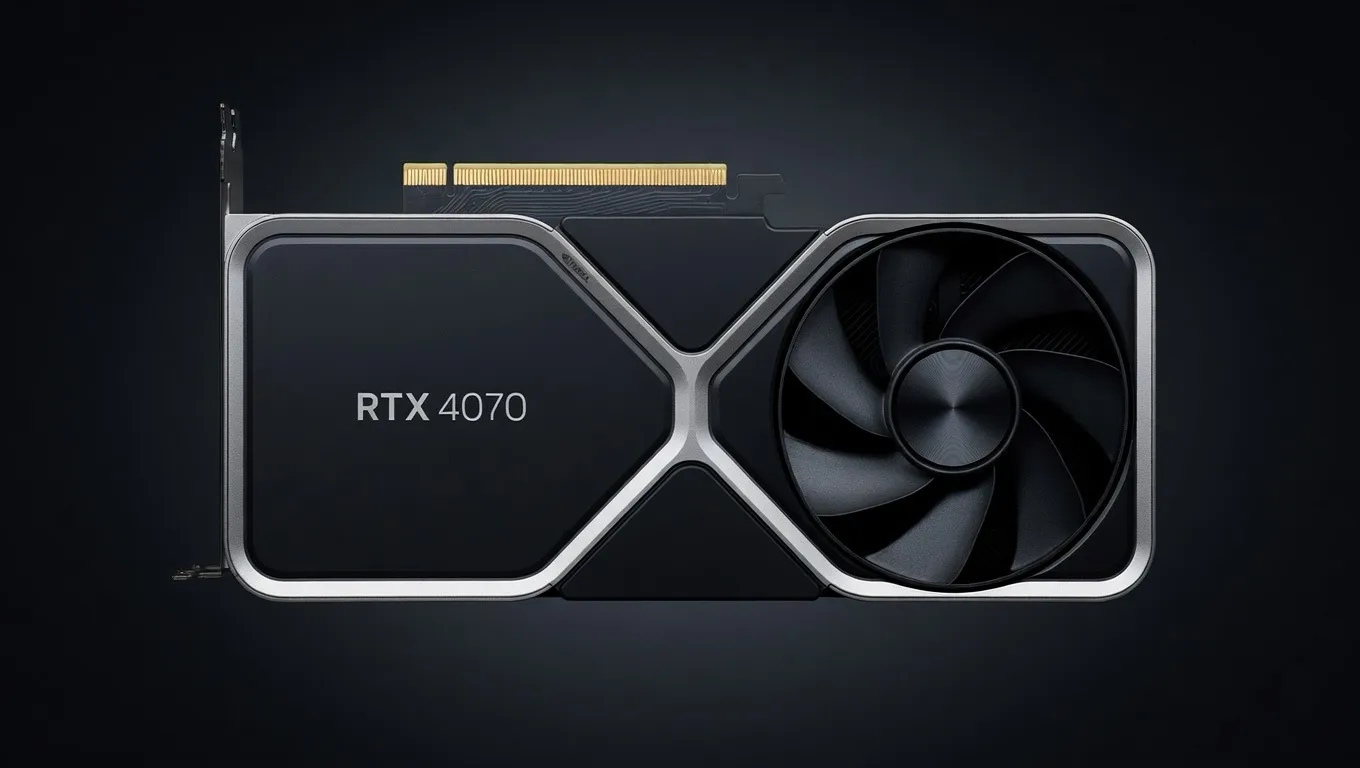
Sweet-spot Ada Lovelace GPU with 8,448 CUDA cores and 16GB GDDR6X on a 256-bit bus. Excellent value for 1440p/4K gaming and medium-scale AI inference.
Manufacturer's suggested retail price. Current prices can be higher or lower. This is not a live price.
Good balance for indie developers running local copilots and chat. 30B+ models are reachable but only with aggressive quantization and short context. Pricing puts it well above average on raw compute-per-dollar, which matters more than peak FLOPS for steady inference loads.
Generated from this product’s spec sheet. Editor reviews refine it over time.
The NVIDIA GeForce RTX 4070 Ti SUPER is a high-performance prosumer GPU based on the Ada Lovelace architecture. Positioned as a significant mid-cycle refresh, this card corrected the primary bottleneck of its predecessor by upgrading to the AD103 silicon, providing a necessary jump to 16GB of GDDR6X VRAM on a 256-bit memory bus. For AI engineers and researchers, this shift from a 192-bit to a 256-bit interface is the defining feature, as it provides the memory bandwidth required for efficient local LLM inference and computer vision tasks.
While officially marketed for high-end gaming, the RTX 4070 Ti SUPER occupies a strategic "sweet spot" in the NVIDIA lineup for AI development. It offers a more accessible entry point than the flagship RTX 4090 while providing the same 16GB VRAM capacity as the more expensive RTX 4080 SUPER. This makes it one of the best NVIDIA GPUs for running AI models locally, specifically for practitioners who need to balance compute density with power efficiency and cost. Although it has been marked as discontinued by some retailers following market shifts, it remains a gold-standard secondary-market or remaining-stock choice for local AI agent workflows.
When evaluating the NVIDIA GeForce RTX 4070 Ti SUPER for AI, the raw compute numbers tell only half the story. The integration of 4th Generation Tensor Cores and the move to a 256-bit memory bus are what drive its utility in a production environment.
The 16GB GDDR6X VRAM is the critical threshold for modern AI workloads. Many state-of-the-art open-source models are optimized for 16GB buffers. With a memory bandwidth of 672 GB/s, this card significantly outpaces the base 4070 Ti (504 GB/s), which is vital because LLM inference is almost always memory-bandwidth bound. Faster bandwidth translates directly into higher tokens per second during the generation phase.
With a TDP of 285W, the 4070 Ti SUPER is remarkably efficient compared to the 450W draw of an RTX 4090. For teams running small-scale inference servers or local workstations, this allows for high-density configurations (2-4 GPUs per system) without requiring specialized 240V electrical circuits or massive industrial cooling solutions.
The 16GB VRAM capacity defines exactly which "weight class" of models you can deploy. For practitioners building agentic workflows, the 4070 Ti SUPER is the baseline hardware for running 13B and 14B parameter models with high context windows.
The RTX 4070 Ti SUPER is widely considered one of the best for computer vision. It can handle:
For local LLM inference, using 4-bit quantization (Q4_K_M or EXL2) allows you to run a 13B parameter model while leaving enough VRAM overhead for a respectable context window (8k-16k tokens). If your workflow requires the highest precision, you can run 7B parameter models at FP16 with near-instantaneous response times.
Developers building local AI agents require low-latency inference to handle the iterative "thought" cycles of an agent. The 4070 Ti SUPER provides the throughput necessary to run an orchestrator model (like Llama 3 8B) with enough speed that the agent's "chain of thought" doesn't feel sluggish.
With 8,448 CUDA cores, this card is optimized for training and deploying CV models. It is particularly effective for real-time object detection in edge-computing simulations or local dev environments where high frame rates are required.
For startups or departmental teams that need to host an internal API for LLMs, a dual-4070 Ti SUPER setup provides 32GB of total VRAM. This is often more cost-effective and easier to cool than a single RTX 4090, while offering more flexibility for serving multiple smaller models simultaneously.
While the 4070 Ti SUPER is an inference powerhouse, it is limited for "heavy" training. It is excellent for Parameter-Efficient Fine-Tuning (PEFT) techniques like LoRA or QLoRA. However, for full-parameter fine-tuning of models larger than 7B, the 16GB VRAM will become a bottleneck.
The 4080 SUPER offers approximately 15-20% more raw compute and slightly higher memory bandwidth (736 GB/s vs 672 GB/s). However, both cards share the same 16GB VRAM capacity. For many AI inference tasks, the 4070 Ti SUPER provides better price-to-performance, as the VRAM ceiling is reached long before the extra compute of the 4080 SUPER is fully utilized.
The AMD 7900 XT offers more VRAM (20GB) at a similar price point. However, for AI development, NVIDIA remains the industry standard due to the CUDA ecosystem. Most libraries (PyTorch, vLLM, AutoGPTQ) offer "NVIDIA-first" support. While AMD's ROCm is improving, the 4070 Ti SUPER is generally the safer choice for practitioners who need "out of the box" compatibility with the latest GitHub repositories and agentic frameworks.
While Apple's Unified Memory allows for running much larger models (e.g., 70B models on a 128GB Mac), the 4070 Ti SUPER will significantly outperform Apple Silicon in raw tokens per second for models that fit within its 16GB VRAM. If your priority is speed and CUDA-native development, the 4070 Ti SUPER is the superior tool for local deployment.
The top models this device can run at 4-bit, ranked by fit and speed.
| Model | Grade | Speed | VRAM |
|---|---|---|---|
| Mixtral 8x7B InstructMistral AI | SS | 47.6 tok/s | 11.4 GB |
| AliceAI-Foundation-80B-A3B-Baseyandex | SS | 63.4 tok/s | 8.5 GB |
| DiffusionGemma 26B-A4BGoogle | SS | 51.6 tok/s | 10.5 GB |
| Gemma 4 26B-A4B ITGoogle | SS | 49.1 tok/s | 11.0 GB |
| Xing4.0-29B-A4BChina Telecom AI | SS | 48.3 tok/s | 11.2 GB |
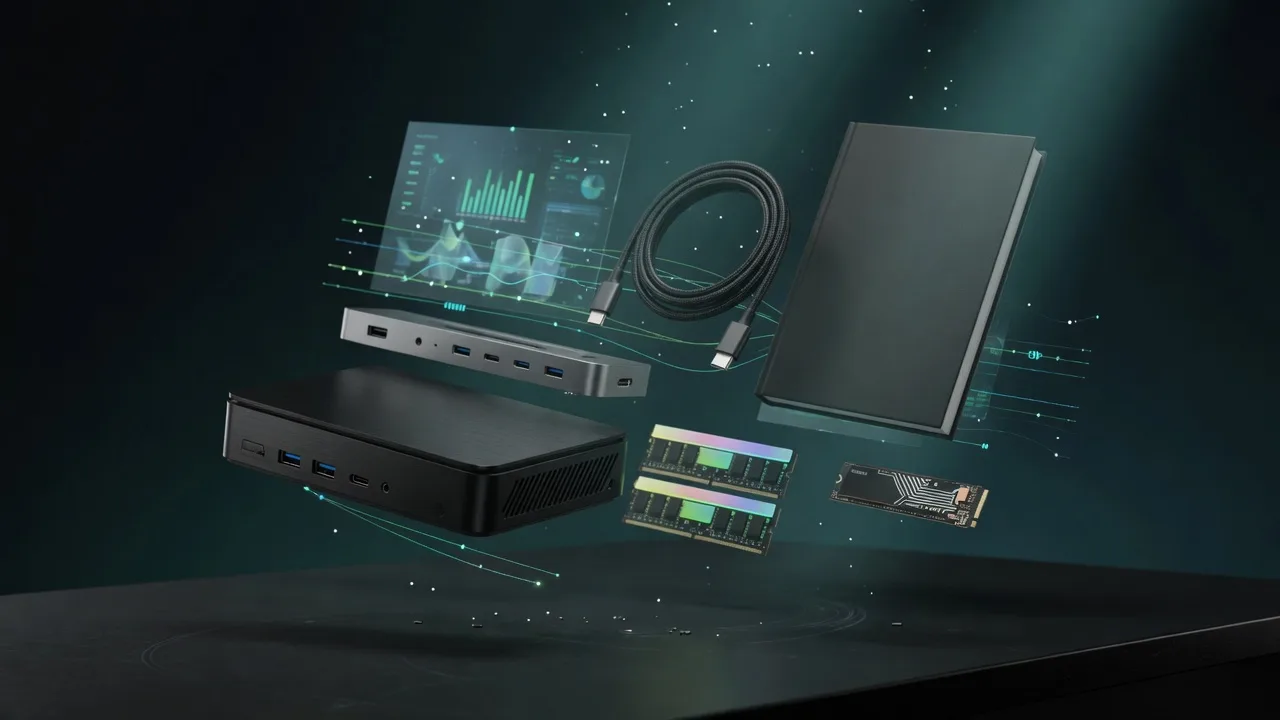
Also in Our Store
Docks, fast storage, cables, and a UPS sized for a local AI machine.

Rent this class of GPU by the hour before you buy. Live prices from RunPod and Vast.ai.
Find the break-even between buying this hardware and paying for a cloud API.
Mac vs NVIDIA for local inference, if you are still choosing a platform.