- Services
Advertising disclosure: we earn commissions when you shop through the links below.
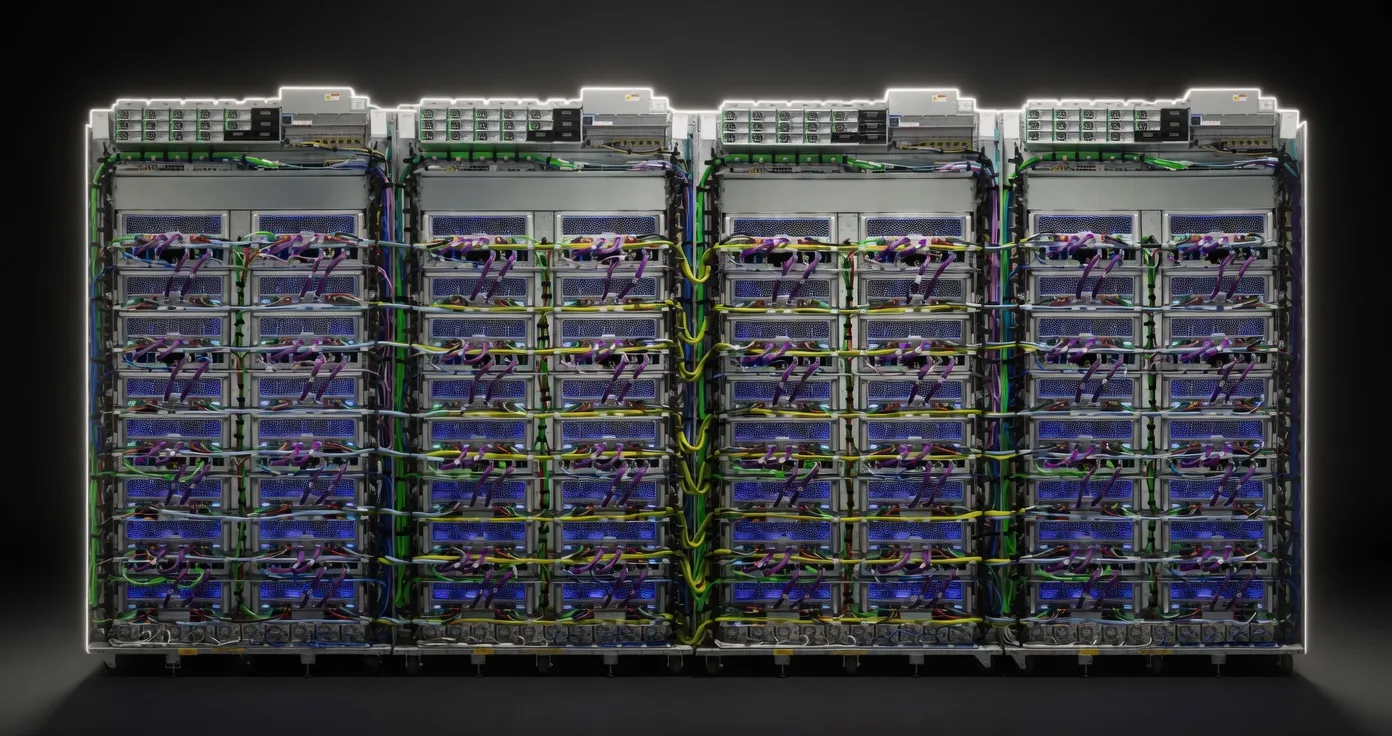
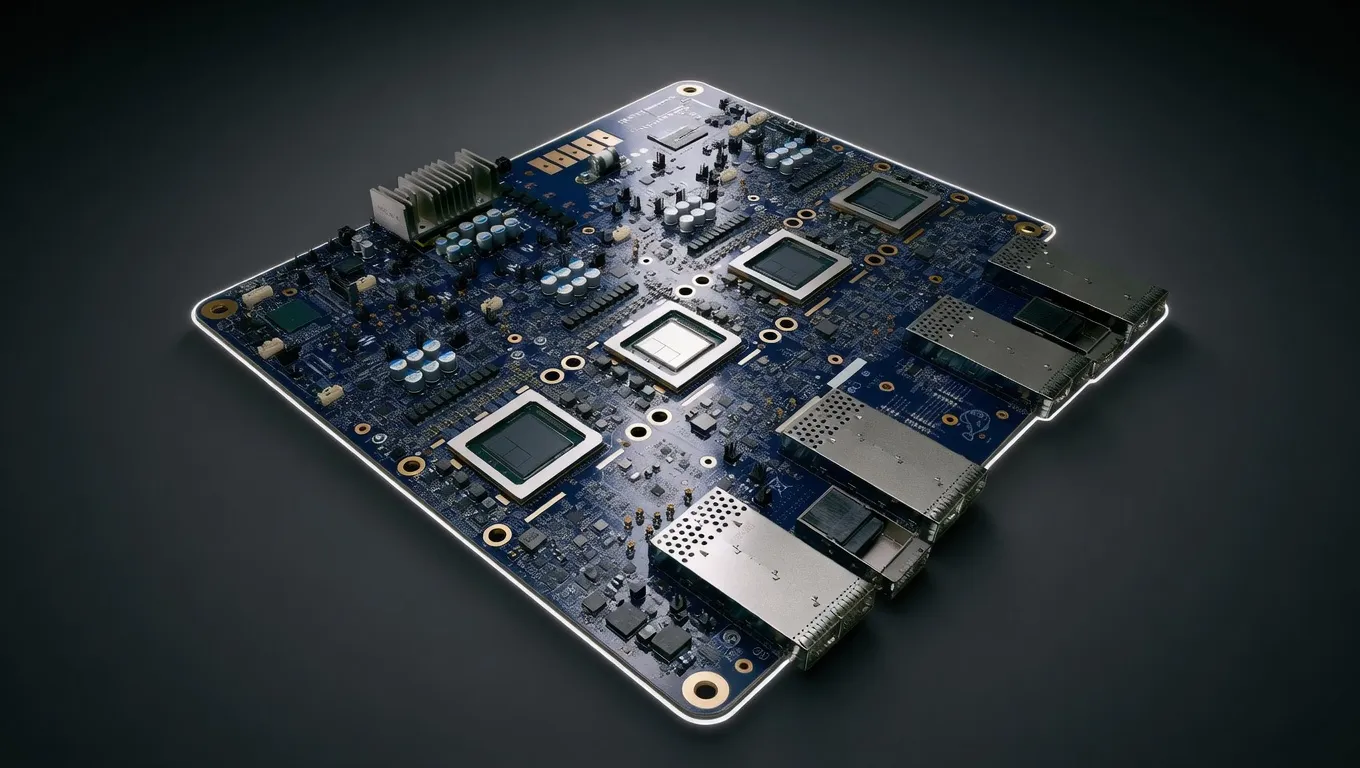
TPU 8i Max is Google's dual-chip eighth-generation TPU package, announced on November 9, 2026. It binds two TPU 8i inference chips into one package, giving twice the compute, twice the on-chip SRAM and twice the HBM bandwidth of a single TPU 8i in the same rack footprint. Google targets it at agent workloads with very large context windows, where memory bandwidth rather than math is the limit. Google has not published pricing or a ship date; Bloomberg reported both new systems arrive next year.
Sized for production serving of 70B–200B class models at full or lightly-quantized precision. Overkill for a homelab; right call when the workload pays for itself in token volume.
Generated from this product’s spec sheet. Editor reviews refine it over time.
The TPU 8i Max is Google's dual-chip eighth-generation custom accelerator package, engineered to tackle the memory-bandwidth bottlenecks inherent to modern reasoning and multi-step agent systems. Announced on November 9, 2026, the architecture binds two discrete TPU 8i inference dies into a unified package. This setup delivers twice the raw compute, doubles the on-chip SRAM to 768 MB, and doubles HBM bandwidth to an exceptional 17,200 GB/s (17.2 TB/s), all while preserving the physical rack footprint of standard eighth-generation deployments.
Positioned firmly at the top of the datacenter and private cloud tier, the TPU 8i Max targets infrastructure operators, enterprise research labs, and teams serving multi-million-token context windows. While cataloged under Unknown hardware for AI development in third-party indexing registries, the silicon represents Google's specialized answer to monolithic and multi-chip competitors such as the NVIDIA Blackwell B200 and H200. Where standard inference silicon chokes during the memory-bound autoregressive decoding phase, the TPU 8i Max attacks latency by keeping parameters and massive KV caches closer to the execution units.
Deploying the TPU 8i Max for AI workloads bypasses the standard trade-offs between context length and latency. By packing 384 GB of high-bandwidth memory directly onto the dual-chip assembly, Google has built an engine tailored for continuous multi-turn tool calling, complex reasoning loops, and document-level retrieval without requiring sprawling multi-node model parallelism for standard production models.
Evaluating hardware for large-scale serving requires looking beyond raw peak FLOPS. The generation phase of autoregressive language models is overwhelmingly memory-bandwidth bound at lower batch sizes, while long context windows create massive KV-cache footprints.
The standout metric of the TPU 8i Max AI inference performance profile is its 17.2 TB/s aggregate memory bandwidth. Compared to standard enterprise accelerators that sit between 3.2 TB/s and 8 TB/s, this bandwidth enables unprecedented single-package throughput. The 768 MB of pooled on-chip SRAM provides an ultra-low-latency staging area for intermediate activation states, attention matrices, and dynamic KV cache slices, reducing frequent trips to HBM during long-sequence generation.
From a thermal and infrastructure standpoint, doubling silicon density within the existing eighth-generation rack envelope allows private datacenters and cloud clusters to double their compute without re-architecting rack cooling loops or power distribution planes. The balance of 384 GB capacity and 17.2 TB/s throughput makes it a premier 384GB GPU for AI alternative in enterprise environments.
With 384 GB of high-speed HBM per package, the TPU 8i Max changes the sizing math for hosting production open-weights models and dense reasoning systems.
For developers evaluating hardware for running 70B parameter models, the TPU 8i Max offers uncompromised execution:
Running 400B+ parameter checkpoints typically demands a 4-way to 8-way GPU cluster:
While INT4 quantization fits enormous models into smaller spaces, the sweet spot for the TPU 8i Max is native FP8 and BF16 execution. The 384 GB pool eliminates the need for low-bit quantization on models under 100 billion parameters, preserving full reasoning capabilities for critical agent loops.
The TPU 8i Max is designed for specific deployment tiers:
Teams deploying persistent multi-step agents require persistent long contexts. The TPU 8i Max serves as the best hardware for local AI agents 2026 demands in on-prem enterprise clusters, where agents hold code repositories, documentation, and continuous chat histories directly in active memory.
While TPUs were historically cloud-only, modern enterprise access programs allow organizations to install complete TPU systems directly into private datacenters. For organizations running sensitive medical, legal, or financial LLMs under strict data-residency laws, an on-prem TPU 8i Max cluster is a viable alternative to traditional hardware stacks.
This silicon is not targeted at individual hobbyists building desktop workstations. It is purpose-built for AI engineers who require the best AI chip for local deployment across corporate datacenters or dedicated TPU slices in Google Cloud. Using modern PyTorch support via OpenXLA and automated compilation tools, developers can run standard Hugging Face checkpoints without re-writing native CUDA kernels.
Evaluating the TPU 8i Max requires looking at its primary enterprise alternative, the NVIDIA Blackwell B200 accelerator.
If your primary objective is running massive context windows, eliminating multi-node communication bottlenecks on 70B-class models, and leveraging extreme memory bandwidth for multi-agent loops, the TPU 8i Max represents one of the most capable inference accelerators announced for next-generation AI infrastructure.
The top models this device can run at 4-bit, ranked by fit and speed.
| Model | Grade | Speed | VRAM |
|---|---|---|---|
| Mistral Large 2Mistral AI | SS | 70.0 tok/s | 197.8 GB |
| ERNIE 5.5 Flash BaseBaidu | SS | 114.8 tok/s | 274.9 GB |
| DeepSeek-V4-FlashDeepSeek | SS | 123.6 tok/s | 269.2 GB |
| Hunyuan Hy3Tencent | SS | 244.1 tok/s | 215.6 GB |
| Hy3Tencent | SS | 248.6 tok/s | 214.6 GB |
Among 5 similar devices, the TPU 8i Max ranks #1 for memory and #1 for memory bandwidth.
Also in Our Store
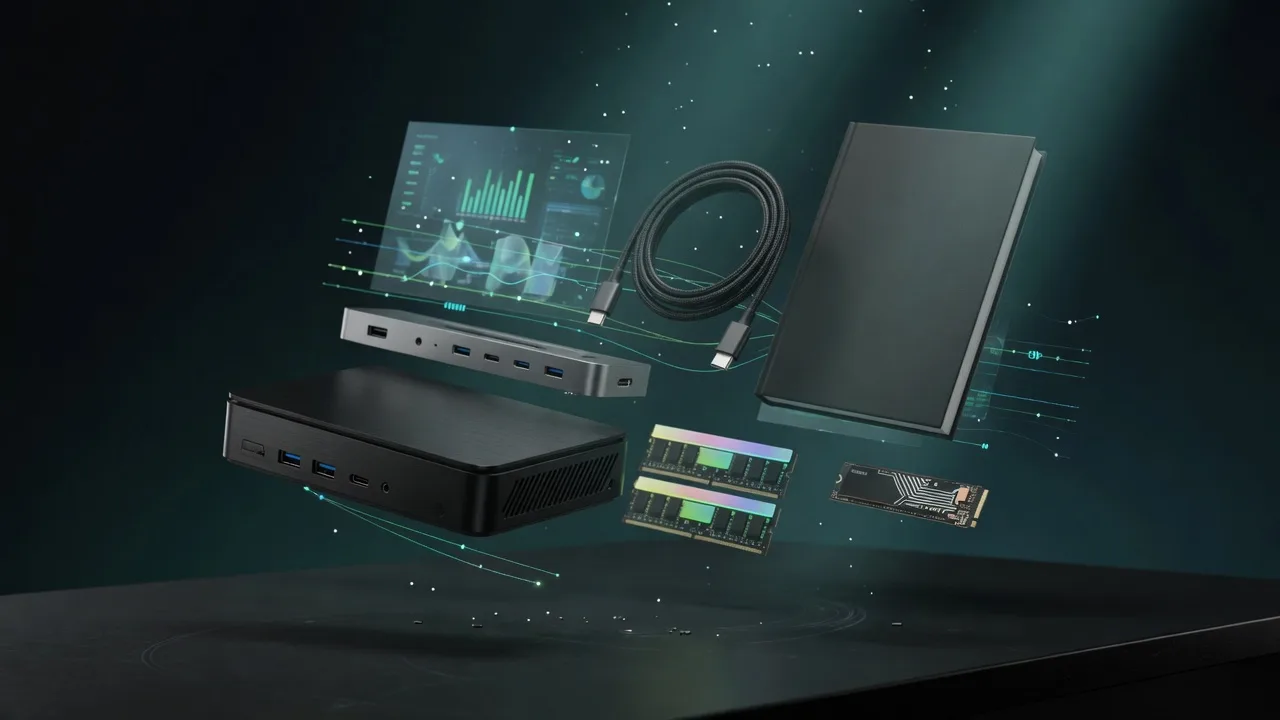
Docks, fast storage, cables, and a UPS sized for a local AI machine.

Rent this class of GPU by the hour before you buy. Live prices from RunPod and Vast.ai.
Find the break-even between buying this hardware and paying for a cloud API.
Mac vs NVIDIA for local inference, if you are still choosing a platform.