- Services
Advertising disclosure: we earn commissions when you shop through the links below.
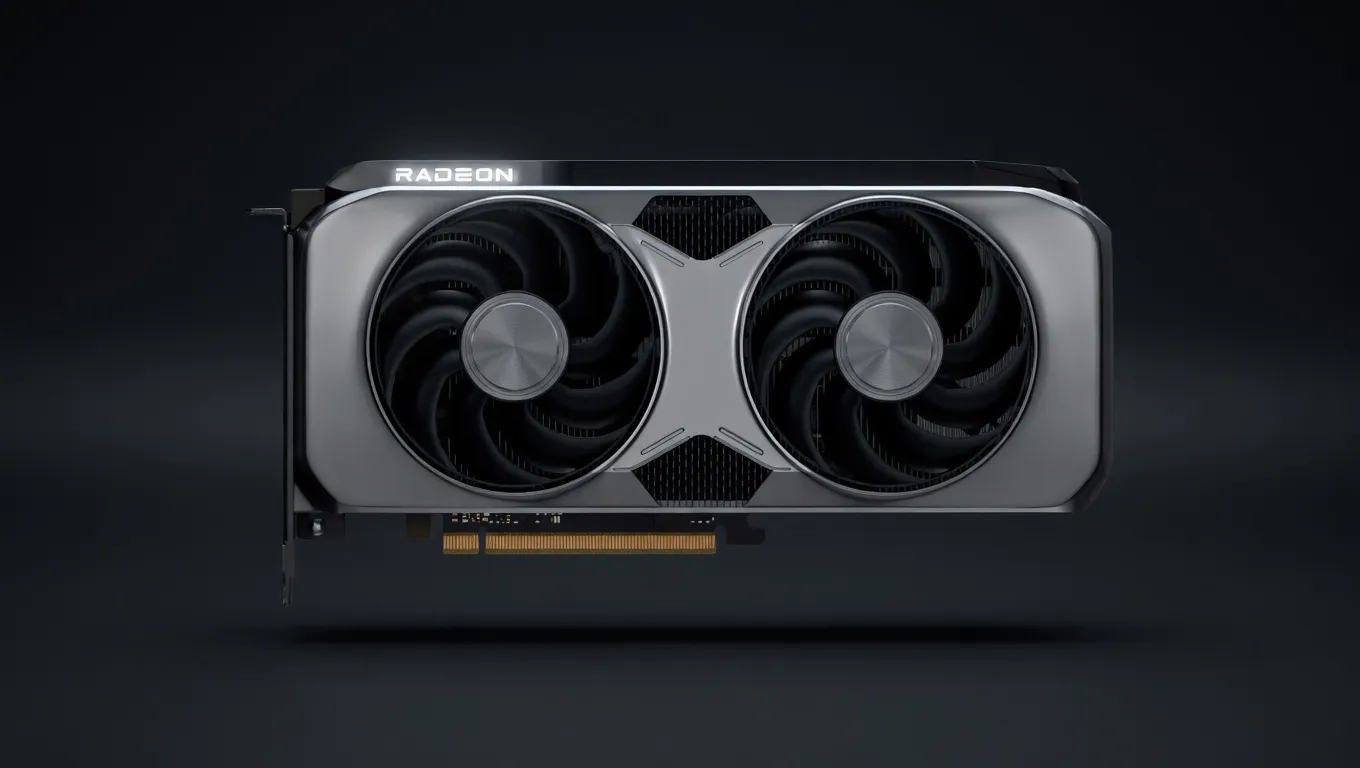
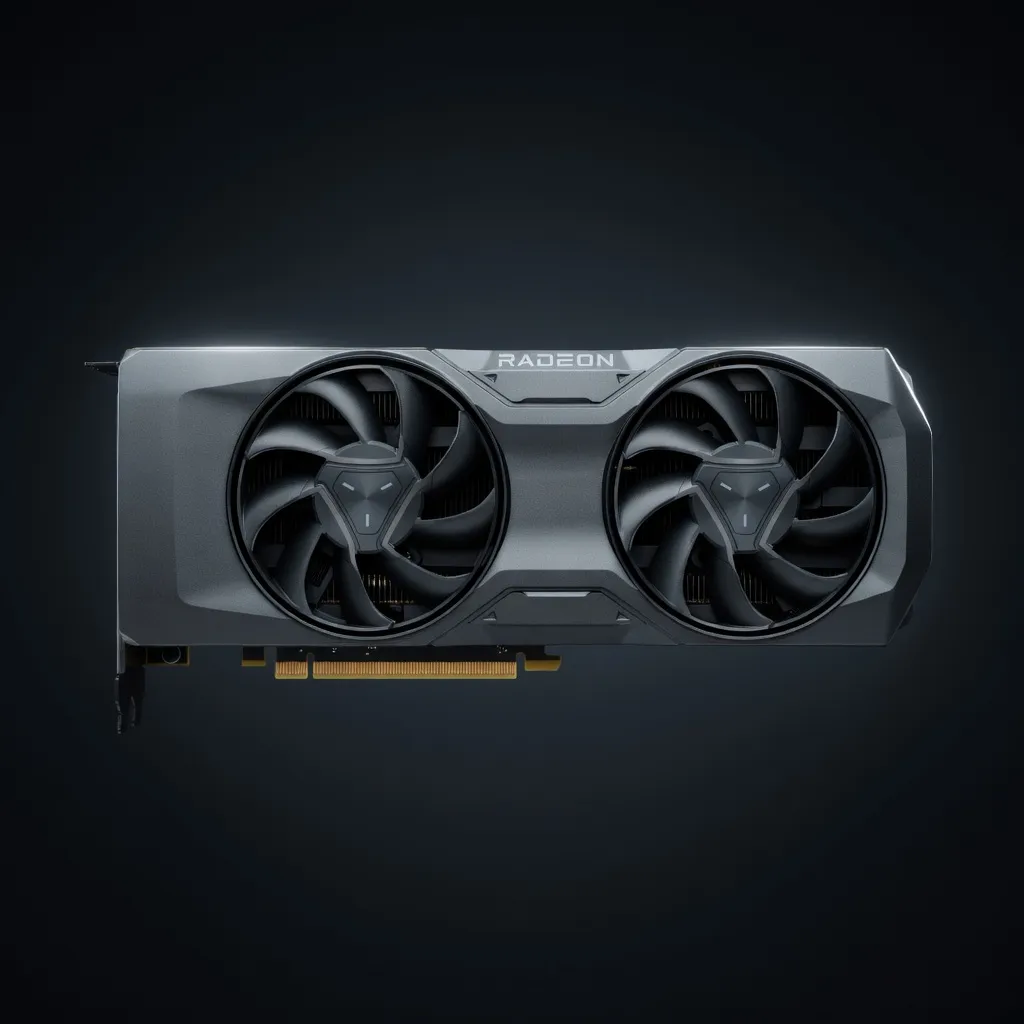
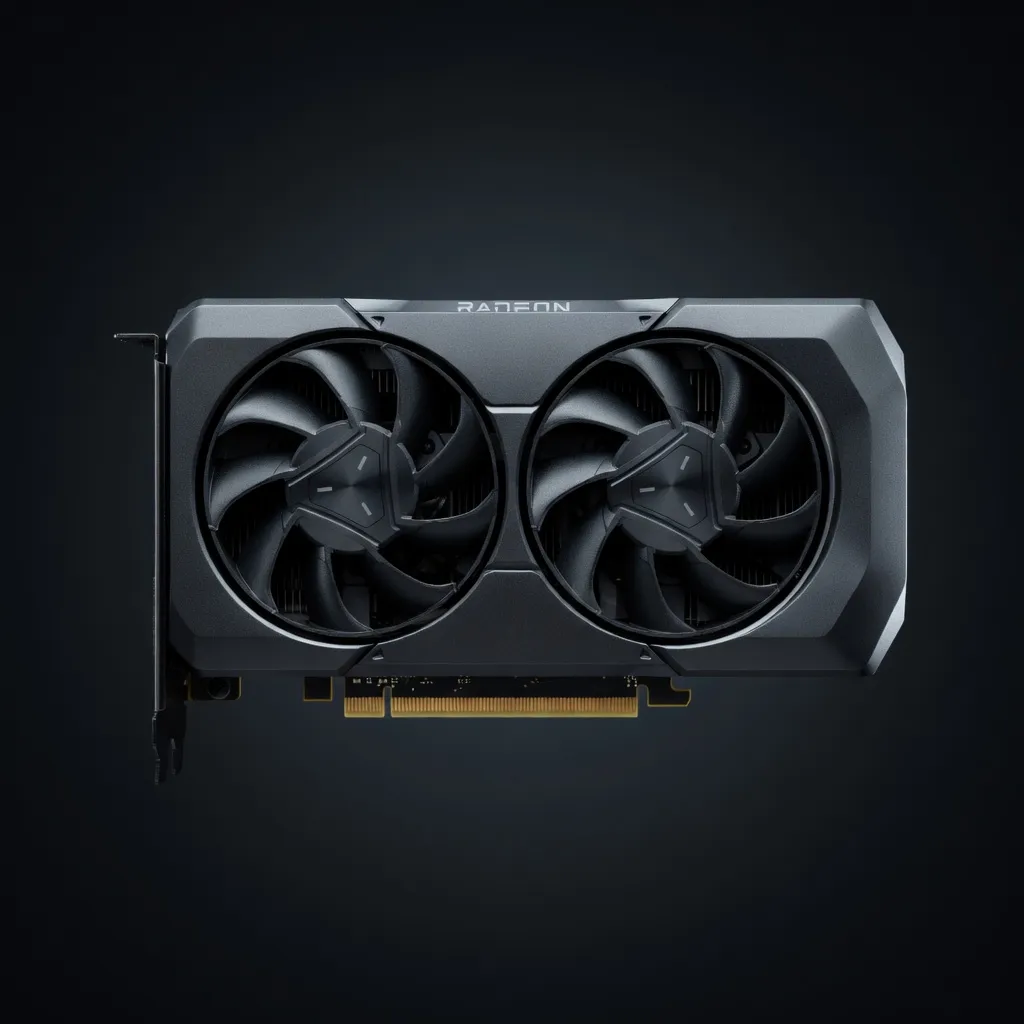
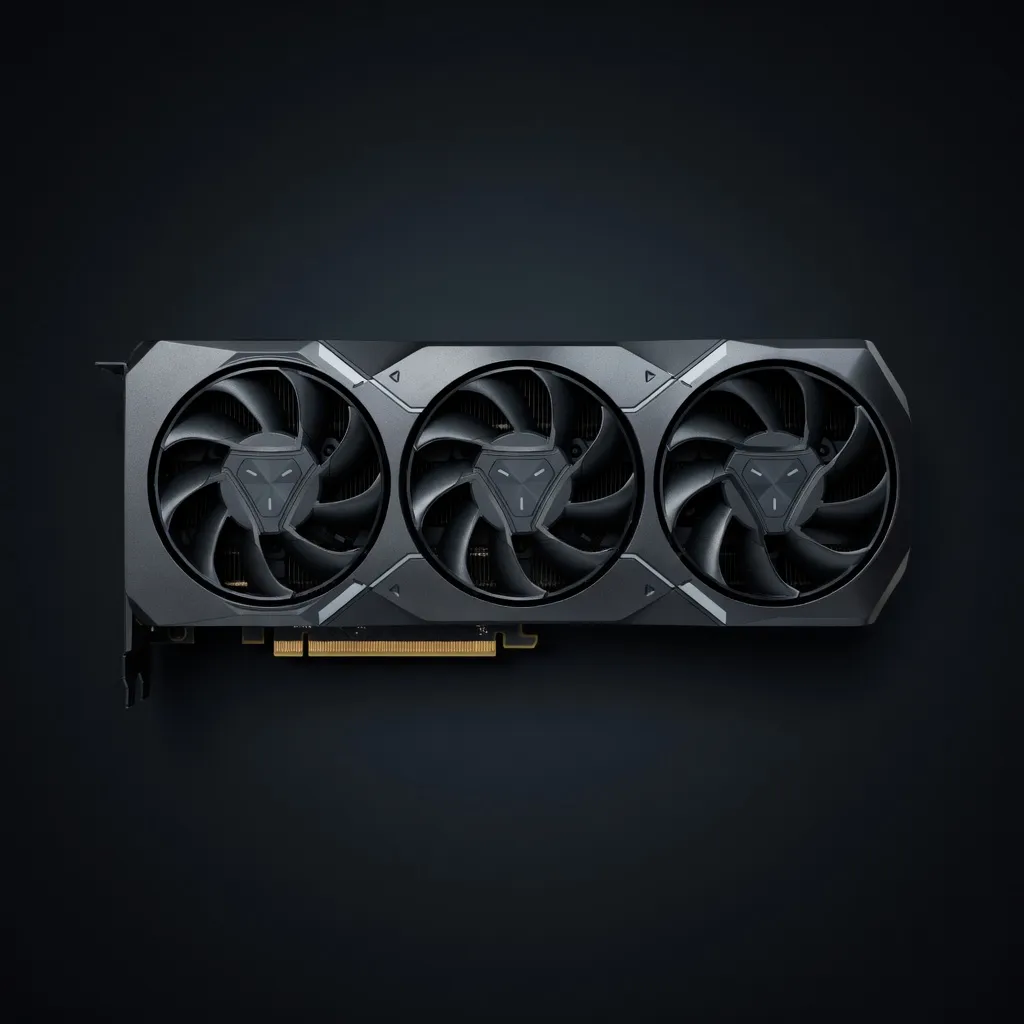
RDNA 4 mid-range GPU with 16GB GDDR6 and 56 compute units. Offers 4GB more VRAM than the competing RTX 5070 at the same $549 price, with strong 1440p performance.
Good balance for indie developers running local copilots and chat. 30B+ models are reachable but only with aggressive quantization and short context.
Generated from this product’s spec sheet. Editor reviews refine it over time.
The AMD Radeon RX 9070 represents a strategic shift in the mid-range GPU market, prioritizing VRAM capacity and architectural efficiency over raw flagship performance. Built on the RDNA 4 (Navi 48) architecture and manufactured on TSMC’s 4nm process, this card is positioned as a high-value entry point for developers and researchers who need more than the standard 8GB or 12GB of memory typically found at the $549 price point.
For practitioners building agentic workflows or running local inference, the RX 9070 is a "utility" card. It isn't designed to compete with the H100 or the RTX 4090 in raw TFLOPS, but it solves a specific problem: providing enough VRAM to fit modern 7B and 8B parameter models comfortably while maintaining a 220W power envelope. Compared to its direct rival, the NVIDIA RTX 5070, the RX 9070 offers an additional 4GB of VRAM (16GB vs 12GB), making it a superior choice for memory-intensive computer vision tasks and larger context windows in local LLM deployments.
When evaluating the AMD Radeon RX 9070 for AI, the most critical metric is the 16GB of GDDR6 memory. In AI inference, VRAM capacity determines the maximum model size you can load, while memory bandwidth determines the speed at which you can generate tokens.
The RX 9070 features a 256-bit memory bus delivering 640 GB/s of bandwidth. This is a significant specification for local LLM performance, as bandwidth is almost always the bottleneck during the auto-regressive decoding phase of text generation. At 640 GB/s, the RX 9070 can sustain high tokens-per-second (t/s) counts for models that fit entirely within its memory buffer.
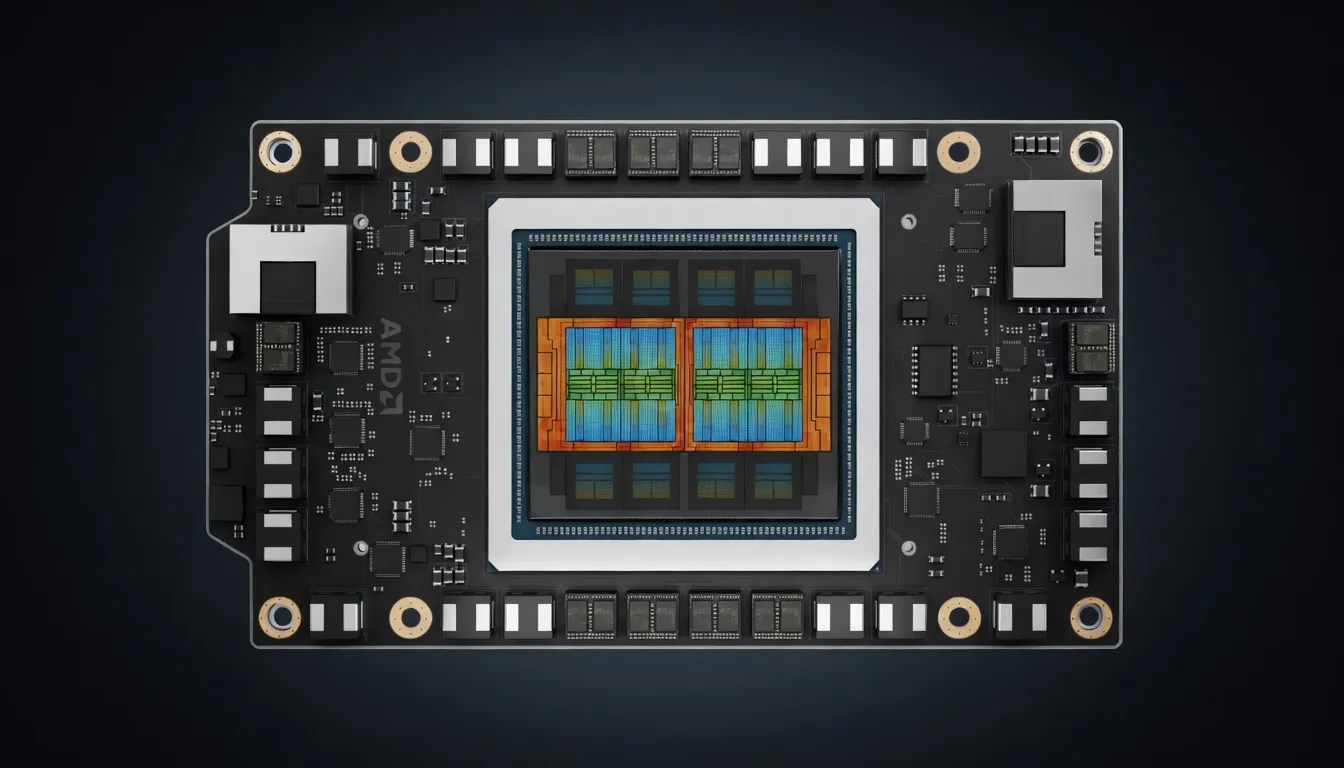
With 56 Compute Units (CUs) and 3,584 Stream Processors, the RDNA 4 architecture introduces improved ray tracing and, more importantly for AI, enhanced WMMA (Wave Matrix Multiply-Accumulate) instructions. These hardware accelerators are utilized by AMD’s ROCm software stack to speed up the matrix multiplications central to transformer-based models and convolutional neural networks (CNNs).
The 220W TDP makes this card easy to integrate into existing workstations without requiring specialized power supplies or elaborate cooling solutions. For teams running 24/7 inference servers or local AI agents, the performance-per-watt on the TSMC 4nm node represents a viable path toward reducing operational costs compared to older, power-hungry architectures.
The RX 9070 is optimized for "edge-heavy" or "workstation-local" AI. Its 16GB VRAM capacity allows it to handle a variety of state-of-the-art models that would otherwise require aggressive quantization or multi-GPU setups on lesser hardware.
The RX 9070 is the ideal hardware for running 7B at Q4 parameter models, but its 16GB ceiling allows for even higher fidelity:
While actual AMD Radeon RX 9070 tokens per second will vary based on the implementation (e.g., llama.cpp vs. vLLM), users can expect:
The 16GB buffer makes this one of the best for Computer Vision in the sub-$600 category. It can handle:
The RX 9070 is a premier choice for hardware for local AI agents 2025. Agents often require a "holding" LLM to remain active in the background while processing tools or environmental inputs. 16GB allows a developer to run a 7B model for logic and still have VRAM overhead for embedding models (like BGE-M3) and vector databases.
Researchers working on object detection (YOLOv10/v11) or video analysis will find the 16GB VRAM essential. It allows for larger batch sizes during fine-tuning or the processing of higher-resolution video frames without out-of-memory (OOM) errors.
For those who need AMD GPUs for AI development but cannot justify the cost of an Instinct MI300 or an RTX 6000 Ada, the RX 9070 provides a professional-grade memory ceiling at a consumer price. It is particularly effective for fine-tuning small models using LoRA (Low-Rank Adaptation) or QLoRA.
The primary competition for the RX 9070 is the NVIDIA RTX 5070.
When choosing between them, practitioners should opt for the RX 9070 if their primary bottleneck is memory capacity for LLMs or large image tensors. If your workflow strictly requires proprietary CUDA libraries (like certain specialized NeRF implementations or legacy 3D software), the NVIDIA alternative may be necessary, but for standard transformer and diffusion workloads, the RX 9070's hardware advantage is compelling.
The top models this device can run at 4-bit, ranked by fit and speed.
| Model | Grade | Speed | VRAM |
|---|---|---|---|
| Mixtral 8x7B InstructMistral AI | SS | 45.3 tok/s | 11.4 GB |
| AliceAI-Foundation-80B-A3B-Baseyandex | SS | 60.4 tok/s | 8.5 GB |
| DiffusionGemma 26B-A4BGoogle | SS | 49.1 tok/s | 10.5 GB |
| Gemma 4 26B-A4B ITGoogle | SS | 46.8 tok/s | 11.0 GB |
| Xing4.0-29B-A4BChina Telecom AI | SS | 46.0 tok/s | 11.2 GB |
Among 6 similar devices, the AMD Radeon RX 9070 ranks #3 for memory and #3 for memory bandwidth.
Also in Our Store
Docks, fast storage, cables, and a UPS sized for a local AI machine.

Rent this class of GPU by the hour before you buy. Live prices from RunPod and Vast.ai.
Find the break-even between buying this hardware and paying for a cloud API.
Mac vs NVIDIA for local inference, if you are still choosing a platform.