- Services

Kolibri 1.1 is Aleph Alpha's open-weight German and English mixture-of-experts reasoning model, released on 23 November 2026 under the Apache 2.0 license. It has 75B total parameters with 3.44B active per token, a native context of 262,144 tokens that can extend to 1,048,576, and a knowledge cutoff of 18 June 2026. It supports an explicit reasoning mode and tool calling, and Aleph Alpha reports it needs 3.4 times less GPU time per task than Kolibri 1.0. Weights are on Hugging Face with GGUF quantisations plus vLLM and transformers support.
A solid 75.13B-parameter MoE language model from aleph-alpha. Pulls ahead on competition math (AIME 2026) (96/100), so reach for it when that's the dimension that matters. Newly released, so production-readiness is still being shaken out.
Generated from this model’s benchmarks and ranking signals. Editor reviews refine it over time.
Access model weights, configuration files, and documentation.
Benchmark data sourced from: Hugging Face, Arena.ai, Artificial Analysis.
Average benchmark score against active parameters for every text model we track. Models higher up deliver more quality for their size.
See how different quantization levels affect VRAM requirements and quality for this model.
| Format | VRAM Required | Quality | |
|---|---|---|---|
| Q2_K | 35.5 GB | Low | |
| Q4_K_MRecommended | 51.3 GB | Good | |
| Q5_K_M | 58.8 GB | Very Good | |
| Q6_K | 67.8 GB | Excellent | |
| Q8_0 | 86.6 GB | Near Perfect | |
| FP16 | 158.0 GB | Full |
The top devices for this model at 4-bit, ranked by fit and speed.
| Device | Grade | Speed | VRAM |
|---|---|---|---|
| Corsair AI Workstation 300 (Ryzen AI Max+ 395)Corsair | SS | 42.4 tok/s | 51.3 GB |
| Google Cloud TPU v5pGoogle | SS | 229.2 tok/s | 51.3 GB |
| Intel Gaudi 2 AI AcceleratorIntel | SS | 203.1 tok/s | 51.3 GB |
| NVIDIA A100 SXM4 80GBNVIDIA | SS | 169.1 tok/s | 51.3 GB |
| NVIDIA H100 SXM5 80GBNVIDIA | SS | 277.7 tok/s | 51.3 GB |
Energy cost on Corsair AI Workstation 300 (Ryzen AI Max 385) (~21 tok/s, Q4_K_M) vs flagship API pricing.
| Source | Cost per 1M tokens |
|---|---|
Local (energy only)Kolibri 1.1 on Corsair AI Workstation 300 (Ryzen AI Max 385) · ~21 tok/s · 150W | $0.236 |
GPT-6.2 SolOpenAI · in $2.00 · out $10.00 | $4.40 |
Claude Fable 5.2Anthropic · in $8.00 · out $40.00 | $17.60 |
Gemini 4 NeonGoogle · in $3.00 · out $15.00 | $6.60 |
Grok 4.5xAI · in $2.00 · out $6.00 | $3.20 |
API prices blended at 70% input / 30% output.
Hardware amortisation not included. Run the full ROI calculator for payback math.
Cheapest current cloud rentals with at least 51 GB VRAM, refreshed hourly.
Advertising disclosure: we earn commissions when you shop through the links below.
| Option | Cost / GPU-hour |
|---|---|
NVIDIA A100 80GB PCIeVast.ai · Spot · 80 GB VRAM | $0.14 |
NVIDIA A100 80GB SXMVast.ai · Spot · 80 GB VRAM | $0.24 |
NVIDIA A100 80GB PCIeVast.ai · On-Demand · 80 GB VRAM | $0.37 |
NVIDIA A100 80GB SXMVast.ai · On-Demand · 80 GB VRAM | $0.40 |
NVIDIA H100 PCIeVast.ai · Spot · 80 GB VRAM | $0.67 |
Per-GPU rate across RunPod, the Vast.ai marketplace, DigitalOcean, and Vultr.
Spot tier is interruptible. Plan for restarts when comparing against on-demand prices.
Cumulative cost of buying the smallest device in our directory that runs this model at 4-bit, compared with paying flagship APIs for the same token volume.
Assumes 1 million tokens a day, a 70/30 input and output mix and $0.12 per kWh. The device only runs as long as the workload needs. Use the ROI calculator for your own numbers.
Kolibri 1.1 is Aleph Alpha's open-weight mixture-of-experts (MoE) reasoning model, released on November 23, 2026, under the permissive Apache 2.0 license. Built specifically for high-efficiency enterprise and sovereign infrastructure, the model balances massive parameter capacity with minimal compute overhead. It features 75.13B total parameters but activates only 3.44B parameters per token during inference. This architectural balance allows it to deliver competitive frontier reasoning, multi-step math, and robust tool-calling without the massive computational penalties associated with running dense 70B+ architectures.
Developed under European jurisdiction with an explicit focus on German and English, Kolibri 1.1 serves developers who require strict compliance, local deployment guarantees, and reliable bilingual performance. Compared to Kolibri 1.0, this iteration requires 3.4 times less GPU compute time per task while generating 41% fewer output tokens to reach answers, thanks to a refined explicit reasoning mode and a new sparse-attention mechanism. With a native context window of 262,144 tokens that can stretch up to 1,048,576 tokens, it operates cleanly in retrieval-heavy, long-document agentic pipelines.
Positioned against competitors like Mistral Small 4, Qwen3.8 Flash Next, and GPT-OSS 120B, Kolibri 1.1 delivers high benchmark scores at a fraction of the serving cost. For engineers looking for a local AI model 75.13B parameters 2026 release that can be hosted on on-premise hardware without bleeding memory bandwidth, Kolibri 1.1 presents one of the most cost-effective open-weight architectures currently available.
The efficiency of Kolibri 1.1 stems from a heavily optimized sparse mixture-of-experts design coupled with hybrid attention:
Kolibri 1.1 MoE efficiency creates a distinct hardware dynamic. Because only 3.44B parameters compute against any single token, execution speed is exceptionally fast once weights are in memory. However, because all 75.13B weights must reside in VRAM to prevent offloading bottlenecks during expert routing, local systems must provide sufficient memory capacity even though compute demands remain minimal.
Kolibri 1.1 is designed around explicit reasoning, high-precision retrieval, and operational sovereignty. It moves away from unnecessary verbosity, focusing instead on dense, accurate outputs across both German and English.
The model features a dedicated reasoning mode that executes step-by-step chains of thought before answering. In any Kolibri 1.1 reasoning benchmark, the model leverages this mode to solve complex analytical, mathematical, and programmatic problems. It halts output when sufficient conclusions are reached, reducing token overhead by over 40% compared to uncalibrated reasoning models.
Kolibri 1.1 excels in agentic loops requiring function-calling and external API orchestration. Aleph Alpha hardened the model against prompt-injection vectors, yielding a 99.1% resistance rate against adversarial injections hidden in external tool outputs and 93.2% in direct user prompts. It handles JSON schema generation, structured API calls, and iterative execution natively.
In software engineering workflows, the model handles code translation, automated test generation, and complex refactoring tasks. Its long context capacity allows developers to ingest entire repositories or deep dependency trees to locate regressions, parse requirements documents, and build verified pull requests without dropping earlier architectural constraints.
Unlike models that treat non-English languages as translated afterthoughts, Kolibri 1.1 maintains first-class tokenization and linguistic representation for German. In retrieval-augmented generation (RAG) contexts, it achieves an 89.1% verified citation rate, citing supporting source passages accurately and choosing to abstain when supplied documentation contains insufficient facts.
Running Kolibri 1.1 on your own hardware requires sizing your rig primarily around VRAM footprint rather than massive raw compute. Because the compute profile matches a lightweight 3.44B model, your primary hardware objective is fitting the 75.13B parameter weights into high-bandwidth memory.
The total memory footprint varies depending on your quantization target:
The best quantization for Kolibri 1.1 for most local developers is Q4_K_M. Because the model utilizes a sparse 384-expert MoE architecture, 4-bit medium quantization preserves the routing mechanics and reasoning performance with negligible degradation compared to full precision, while reducing the memory footprint to under 46 GB. For mission-critical RAG and complex legal or medical parsing where hallucination margins are zero, deploy the Q8_0 or native FP8 variant.
If you are evaluating how to run 75.13B model on consumer GPU setups, dual 24GB cards provide the best price-to-performance ratio:
tp=2), you can split the Q4_K_M GGUF weights across both cards. This setup completely fits the model weights, leaving approximately 2 GB to 4 GB for KV cache at moderate context lengths.Because only 3.44B parameters are calculated per token, Kolibri 1.1 tokens per second figures outpace standard dense 70B models by a wide margin once weights are cached:
The easiest route to run Kolibri 1.1 locally is via Ollama or a direct llama.cpp build. Aleph Alpha provides official GGUF quantizations on Hugging Face.
To run with Ollama (once imported or pulled from the library):
1ollama run kolibri:1.1-75b-q4_k_m
For high-concurrency production deployments, serve via vLLM across multiple GPUs:
1vllm serve Aleph-Alpha/Kolibri-1.1 \2 --tensor-parallel-size 2 \3 --max-model-len 32768 \4 --dtype bfloat16
Evaluating Kolibri 1.1 requires comparing it to contemporary hybrid and sparse architectures.
Mistral Small 4 is a leading dense mid-sized model for local code and tool orchestration. While Mistral Small 4 requires less total raw memory to store (fitting easily onto a single 24GB or 32GB GPU), Kolibri 1.1 delivers higher inference generation speeds due to its 3.44B active compute footprint. Additionally, Kolibri 1.1 significantly outperforms Mistral Small 4 on native German-language legal and technical comprehension, document grounding, and prompt-injection resilience.
GPT-OSS 120B operates with a larger parameter pool, demanding substantial 8-bit or MXFP4 memory clustering (often requiring at least 80GB to 120GB of VRAM). Kolibri 1.1 scores higher on aggregate efficiency benchmarks, using 3.4 times less compute time while matching or exceeding GPT-OSS 120B on math and step-by-step logic. If you have limited dual-GPU hardware, Kolibri 1.1 Q4_K_M is deployable on a 48GB footprint where GPT-OSS 120B cannot fit.
Qwen3.8 Flash Next represents the closest architectural competitor on the Pareto frontier of cost versus capability. While Qwen offers exceptional general coding and multi-language East Asian capabilities, Kolibri 1.1 is the superior choice for European enterprise stacks, offering verifiable document citations, compliance under the EU GPAI Code of Practice, and specialized performance across DACH administrative and industrial workflows.

Explore the Provider
Aggregate stats, leaderboard, release timeline, and benchmark coverage across every aleph-alpha model we track.
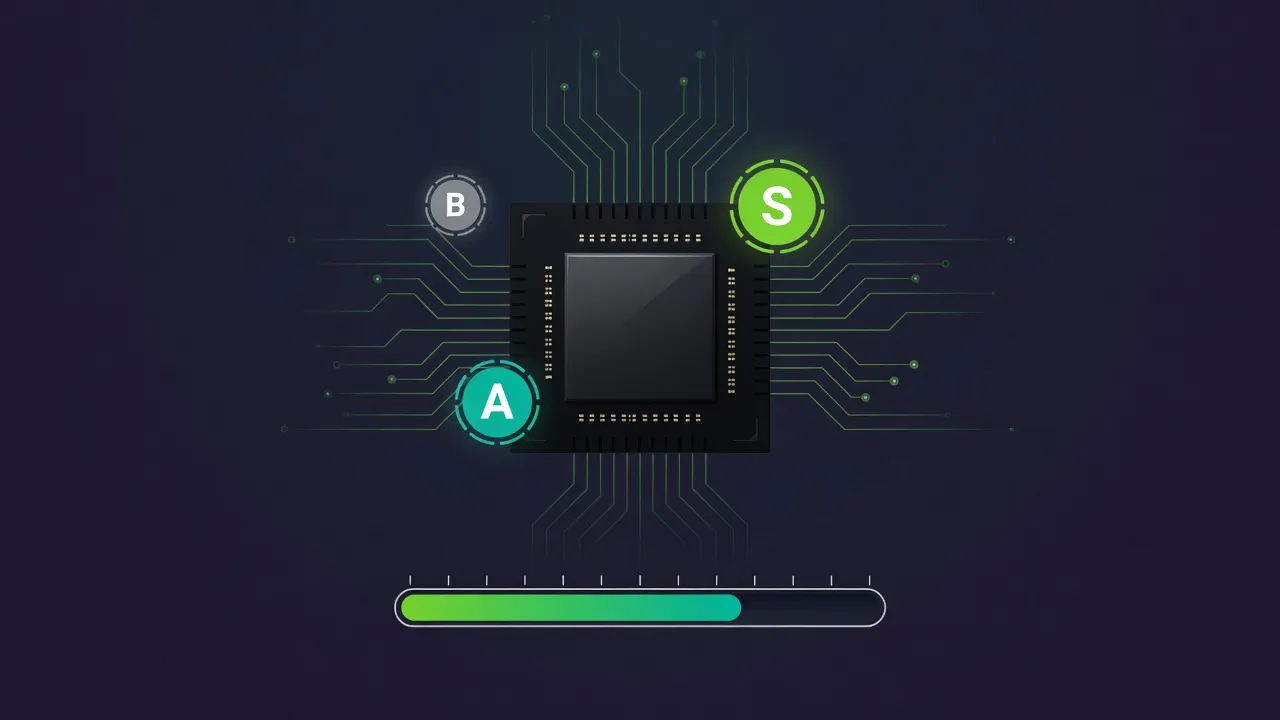
Check which of your devices can run this model and how fast.

Compare hosted per-token prices before you commit to local hardware.

Break-even math for self-hosting, renting a GPU, or paying per token.

Live status for the hosted APIs you might use instead of running this locally.
 View on Hugging Face