- Services
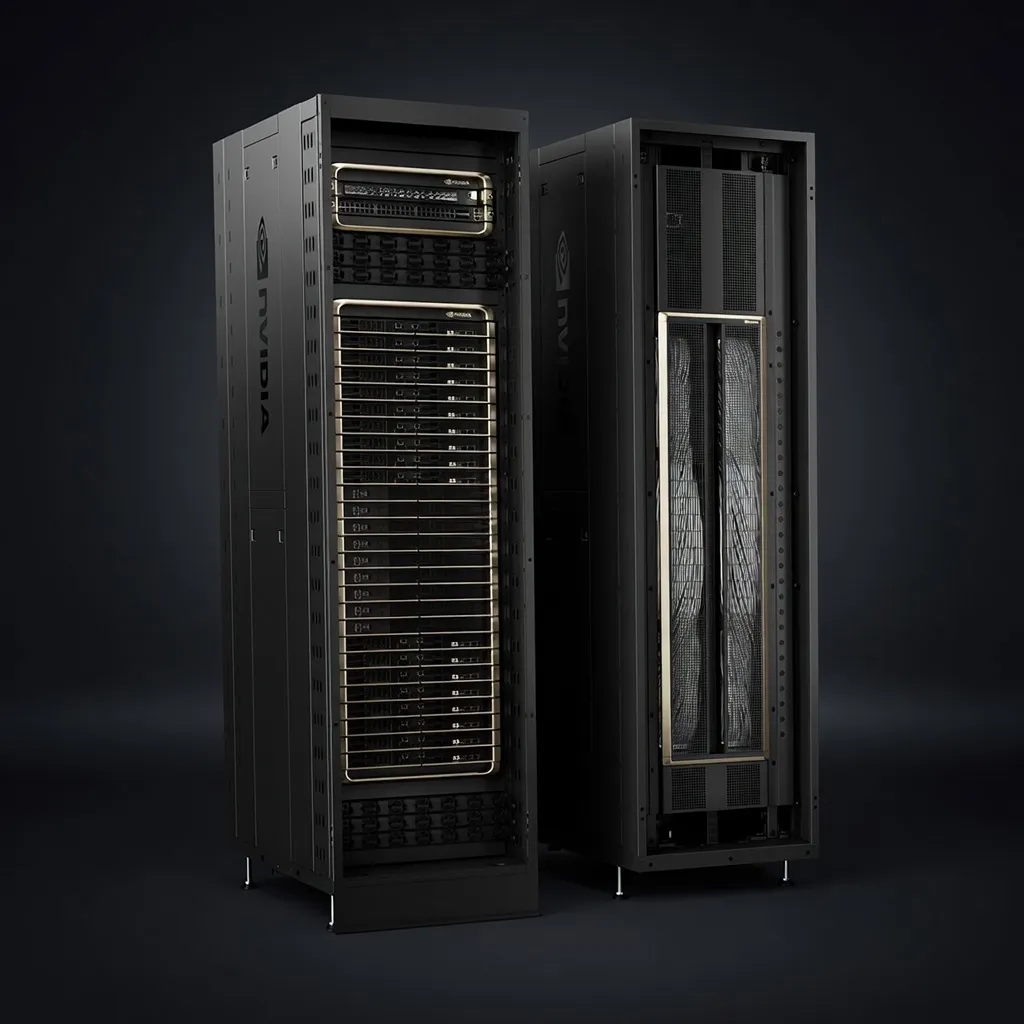
Every open model in our directory, ranked by how well it runs on GIGABYTE NVIDIA Vera Rubin NVL72 GIGAPOD AI DLC Rack (20700GB) at 4-bit. Grades weigh whether the model fits in memory and how fast it should run.
GIGABYTE NVIDIA Vera Rubin NVL72 GIGAPOD AI DLC Rack has 20700 GB of VRAM, enough to run 326 of the 326 open models we track at 4-bit. The largest that still fits well is Kimi K3 (2800B), and the top-rated is Quasar 438B at about 300 tok/s.
326 of 326 models run comfortably on GIGABYTE NVIDIA Vera Rubin NVL72 GIGAPOD AI DLC Rack.
See full GIGABYTE NVIDIA Vera Rubin NVL72 GIGAPOD AI DLC Rack specs and pricingThe top models this device can run at 4-bit, ranked by fit and speed.
| Model | Grade | Speed | VRAM |
|---|---|---|---|
| Quasar 438BMultiverse Computing | SS | 299.9 tok/s | 3758.5 GB |
| Kimi K3Moonshot AI | SS | 1207.6 tok/s | 2496.9 GB |
| Atria-Dawn-PreviewShanghai AI Laboratory | SS | 576.3 tok/s | 1955.7 GB |
| Llama 4 ScoutMeta | SS | 822.4 tok/s | 1423.7 GB |
| LongCat-2.0Meituan | SS | 2733.2 tok/s | 1312.5 GB |
| DeepSeek-V4-ProDeepSeek | SS | 2677.5 tok/s | 1320.5 GB |
| MiMo-V2.6-Pro-RLXiaomi MiMo | SS | 3123.1 tok/s | 930.5 GB |
| Muse Spark OpenMeta | SS | 2988.0 tok/s | 826.1 GB |
| Nemotron 3 UltraNVIDIA | SS | 2385.7 tok/s | 759.5 GB |
| GLM-5.2Z.ai | SS | 3279.0 tok/s | 752.0 GB |
| Mistral Large 4Mistral | SS | 4807.2 tok/s | 815.0 GB |
| Llama 3.1 405B InstructMeta | SS | 1733.5 tok/s | 650.1 GB |
Quasar 438BMultiverse Computing | 438B | SS | 299.9 tok/s | 3758.5 GB | |
Kimi K3Moonshot AI | 2800B(104B active) | SS | 1207.6 tok/s | 2496.9 GB | |
Atria-Dawn-PreviewShanghai AI Laboratory | 744B | SS | 576.3 tok/s | 1955.7 GB | |
Llama 4 ScoutMeta | 109B(17B active) | SS | 822.4 tok/s | 1423.7 GB | |
LongCat-2.0Meituan | 1600B(48B active) | SS | 2733.2 tok/s | 1312.5 GB | |
DeepSeek-V4-ProDeepSeek | 1600B(49B active) | SS | 2677.5 tok/s | 1320.5 GB | |
MiMo-V2.6-Pro-RLXiaomi MiMo | 1024.22B(42B active) | SS | 3123.1 tok/s | 930.5 GB | |
Muse Spark OpenMeta | 816B(42B active) | SS | 2988.0 tok/s | 826.1 GB | |
Ad Tools for AI BuildersAll the hardware and tools you need to run private AI at your office or at home.Shop Now Tools for AI BuildersAll the hardware and tools you need to run private AI at your office or at home.Shop Now | |||||
Nemotron 3 UltraNVIDIA | 550B(55B active) | SS | 2385.7 tok/s | 759.5 GB | |
GLM-5.2Z.ai | 744B(40B active) | SS | 3279.0 tok/s | 752.0 GB | |
Mistral Large 4Mistral | 1050B(49B active) | SS | 4807.2 tok/s | 815.0 GB | |
| 405B | SS | 1733.5 tok/s | 650.1 GB | ||
Kimi K2.7 CodeMoonshot AI | 1000B(32B active) | SS | 13079.0 tok/s | 647.6 GB | |
Ring-2.6-1TinclusionAI | 1000B(63B active) | SS | 6662.3 tok/s | 712.6 GB | |
Kimi K2.6Moonshot AI | 1000B(32B active) | SS | 13079.0 tok/s | 647.6 GB | |
Kimi K2 InstructMoonshot AI | 1000B(32B active) | SS | 21745.0 tok/s | 613.3 GB | |
Ad Vast.aiAffordable on-demand GPU rentals for training and inference. Pick from thousands of hosts.Rent a GPU Vast.aiAffordable on-demand GPU rentals for training and inference. Pick from thousands of hosts.Rent a GPU | |||||
Kimi K2 Instruct 0905Moonshot AI | 1000B(32B active) | SS | 13322.1 tok/s | 646.0 GB | |
Kimi K2 ThinkingMoonshot AI | 1000B(32B active) | SS | 13322.1 tok/s | 646.0 GB | |
Kimi K2.5Moonshot AI | 1000B(32B active) | SS | 13322.1 tok/s | 646.0 GB | |
BeamReflection AI | 501B(23B active) | SS | 5696.5 tok/s | 475.1 GB | |
Beam 1.0 501B A23BReflection | 501.27B(23.4B active) | SS | 5357.3 tok/s | 487.5 GB | |
GLM-5Z.ai | 744B(40B active) | SS | 12850.6 tok/s | 496.0 GB | |
GLM-5.1Z.ai | 744B(40B active) | SS | 12850.6 tok/s | 496.0 GB | |
MiniMax M3MiniMax | 428B(23B active) | SS | 5696.5 tok/s | 432.7 GB | |
| AdTools for AI BuildersAll the hardware and tools you need to run private AI at your office or at home.Shop Now | |||||
DeepSeek-V4.1-Flashdeepseek-ai | 552B(16B active) | SS | 8179.7 tok/s | 448.7 GB | |

Model Compatibility
Use the calculator to weigh this device against any other, model by model, with speed and fit scores.
Straight answers to the questions we hear most often.
Can't find what you're looking for? Book a Discovery Call
Quasar 438B is the highest-rated model that runs on GIGABYTE NVIDIA Vera Rubin NVL72 GIGAPOD AI DLC Rack at 4-bit, at about 300 tok/s. In total, GIGABYTE NVIDIA Vera Rubin NVL72 GIGAPOD AI DLC Rack can run 326 of the 326 open models we track.
We size each model at 4-bit (Q4_K_M), add the KV cache for its context length and a fixed runtime overhead, then compare that to this device VRAM. Each model is graded on how comfortably it fits and how fast it should run on this card.
It is an estimate of decode speed in tokens per second at 4-bit, based on this device memory bandwidth and each model size. Real speed depends on your runtime, batch size, and context length, so use it to compare models, not as a hard promise.
Lower-bit quantization shrinks a model so more of them fit. These grades already assume 4-bit, which is the common local default. Going below 4-bit can squeeze a larger model in at some quality cost; going above needs more VRAM and may not fit.
Mixture-of-experts models only activate a fraction of their parameters at a time, so their runtime memory is closer to the active size than the headline size. We score fit on the active parameters, which is why some very large models still fit.